
Guide
How interior design increases hotel occupancy in Madrid (Guide 2026)
Subscribe to our newsletter!
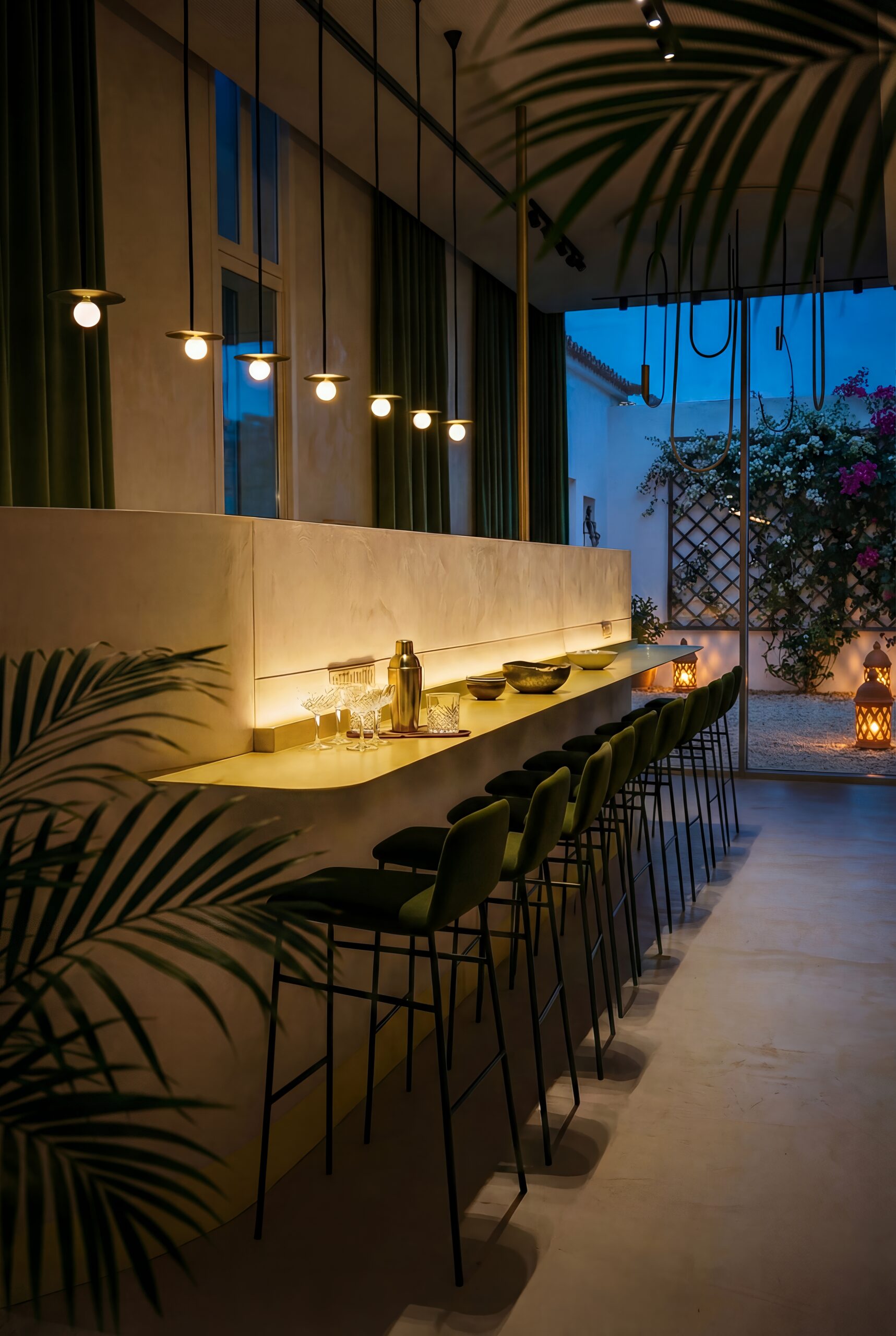
Madrid's hotel market is more competitive than ever. A good location and a competitive price are no longer enough: by 2026, travelers will choose hotels based on the visual experience promised by photos on Booking.com and social media.
This article demonstrates with real data how interior design directly impacts your KPIs: occupancy, RevPAR, ADR, and ratings. It's not theory; it's applied mathematics for hotel profitability.
The numbers that matter: how design affects your bottom line
Real case: 18-room boutique hotel, Malasaña
- Before the redesign: 62% annual occupancy, ADR €95, RevPAR €58.9
- After the redesign (investment €120,000): 84% occupancy, ADR 135€, RevPAR 113.4€
- ROI: Investment recovered in 14 months
Why did it work? Three key levers:
- Increased direct conversion: Professional photos of the new design reduced reliance on OTAs from the 78% to the 52%
- Justified premium price: The design allowed for a price increase of 42% without market resistance
- Top ratings: They went from 7.8 to 9.2 on Booking, entering the top 15% in Madrid
The 5 design areas that most impact occupancy
1. The entrance/lobby area (40% impact on conversion)
The lobby is your cover photo. A significant number of potential guests decide within the first 8 seconds whether your hotel is a good fit for them based on this image.
Critical elements:
- Lighting statement: A sculptural lighting piece (not a shopping mall ceiling light)
- Texture on walls: Wallpaper, paneling, microcement – something tactile
- Staircase furniture: Medium-to-large sized pieces that add personality
- Green: Large plants (minimum 2 of 150cm+) or plant wall
- Photogenic waiting area: Even if it's small, it should have a corner worthy of Instagram.
Budget: €8,000-€25,000 | ROI: <6 months in direct conversion
2. Typical rooms (30% of the impact)
This is where your guest lives. A mediocre design here isn't compensated for by a spectacular lobby.
What makes the difference:
- Custom headboards: No metal frame from the catalog. Upholstered panel, wood, corten steel…
- Adjustable lighting: Minimum 4 independent light sources per room
- Invisible blackout curtains: They shouldn't look like office blinds.
- Premium textiles: Sheets 300 thread count minimum, towels 600g/m²
- Visual focal point: An element that defines personality (wallpaper, art, statement mirror)
Budget per room: €3,500-€8,000 | Allows for an ADR increase of €25-€45/night
3. Bathrooms (20% impact – critical for assessments)
Mediocre bathrooms ruin experiences. They are the second most mentioned issue in negative reviews.
Standards 2026:
- Rain shower + hand shower: Generous flow rate (minimum 12L/min)
- Amenities with identity: Custom packaging or boutique brands (no generic single doses)
- Backlit mirror: Essential for selfies and functionality
- Noble materials in wet conditions: Large format ceramics, natural stone, terrazzo
- Smart storage: Shelves that don't get wet, plenty of hooks
Budget per bathroom: €2,500-€6,000 | Direct impact on cleanliness and comfort score
4. Common areas suitable for photography (5% conversion but high reputational impact)
Terraces, patios, lounges, libraries, gyms… Every common space is free content when it is well designed.
The trick:
- Create "scenes": Corners that are begging for a photo
- Always warm lighting: 2700K maximum in social areas
- Versatility: Spaces that work for work, coffee, reading, drinks
- Abundant green: Plants humanize large spaces
Budget: €5,000-€20,000 depending on size | Generates organic content valued at €2,000-€5,000/month
5. Signage and wayfinding (underestimated, affects operational experience)
When guests ask where the elevator or breakfast is, your design failed.
Solution:
- Signage consistent with visual identity
- Clear multilingual iconography
- Information at decision points
- QR codes for detailed information (schedules, services, recommendations)
Budget: €800-€3,000 | Reduces operational friction on a 40%
Do you want to optimize your hotel's occupancy?
Complete the form and one of our hotel design specialists will give you a free evaluation of your space in less than 24 hours.
Design styles that are working in Madrid 2026
1. Contemporary Mediterranean (the most profitable) It combines natural materials (wood, stone, linen) with a terracotta/sand/Mediterranean blue palette. It works especially well in neighborhoods like Salamanca, Chamberí, and the city center.
2. Industrial Refined Perfect for neighborhoods like Malasaña and Lavapiés. Exposed brick, black metal, reclaimed wood, but refined (nothing "chic ruin").
3. Soft Japandi Warm Japanese minimalism + Nordic hygge. Ideal for small hotels (under 30 rooms) seeking to be an urban retreat.
4. Maximalist Boutique Statement wallpaper, saturated colors, mixed patterns. High risk but high reward. Only if you have a strong brand personality.
What DOESN'T work:
- Cold Scandinavian minimalism (Madrid is not Copenhagen)
- All white, "clinic" style«
- Cheap imitation of luxury chains
- Mixture of styles without coherence
Actual budgets according to type
Urban Hotel 15-25 rooms (medium investment)
- Lobby + reception: €15,000-30,000
- Rooms (€3,500/unit): €52,500-€87,500
- Bathrooms (€2,800/unit): €42,000-€70,000
- Common areas: €10,000-25,000
- Signage + details: €3,000-€8,000 Total: €122,500 – €220,500 Recovery period: 12-18 months
Boutique Hotel 8-15 rooms (premium design)
- Lobby statement: €20,000-€45,000
- Rooms (€5,500/unit): €44,000-€82,500
- Premium bathrooms (€4,500/unit): €36,000-€67,500
- Instagrammable areas: €15,000-€35,000
- Spatial branding: €5,000-€12,000 Total: €120,000 – €242,000 Recovery period: 10-14 months (thanks to higher ADR)
Hostel/Budget Hotel 30-50 rooms (optimized)
- Functional lobby with soul: €8,000-18,000
- Optimized rooms (€2,200/unit): €66,000-€110,000
- Efficient bathrooms (€1,800/unit): €54,000-€90,000
- Multipurpose common areas: €12,000-€25,000 Total: €140,000 – €243,000 Recovery period: 16-24 months (lower unit margin but volume)
Transform your hotel with strategic design.
Fill out the form and discover how small interior changes can increase your occupancy and guest satisfaction. We'll respond in less than 24 hours.
Common mistakes that waste money
Error 1: Renew room by room It's tempting because of the cash flow, but it generates:
- Visual inconsistency in photos
- Impossibility of a cohesive photographic campaign
- Loss of volume discounts on purchases
- Period of works made eternal
Solution: Phase by complete plants or do it all in the off-peak period.
Mistake 2: Copying the premium competition without understanding why it works Seeing a beautiful hotel on Instagram and ordering "the same" without a strategy = disaster.
Solution: Hire a strategic designer who understands your target audience, your target ADR, and your brand personality.
Mistake 3: Skimping on mattresses and bedding This is where guests spend 8 hours. Every bad review about comfort costs you 15-30 potential bookings.
Solution: Invest in the mid-to-high-end range. It's the 15% of the budget but the 40% of the experience.
Error 4: Not designing for photos By 2026, if your hotel doesn't look good on a mobile phone camera, it doesn't exist.
Solution: Design with lighting suitable for photography without flash. Create corners that beg to be photographed.
Error 5: Ignoring acoustics Beautiful design + noise = guaranteed bad reviews.
Solution: Invest in soundproofing (windows, doors, walls if necessary). €2,000-€4,000 per room well spent.
The multiplier effect of good design
A well-designed hotel generates compound benefits:
Virtuous cycle:
- Spectacular photos → More direct conversion (-15% OTA commission)
- Superior experience → Better reviews (↑0.5-1.5 points)
- Better positioning → More organic visibility
- Premium price → Better margin per room
- More margin → More budget for maintenance/improvement
- UGC Content → Free marketing valued in thousands/month
Documented case: 22-room hotel, Chueca. Design investment: €165,000
- Year 1 post-redesign: +2,100 nights occupied
- The ADR rose from €105 to €142
- Additional income year 1: €187,000
- ROI: Recovery in 10.5 months
- Years 2-5: Additional cumulative net profit: €680,000
Sustainability and design: what travelers are looking for in 2026
67% of travelers consider sustainability criteria. Your design can communicate that:
Sustainable decisions that also sell:
- Dimmable LED lighting (60-70% energy savings + better experience)
- Faucets with flow limiter (invisible water savings for the user)
- Local and recycled materials (storytelling + reduced footprint)
- Restored or vintage furniture (personality + circular)
- Refillable amenities (reduces waste + premium image)
- Low-maintenance native vegetation
Important: No greenwashing. Travelers can spot the fake. Integrate real sustainability into your design and communicate it honestly.
When is the right time to renew?
Clear signs:
- Your ADR is 15%+ below similar competitors in the location
- Annual occupancy <70% without explanation for location/price
- Booking.com score <8.5 with comments about "outdated"«
- Photos of your direct competitors make you feel like you're outdated
- Latest renewals are over 8 years old
Optimal timing:
- January-March: Lower occupancy, construction impacts less revenue
- Construction time for rooms: 3-5 weeks per floor
- Lobby: 4-6 weeks (without closing, with smart phasing)
Working with professionals: what to expect
Do I need an architect or an interior designer?
- Architect: If there are structural changes, major installations, permits
- Interior designer: If it's a renovation without major construction
- Ideal: Integrated team (what we do at EOLOS)
Project phases:
- Strategic briefing (1-2 weeks): Define target, target ADR, identity
- Concept + moodboard (2-3 weeks): Visual direction, palette, references
- Technical project (4-6 weeks): Plans, specifications, detailed budget
- Execution (2-4 months depending on size): Construction, coordination, installation
- Styling + Photography (1 week): Prepare spaces for visual campaign
Design project cost: 12-18% of the total construction budget
Conclusion: Design is not an expense, it's your pricing tool
In 2026, your hotel's design is your main tool for:
- Justify premium prices (+25-40% ADR)
- Reduce dependence on OTAs (commissions -15-20%)
- Increase direct occupancy (+15-25%)
- Generate organic marketing (UGC valued in thousands/month)
- Improve ratings (direct impact on conversion)
You don't design to make it pretty. You design to make it more profitable.
The numbers don't lie: a well-designed hotel in Madrid recovers the investment in 10-18 months and generates higher returns for at least 7-10 years.
The question isn't whether you can afford to renew. It's whether you can afford not to while your competition does.
Does your hotel need strategic renovation?
At EOLOS, we design hotel spaces that increase occupancy and ADR with a data-driven approach. From concept to the last pillow, we think about profitability.
Design tips in your inbox
Subscribe to our newsletter and receive the latest trends in interior design, branding, and experience design for businesses.