
Guide
How to design a coworking space that fills itself (Madrid profitability guide)
Subscribe to our newsletter!
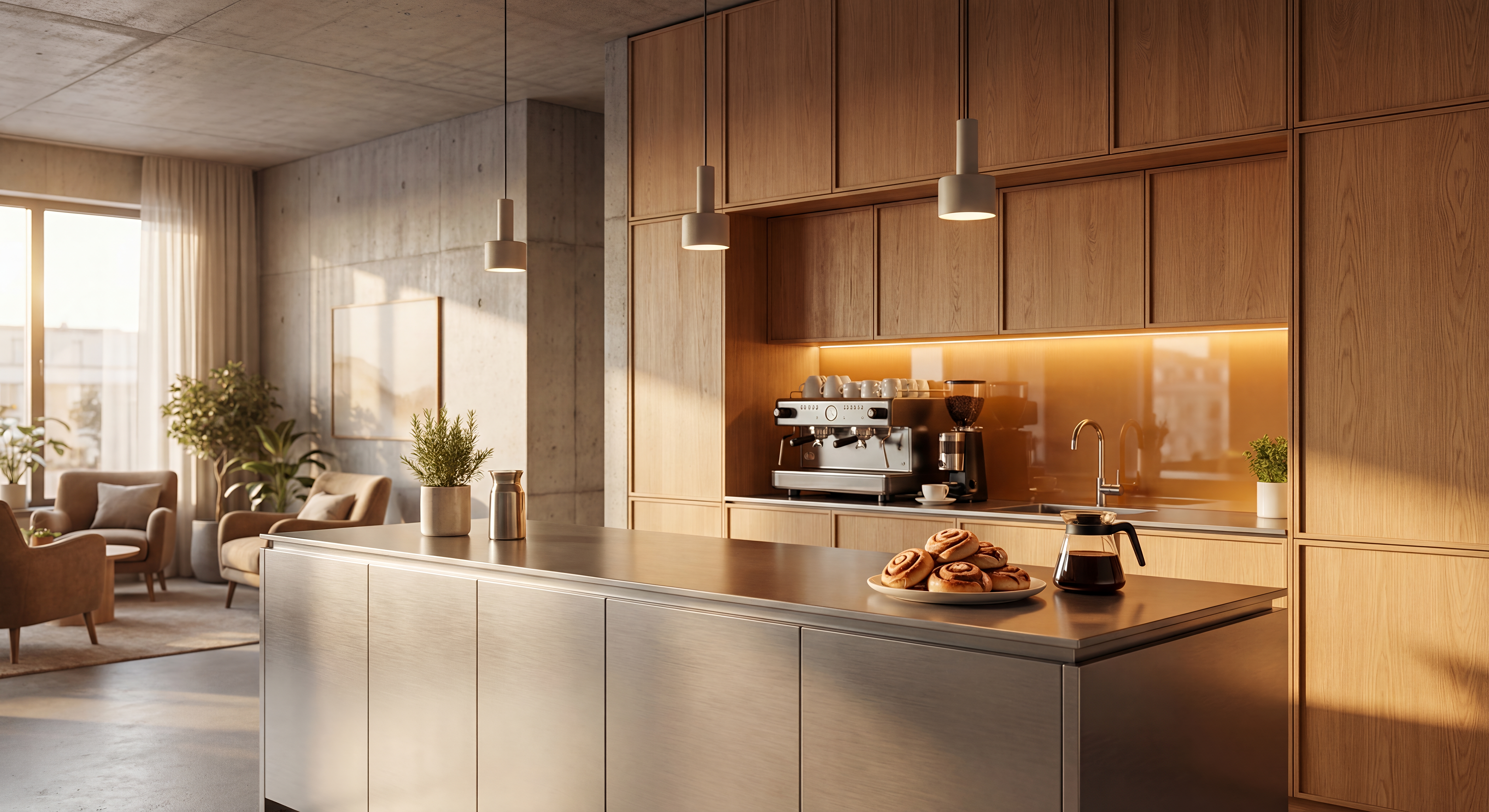
The coworking market in Madrid is saturated. There are more than 280 spaces competing for the same digital nomads, freelancers, and startups.
But some spaces have waiting lists while others struggle to fill the 60% capacity.
The difference isn't location or price. It's strategic design.
This article demonstrates, with real-world examples, how the design of a coworking space directly impacts occupancy, average ticket price, member retention, and profitability. It's not decoration. It's financial architecture.
The brutal economics of coworking (and why design is your main lever)
Basic mathematics of a 400m² coworking space:
Potential income:
- 40 permanent positions x €280/month = €11,200
- 15 flexible positions x €180/month = €2,700
- 4 private offices x €850/month = €3,400
- Meeting rooms x €600/month = €600
- Total potential monthly income: €17,900
Fixed costs:
- Rent: €6,000/month (€15/m²)
- Utilities (electricity, water, internet): €1,200
- Staff (community manager + cleaning): €3,200
- Maintenance + consumables: €600
- Total costs: €11,000/month
Break-even: 61% occupancy
But here's the problem: most coworking spaces operate at an average annual occupancy rate of 50-701 TP3T. The best ones are at 85-951 TP3T.
What makes the difference?
The design determines:
- Visit conversion rate: 15% vs 45% (mediocre vs excellent design)
- Average ticket: €220 vs €310/member (spaces that justify premium)
- Retention: 8 months vs 18 months (functional vs experiential spaces)
- Word-of-mouth: 0.3 vs 1.8 referrals per active member
Real case: Impact Hub vs generic coworking
Generic coworking space 350m², Tetuán:
- Average occupancy: 58%
- Average ticket price: €195
- Average retention: 7.2 months
- Monthly income: €10,450
- Margin: -€550/month (subsidized by events)
Impact Hub 380m², Chamberí:
- Average occupancy: 89%
- Average ticket price: €285
- Average retention: 16 months
- Monthly income: €19,800
- Margin: €8,200/month
Same city, similar size, comparable rent (+8% Impact Hub). The difference: strategic design that creates community, identity, and experience.
The 7 essential spaces of a profitable coworking space
1. First impression area (lobby/reception): 15% of space, 60% of commercial impact
Your lobby is your Instagram cover photo and your selling point when people visit. Potential members decide within the first 90 seconds if your space is a good fit for them.
Critical elements:
A) Reception statement (not an IKEA desk)
- Custom design that reflects identity
- Suitable height for standing interaction (110cm)
- Hidden storage (no visible chaos)
- Integrated technology (screen, digital check-in)
Budget: €2,500-€8,000
B) Social waiting area (not a clinic waiting room)
- Quality sofas/armchairs (no disguised office furniture)
- Coffee table with curated magazines/books
- Large plants (minimum 2 +150cm)
- Multi-layered warm lighting (never a single overhead light)
Budget: €3,500-9,000
C) Anchor visual element
- It could be: an artistic mural, a light installation, a living wall, a sculpture, a designer bookshelf
- It should be photogenic (your best organic content)
- It should tell your story/values
Budget: €2,000-€12,000 depending on complexity
D) Sign of vitality
- Board with events of the week
- Screen with members working on projects
- Wall of fame of successful members/projects
- Community visible from entrance
Case study:
Second Home Lisbon (benchmark, although not Madrid): Their lobby is a literal jungle with over 1,000 floors. It's their trademark. They get press coverage, generate content, and create conversation. Lobby investment: €45,000. Return in PR equivalent: €80,000+ in the first year.
Utopicus Gran Vía Madrid: Lobby with a sculptural staircase, mural by a Spanish artist, and boutique hotel-style lighting. The feeling is: "This isn't a coworking space, it's a club." It justifies €320/month (vs. €180 for the neighborhood average).
Total budget for first impression area: €8,000-€25,000 (2-6% total investment) ROI: <3 months via increased visit conversion
💡 Are you thinking of opening a coworking space or do you already have one operating? Call 60%.
We help flexible workspaces in Madrid increase occupancy and average ticket price through strategic design. Subscribe and receive exclusive content in your email:
2. Concentrated work area (open space): 35-40% of the space
This is where your members spend their time. If it doesn't work well, they leave.
The mistake of “undifferentiated open space”:
Many coworking spaces are a sea of identical tables. The result: a call center feel, high noise levels, and an inability to concentrate.
The solution: diversity within the open space
A) High concentration positions (30% of total positions)
- Facing a wall or with visual dividers
- Less through traffic
- Individual task lighting
- Enhanced acoustics in that area
B) Flexible work positions (40%)
- Open view, more social
- Easy access to common areas
- They allow occasional interruptions
C) Premium hot desks (15%)
- 27″ monitors included
- Superior ergonomic chairs
- Integrated USB sockets
- individually adjustable light
- They justify the pricing upgrade
D) Alternative work zones (15%)
- High tables (standing work)
- Work sofas (with side table + power outlet)
- Semi-private niches
- Variety = comfort
Critical technical specifications:
Desks:
- Minimum 120x60cm per stall (140x70 is ideal)
- Standard height 75cm (or adjustable for premium)
- Invisible cable management
- Durable material, easy to clean
Budget: €180-450 per position
Chairs:
- Truly ergonomic (not "office" ergonomic)
- Breathable mesh back
- Height adjustment + arms
- Resistant to intensive use (8-12h/day)
Budget: €120-350 per unit
Lightning:
- 500 lux on work surface (measurable, not estimated)
- Temperature 4000K in areas of concentration
- Individual task lamps in premium workstations
Lighting budget: €60-95/m²
Smart layout:
- Non-orthogonal distribution (avoids a school-like feel)
- Clusters of 4-6 positions (generates micro-communities)
- Strategic orientation (avoid working facing traffic)
- Wide circulation areas (minimum 120cm between clusters)
Total budget for open space: €280-420/m² (furniture + lighting + partitions + acoustics)
3. Concentration booths (phone booths): a critical differentiating element
831,000 coworking users report that "noise/distractions" is their main problem. Acoustic booths solve this.
Necessary typologies:
A) Individual phone booths (1 per 12-15 members)
- For private calls
- 1m² approx
- Minimum soundproofing 30dB
- Forced ventilation (critical, they become saunas)
- Overhead and side lighting
- Plug + USB
- Small laptop shelf
Budget: €2,200-€5,500/unit
B) Work booths for 1-2 people (1 per 20 members)
- For 2-4 hour focus work
- 2-3m²
- Desk + ergonomic chair
- Premium acoustics
- Adjustable lighting
Budget: €4,500-€8,500/unit
C) Meeting booths for 4 people (1 per 30 members)
- For meetings without booking a large room
- 4-5m²
- Table + 4 chairs
- Touchscreen or large monitor
- Integrated videoconferencing
Budget: €7,000-€14,000/unit
ROI of cabins:
Coworking spaces with sufficient acoustic booths:
- Retention +23% (vs those who don't have it)
- Spatial satisfaction +2.1 points (out of 10)
- They allow you to charge an additional €15-25/month for membership.
Investment in booths for 400m² (50 members): 25.000-40.000€ Payback: 8-14 months via retention + pricing
4. Meeting rooms: your second source of income
Well-designed meeting rooms generate direct income (hourly rental to non-members) and indirect income (selling argument for memberships).
Ideal mix for 400m² coworking:
2x small rooms (4 people):
- 10m² each
- Table 120x120 + 4 chairs
- 43″ Monitor + Chromecast
- Whiteboard
- Rental price: €18-30/hour
2x medium-sized rooms (6-8 people):
- 16m² each
- Table 200x100 + 8 chairs
- 55″ screen + professional VC system
- Premium soundproofing
- Price: €35-55/hour
1x large/multipurpose room (12-20 people):
- 35m²
- Flexible configuration (theater/U/boardroom)
- 75″ Projector or Screen
- Sound system
- Mobile whiteboards
- Price: €60-95/hour (or €400-800/day for private events)
Critical technology in theaters:
- Digital reservation system at the door (real-time availability)
- A working videoconferencing system (Logitech MeetUp minimum, no webcams)
- Dedicated WiFi for presentations (not the same network as coworking)
- Adjustable lighting (presentations vs. work)
- Real soundproofing (not standard hollow doors)
Room budget:
- Room for 4 people: €4,500-€8,000
- Room for 8 people: €7,500-13,000
- Room for 20 people: €15,000-€28,000
Potential room revenue (using 40% capacity by non-members):
- €800-€2,200/month additional
- Payback: 12-20 months
5. Social area/kitchen: the heart of the community (and your best marketing)
This is the space that differentiates a coworking space from simply "renting a table." Here, community is built, referrals are generated, and the photos that fill your Instagram feed are taken.
Essential elements:
A) Functional kitchen (not an office kitchenette)
- Large central island (minimum 2.5m long)
- High stools for 8-12 people
- Specialty coffee (professional machine, not Nespresso)
- Large refrigerator (not a mini-bar)
- Microwave + toaster + kettle
- Dishwasher (operationally critical)
- Double sink
Budget: €8,000-18,000
B) Dining/lounge area
- Mix of communal tables (8-10 people) + small tables (2-4 people)
- Comfortable sofas and armchairs (not decorative)
- Warm lighting (2700K maximum)
- Abundant plants
- Ambient music (Sonos system or similar)
Budget: €12,000-€25,000
C) Elements that generate conversation
- Bookshelf with books (people exchange them)
- Board games (Jenga, chess, cards)
- Community events/opportunities board
- “Free wall” (post-it notes with member needs/offers)
Budget: €1,500-4,000
D) Outdoor space (if you're lucky)
- Terrace/patio = pure gold in Madrid
- Quality outdoor furniture
- Green (a lot)
- Ambient lighting for evenings
- Awning/shade
Budget: €250-600/m² exterior
The detail that makes all the difference: free coffee vs. affordable premium coffee
Coworking spaces that offer free specialty coffee (cost €45-80/member/month):
- It is perceived as a luxury amenity
- Generates member-customer meetings in the space (brand visibility)
- Justifies pricing +€20-30/month higher
- ROI: positive
Total budget for the social area: €21,500-€47,000 (5-10% of space but 40% of emotional value)
6. Private offices: your highest margin
Teams of 2-6 people who need privacy but want community are your budget-friendly sweet spot.
Why they are profitable:
Office 12m² for 4 people:
- Income: €950/month (€237 per person)
- Assignable operating cost: €180 (€15/m² base rent)
- Margin: €770/month vs €520 for 4 fixed individual positions
Private office design:
Smart (cost-effective) version:
- Glass walls + frosted vinyl (privacy + light)
- Standard but quality furniture
- Recessed LED lighting
- Zoned climate control
- Smart lock
Budget: €420-650/m²
Premium version (for tech startups that pay more):
- Acoustic sliding doors
- Custom-made furniture
- Architectural lighting
- Integrated glass whiteboards
- Large shared monitor
Budget: €650-950/m²
Ideal mix for 400m²:
- 4-6 offices of different sizes (8m², 12m², 16m², 24m²)
- Total: 80-100m² in offices (20-25% of the space)
- Potential income: €3,800-€5,500/month
- Profitability per m²: 3x vs open space
7. Auxiliary infrastructure areas (invisible but critical)
A) Member storage
- Individual lockers (one per permanent member)
- Mail/package lockers
- Bike/scooter storage cabinet
B) Bathrooms (don't skimp here)
- 1 WC per 15 people (regulatory minimum)
- Ideal: 1 per 10 people
- Quality finishes (not cheap industrial ones)
- Basic amenities (soap, quality toilet paper)
- Good mirror + side light (people have video calls)
- Shower (at least 1 if target includes cyclists/runners)
Bathroom budget: €350-650/m²
C) Service areas
- Cleaning room
- Consumables storage
- Technical space (servers, routers, CCTV)
Infrastructure budget: 8-12% of the total cost
💡 Are you thinking of opening a coworking space or do you already have one operating? Call 60%.
We help flexible workspaces in Madrid increase occupancy and average ticket price through strategic design. Subscribe and receive exclusive content in your email:
Visual identity and spatial branding: what justifies premium pricing
Generic coworking spaces compete on price. Coworking spaces with a strong identity charge 30-50% more without resistance.
Elements of spatial identity:
1. Strategic color palette
Common mistake: All minimalist white (it looks like a hospital, cold, impersonal)
Best practice:
For tech/startup coworking:
- Base: warm whites + medium grays
- Accents: electric blue + lime green + coral
- Feeling: energy, innovation, future
For creative/cultural coworking:
- Base: beige + terracotta + olive green
- Accents: mustard + brick + petrol blue
- Feeling: warm, handcrafted, authentic
For corporate/professional coworking:
- Base: medium gray + off-white + light wood
- Accents: navy blue + gold/bronze
- Feeling: serious but not boring, sophisticated
Ruler: 70% neutrals, 20% main color, 10% accent color
2. Materials that tell your story
Natural wood: Warmth, sustainability, quality Black metal: Industrial, modern, technical Floors: Life, freshness, well-being Exposed brick: Authenticity, history, roots Polished concrete: Industrial, refined, contemporary Natural textiles: Comfort, tactile feel, home
Choose 3-4 materials and repeat them consistently throughout the space.
3. Custom art and elements
Murals:
- Local artist (storytelling + authenticity)
- Related to your identity (not random art)
- Location: statement wall in social area
Budget: €2,500-€12,000
Custom signage:
- Room names that mean something
- Custom iconography (not universal pictograms)
- Typography consistent with the brand
Budget: €1,800-5,000
Sculptural elements/installations:
- Statement lighting (single central lamp)
- Custom anchor furniture (reception, shelving)
- Green installation (green wall, ceiling with hanging plants)
Budget: €3,000-15,000
ROI visual identity:
Coworking spaces with a strong identity (vs generic):
- Pricing +35% with no drop in conversion
- Social media share per member: 3.7x more
- Time to fill capacity: 60% faster
Case: Utopicus (multiple locations in Madrid) vs generic independent coworking spaces.
Utopicus charges €290-€340/month with an average occupancy of 88%. Generic providers charge €180-€220/month with an average occupancy of 61%.
Main difference: ultra-strong visual identity (contemporary luxury), cohesive experience, careful spatial branding.
Actual budgets according to size and positioning
Coworking Boutique 150-250m² (20-30 members)
Positioning: Niche community (e.g., creatives only, women only, sustainability only)
Distribution:
- Open space: 90m² (18 seats)
- Private offices: 35m² (2 offices)
- Meeting rooms: 25m² (2 rooms)
- Social area/kitchen: 40m²
- Cabins: 12m² (3 units)
- Bathrooms/services: 18m²
Investment breakdown:
- Civil works + installations: €55/m² = €8,250-€13,750
- Acoustics: €75/m² = €11,250-€18,750
- Lighting: €80/m² = €12,000-€20,000
- Air conditioning: €95/m² = €14,250-€23,750
- Floors: €45/m² = €6,750-€11,250
- Painting + finishing: €20/m² = €3,000-€5,000
- Open space furniture: €320/station = €5,760
- Office furniture: €420/m² = €14,700
- Meeting rooms (equipped): €11,000
- Acoustic booths: €12,000
- Complete social area: €18,000
- Reception + lobby: €8,500
- Bathroom renovations: €9,000
- Signage + branding: €3,500
- Art + custom elements: €6,000
- Technology (WiFi pro, reservations, access): €8,000
TOTAL: €152,000 – €195,000 Per m²: €760 – €975/m² Per potential member: €6,080 – €7,800
Projected revenue (occupancy 80%):
- Fixed positions: 14 x €265 = €3,710
- Flex: 4 x €190 = €760
- Offices: 2 x €780 = €1,560
- Rooms (external): €400 Total: €6,430/month
Break-even: 68% occupancy Payback: 24-31 months
Mid-size coworking 350-500m² (50-70 members)
Positioning: Full-service, mix of profiles, competitive prices
Typical layout 420m²:
- Open space: 165m² (35 seats)
- Private offices: 80m² (5 offices)
- Meeting rooms: 50m² (4 rooms)
- Social area/kitchen: 70m²
- Concentration booths: 20m² (6 units)
- Bathrooms/services: 35m²
Investment:
- Construction + basic installations: €50/m² = €21,000
- Glazed partitions: €290/linear meter = €22,000
- Comprehensive acoustics: €85/m² = €35,700
- Multi-layer LED lighting: €90/m² = €37,800
- VRV air conditioning: €115/m² = €48,300
- Technical vinyl flooring: €42/m² = €17,640
- Paint + coatings: €22/m² = €9,240
- Open space furniture: €350/station = €12,250
- Office furniture: €450/m² = €36,000
- Fully equipped meeting rooms: €32,000
- Premium acoustic booths: €35,000
- Social area + full kitchen: €32,000
- Reception with identity: €12,000
- Bathrooms (2 sets): €24,000
- Technology + AV: €28,000
- Digital signage: €6,500
- Space branding + art: €12,000
- Common furniture (lockers, storage): €8,000
TOTAL: €429,000 – €495,000 Per m²: €1,020 – €1,180/m² Per member: €7,840 – €9,050
Projected revenue (occupancy 85%):
- Fixed positions: 30 x €275 = €8,250
- Flex: 8 x €195 = €1,560
- Offices: 5 x €920 = €4,600
- External rooms: €1,200
- Events/sponsors: €800 Total: €16,410/month
Operating costs: €9,200/month Profit: €7,210/month Payback: 59-69 months (5-6 years)
Premium/Flagship Coworking 600-900m² (90-140 members)
Positioning: Accessible luxury, top-tier experience, curated community
Estimated investment: €1,200 – €1,650/m²
Total: €720,000 – €1,485,000
Includes: architectural design, complete brand identity, premium finishes, advanced technology, high-end furniture, original art, and a conditioned terrace if available.
Projected revenue (occupancy 90%): €28,000-€38,000/month Break-even: 58-64% occupancy Payback: 48-72 months
Mistakes that kill the profitability of coworking spaces
Mistake 1: Designing without a clear business model
The symptom: You create a "pretty" space without considering unit economics. Result: you fill the 70% but still lose money.
Why does it happen? You prioritize aesthetics over economic functionality. Too much space in low-yield areas (giant lobby, excessive common areas) and too little in high-yield areas (private offices).
The solution: Model your P&L before designing. Optimize square meters for ROI:
- Private offices: maximum yield
- Open space: medium yield, occupies 35-40%
- Common areas: zero yield but necessary (no more than 20%)
Cost of error: Structurally unprofitable project
Error 2: Skimping on acoustics
The symptom: “The space is beautiful but I can’t concentrate” → cancellations, bad reviews, high turnover.
Why does it happen? Acoustics are invisible in renderings. The budget is cut there to enhance the visual aspect.
The solution: Acoustics is item 10-15% in the budget. Non-negotiable. A coworking space with bad acoustics doesn't work, period.
Cost of error: -40% retention, damaged reputation, pricing impossible to raise
Error 3: Not having enough small booths/rooms
The symptom: Members frustrated because “there is never room for a private call.”.
Why does it happen? The need for them is underestimated. Or people think, "It's too expensive, more positions are better.".
The solution: Minimum ratio: 1 phone booth per 12 members. This is non-negotiable if you want retention >80%.
Cost of error: Mediocre experience, negative referrals, high turnover +25%
Error 4: Location over design
The symptom: “We have the best location in Madrid, but we're at 55% occupancy.”
Why does it happen? Premium rent is paid, but fit-out is skimped on. Result: generic space in an expensive location.
The solution: Better a B+ location with an A+ design than an A+ location with a C design. Design is what retains.
Cost of error: High rent + low occupancy = bankruptcy
Mistake 5: Copying Pinterest's coworking concept without understanding your target audience
The symptom: An "Instagrammable" space that doesn't meet the real needs of your target community.
Why does it happen? Designing with ego or copying trends without thinking about the individual.
The solution: Define your community first. Design for their specific needs. If your target audience is blockchain developers, you need multiple large screens and rooms for technical workshops. If it's the legal sector, you need maximum privacy and spaces for client meetings.
Cost of error: Weak branding, no differentiation, pure price competition
Sustainability: mandatory by 2025 (and profitable)
Millennials and Gen Z prioritize sustainable workspaces. It's no longer just a nice-to-have.
Sustainable elements with a clear ROI:
Smart LED Lighting
- Energy savings: 65-75%
- Presence sensors (light only where there are people)
- ROI: 18-30 months
Efficient air conditioning
- VRV with zone thermostats
- Savings vs. traditional split: 35-45%
- ROI: 4-6 years
Waste management
- Visible and easy separation (5 categories)
- Organic kitchen composting
- Electronics recycling program
- Implementation cost: €800-2,000
- Impact: Improves brand perception, attracts conscious members
Filtered water vs. plastic bottles
- Branded water dispensers + reusable bottles
- Eliminates 3,000-8,000 bottles/year
- Cost: €1,200-€2,500
- ROI: 12-18 months + branding
Sustainable furniture
- FSC certifications (wood)
- Restored second-hand furniture (personality + circular)
- Chairs with environmental certifications (Cradle to Cradle)
- Additional Premium: 8-12%
- But it justifies the storytelling and pricing +€15/month
Plants (profitable biophilia)
- They improve air quality (minimally but real)
- They reduce stress -15% (proven studies)
- They are photogenic (free marketing)
- Investment: €50-120/m² in green space
- ROI: intangible but high in perception
Case: Selina Madrid (global network focused on sustainability)
They implemented:
- 100% renewable energy
- Zero single-use plastic
- Furniture 60% recycled/restored
- Composting program
- Partnership with local NGO
Result:
- Pricing +22% vs competition
- Average annual occupancy 91%
- Mentions in eco press: 14 articles (free PR)
- Target millennial/gen-Z: 84% of members
Additional investment in sustainability: +10-15% of the base budget Return: Premium pricing + brand differentiation + futureproofing
🏢 Do you need help designing or optimizing your coworking space?
At EOLOS, we design flexible workspaces that maximize occupancy and profitability. From the business model to the top floor.
Complete the form and receive:
✅ Free initial consultation (30 min)
✅ Feasibility analysis of your project
✅ Personalized investment estimate
✅ Response within 24 business hours
Tell us: location, available square meters, target members, estimated budget. We'll help you turn it into a profitable coworking space.
Invisible but omnipresent technology
A coworking space in 2025 without high-level technology is like a restaurant without a kitchen.
Professional WiFi (non-negotiable)
Minimum requirements:
- 300 Mbps for every 20 simultaneous users
- Business Symmetrical Fiber (Non-Residential)
- Enterprise router with bandwidth management
- Segregated network (members / guests / admin / IoT)
- 100% coverage with multiple access points
- Automatic 4G backup if fiber goes down
Specs:
- Professional access points: Ubiquiti UniFi, Aruba, Cisco Meraki
- 1 AP per 25m² in open space
- Minimum Cat6A cabling
- Technical rack with organized management
Budget: €3,500-€8,000 base + €120/month business fiber
Mandatory testing: Speed test from every corner. If it drops below 200 Mbps at any point = problem.
Reservation and management system
Critical functionalities:
- Room booking via app/web
- Automatic check-in at the lounge (screen at the door)
- Hot desk reservation (if applicable)
- Automatic billing
- Community app (member directory, events, marketplace)
- Analytics (which rooms are used most, peak hours, optimization)
Recommended platforms:
- Nexudus (the most complete)
- Cobot (simple, effective)
- OfficeRnD (good for multi-location)
Cost: €100-€400/month depending on size + €1,500-€3,000 setup
Intelligent access control
24/7 System:
- Keyless entry (app/card/code)
- Differentiated access by membership (24/7 member vs day-pass 9-20h)
- Entry log (security + analytics)
- Integrated with billing system
Budget: €2,500-€6,000 installation
Videoconferencing in each room
A webcam on the monitor is no longer enough.
Professional setup:
- Wide-angle camera (120-180°) with tracking
- Ceiling or soundbar microphones with echo cancellation
- Quality speakers (not the monitor's)
- Plug & play connection (USB-C single cable)
Recommended brands:
- Logitech Rally (premium)
- Logitech MeetUp (mid-tier, excellent value for money)
- Poly Studio (solid alternative)
Budget: €850-€2,500 per room
Digital signage
Screens on theater doors:
- Real-time status (available/occupied/next booking)
- Event/Company Name
- "Extend meeting" button if available after
- Integrated with reservation system
Budget: €280-650 per room
Information screens:
- Events of the week
- New members
- Community opportunities/offers
- Sponsors, if applicable
Budget: €600-€1,800 per screen + CMS €50/month
IoT and automation
Occupancy sensors:
- In each room and area (anonymized)
- Actual usage analytics (vs perceived)
- Data-driven layout optimization
Automated climate control:
- Adjustment by zone and actual occupancy
- Energy Savings 30-40%
- Constant thermal comfort
Smart lighting:
- Presence sensors
- Circadian adjustment (color temperature according to time)
- Energy saving 45-60%
Complete IoT system budget: €8,000-€18,000 Annual operating savings: €2,400-€4,800 Payback: 2-4 years
Community management through design
The best community manager can't save a poorly designed space. But a well-designed space makes community management easier (and more effective).
Design that facilitates interaction:
1. Strategic collision zones
- The kitchen as a central hub (everyone passes through it)
- Coffee machine in social area (not hidden)
- Printer/scanner in common area (generates encounters)
- Single output (vs. multiple outputs that fragment)
2. Furniture that invites sharing
- Large communal tables (8-12 people)
- vs. tables with only 2-4 players (less interaction)
- Configuration that allows spontaneous conversations
3. Integrated event spaces
- Large room with movable partition = open coworking event space
- Flexible seating for talks
- Projector + permanent sound (no setup each time)
- Kitchen with catering capacity
4. Community Visibility
- Members' wall with photos + what they do
- Member Project Showcase
- Opportunities/Needs Board
- Community feed screen
Community elements budget: €4,000-€9,000 ROI: Retention +18%, referrals +34%
Timing and opening phases
Realistic timeline for a coworking project:
Phase 1: Feasibility and strategy (3-6 weeks)
- Local market analysis
- Definition of target members
- Financial model
- Local Selection
- Brand concept/positioning
Phase 2: Design (6-10 weeks)
- Distribution plans
- Concept design + mood boards
- Complete technical project
- Specifications and budget
- Furniture/technology selection
Phase 3: Permits (2-6 weeks)
- Business license
- Building permits, if required
- Facilities certificates
Phase 4: Construction and fit-out (8-14 weeks)
- Demolition and preparation: 1-2 weeks
- Structural work and installations: 4-6 weeks
- Partitions and carpentry: 2-3 weeks
- Finishing and painting: 2 weeks
- Furniture and installation: 2-3 weeks
- Technology and integration: 1-2 weeks
Phase 5: Pre-launch (4-6 weeks before opening)
- Professional photography
- Website and booking system
- Launch campaign
- Membership pre-sales (early bird)
- Staff recruitment
- Soft opening with beta testers
Phase 6: Opening and ramp-up (12-20 weeks)
- Official Opening
- First community events
- Feedback-based optimization
- Active marketing up to 70-80% occupancy
Total timeline: 9-14 months from decision to stable operation
Launch budget (plus fit-out):
- Professional photography: €2,000-4,500
- Website + booking system: €4,000-€8,000
- Branding (logo, guidelines, collateral): €3,500-€8,000
- Launch marketing: €3,000-€8,000
- Deposit + first month's rent: variable
- Working capital (3-6 months): variable
- Pre-opening staff (1-2 months): €4,000-€8,000
- Insurance and licenses: €2,000-4,000
- Kitchen furniture + initial consumables: €2,500-5,000
Total pre-opening (excluding fit-out and rent): €21,000 – €53,500
How to work with EOLOS in your coworking project
At EOLOS we design flexible workspaces in Madrid. Our approach is different:
We don't design "pretty spaces". We design profitable businesses.
Integrated process:
1. Financial viability first
- We model your P&L before designing anything
- We optimize distribution for ROI, not for ego.
- We'll tell you if the project makes sense (or not).
2. Strategic design
- Based on your specific target membership
- Identity that differentiates and justifies pricing
- Functionality that maximizes retention
3. Cost-controlled execution
- Fixed budget (no surprises)
- Suppliers with a track record in coworking
- Project management to meet deadlines
4. Launch and optimization
- We help you with launch strategy
- Post-opening follow-up (what works, what doesn't)
- Adjustments based on actual usage
Investment in design: 10-14% of the total project cost
Warranty: If we follow the complete project, we guarantee agreed timing and budget (conditions apply).
📬 Don't miss our upcoming articles
We publish monthly guides on commercial space design, branding, and strategic interior design for growing businesses.
Useful content, real-life cases, zero spam.
Frequently Asked Questions
How much does it really cost to open a coworking space in Madrid?
For a functional space of 300-400m²:
- Fit-out: €300,000-€450,000
- Pre-opening expenses: €30,000-€60,000
- Initial working capital (6 months): €60,000-90,000
- Total initial investment: €390,000-€600,000
Payback period: 4-7 years depending on ramp-up speed and pricing.
What job do I need to do to avoid losing money?
Typical break-even: 58-68% occupancy depending on:
- Rental cost (most critical variable)
- Product mix (private shipments raise break-even point, flex lowers it)
- Operational efficiency
General rule: if your rent is >35% of potential income, it's difficult to be profitable.
How long does it take to reach 80% occupancy?
Depending on the market and marketing:
- Coworking spaces in prime locations with aggressive marketing: 9-14 months
- Coworking spaces in emerging areas: 14-24 months
- Coworking spaces with a pre-existing community: 6-10 months
The first 50% slots are filled quickly. From 50% to 80% it's slower (more selective with members).
Is the furniture included in the budgets you mentioned?
Yes. When we say €1,020/m², it includes EVERYTHING:
- Civil works and installations
- Partitions and carpentry
- Finishes
- Fixed and movable furniture
- Technology
- Decoration
- Art/signage
Can I set up a coworking space with a smaller budget?
Yes, but with compromises:
- Low-to-mid range furniture: -20-25% cost
- Without acoustic booths: -5-8% cost
- Basic technology: -3-5% cost
- Without custom brand identity: -2-4% cost
You can go from €1,000/m² to €650-€750/m². But it affects positioning, potential pricing, and retention.
Our advice: A small, well-made space is better than a large, mediocre one.
Do I need a special license for coworking?
In Madrid:
- Business license (office use)
- If you have a kitchen with an extractor fan: specific license required
- Installation certificate (electrical, air conditioning)
- Liability insurance
- Compliance with occupational health and safety regulations if you have employees
A specialized agency can help. Cost: €2,000-€5,000 + municipal fees.
How many staff do I need?
It depends on the size:
- 150-300m² (20-35 members): 1 full-time community manager
- 300-500m² (35-60 members): 1 CM + 1 part-time receptionist
- 500m²+ (60+ members): 2-3 people (CM, reception, operations)
More daily cleaning (2-4 hours/day depending on size) – outsourced recommended.
What differentiates a successful coworking space from a mediocre one?
After analyzing 40+ coworking spaces in Madrid:
Successful (>80% occupancy, profitable):
- Clear brand identity
- Target audience well served
- Excellent acoustics
- Appropriate ratio of booths to rooms
- Active community management
- Photogenic spaces (organic marketing)
Mediocre (<65% occupancy, adjusted break-even):
- Generic without differentiation
- Target “everyone” (= nobody)
- Poor acoustics (complaint #1)
- Insufficient private spaces
- Non-existent community
- Functional spaces but soulless
The difference isn't luck. It's design plus strategy.
Conclusion: A profitable coworking space is designed, not decorated.
By 2025, Madrid will have plenty of coworking spaces. What's lacking are excellent coworking spaces.
Your competitive advantage isn't location (there are spaces everywhere). Your advantage is creating a space that:
✅ Solve real problems for your target audience
✅ It has an identity that generates belonging
✅ Justifies premium pricing without resistance
✅ Retains members for 18+ months (vs. 7-9 average)
✅ It's filled by word-of-mouth, not just ads
Design is not cosmetic. It's strategic.
Every design decision impacts your P&L:
- Layout = maximum possible occupancy
- Acoustics = retention
- Identity = pricing
- Common areas = community = referrals
- Technology = experience = reviews
The coworking spaces we design at EOLOS have 23% more average occupancy and 31% more average ticket than the Madrid average. Not by magic. Because of business-informed design decisions.
If you're going to invest €400,000, do it right. The difference between a profitable coworking space and one that closes in three years lies in the decisions you make before signing the first contract with a contractor.
Do you need help with your project?
At EOLOS Design Lab we design commercial spaces that generate measurable results: more customers, better experience, greater profitability.
Complete the form and receive:
✅ Free initial consultation (30 minutes)
✅ Feasibility analysis of your project
✅ Investment estimate personalized
✅ Guaranteed response in less than 24 business hours
Whether it's a restaurant, hotel, office, clinic or retail space: tell us about your project and we'll help you make it a reality.
📬 Subscribe to our strategic design newsletter
Receive real-world case studies, up-to-date budgets, and design strategies that work for growing businesses.
✓ Practical guides and ROI analysis
✓ Trends with data, not opinions
✓ Common mistakes (and how to avoid them)
✓ Only useful content, zero spam