
Guide
Clinic design that reduces patient anxiety and increases first-visit conversion rates
Subscribe to our newsletter!
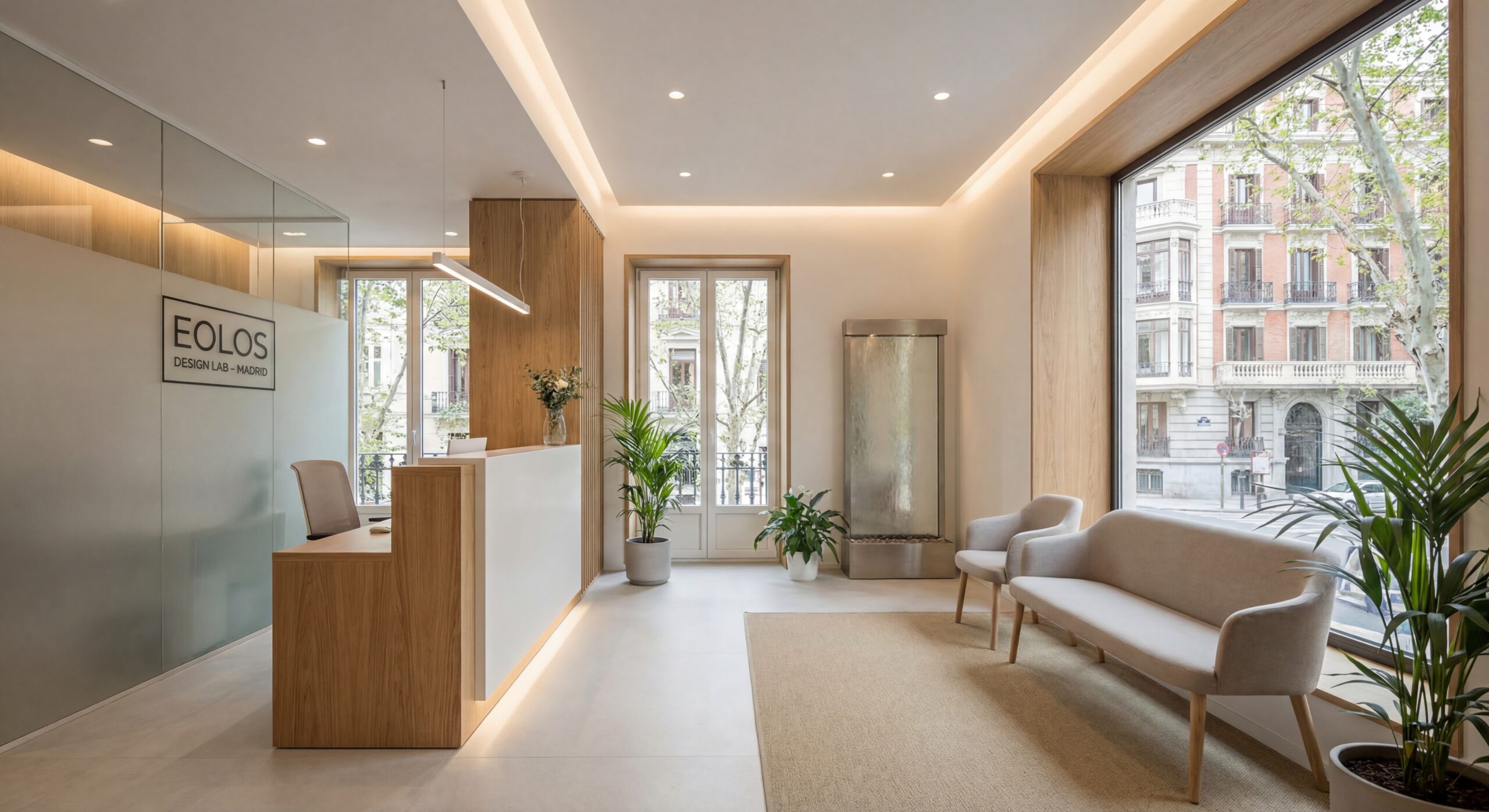
68% patients state that the appearance of a clinic influences their perception of the quality of medical service. It's not superficial: it's patient psychology.
A well-designed clinical space not only provides reassurance, it turns first-time visits into repeat patients, justifies private pricing, and generates organic referrals.
This article demonstrates, through real-world examples, how the strategic design of medical and dental clinics directly impacts patient anxiety, conversion rates, average ticket price, and profitability. It's not just decoration. It's preventative medicine applied to the physical space.
The hidden cost of a clinic that looks like a clinic
Real case: Dental clinic with 3 offices, Chamberí
Initial situation (traditional clinical setting):
- Waiting room: chairs in a row, cold overhead light, white walls, old magazines
- Smells like a "clinic" (strong disinfectant)
- Functional but impersonal consulting rooms
- Conversion first visit → treatment: 34%
- Average treatment cost: €680
- Word-of-mouth recommendations: 1.8 per active patient
- Google Reviews: 4.1/5 (with comments about “cold atmosphere”)
After redesign (investment €85,000):
- Conversion first visit → treatment: 52% (+53% relative)
- Average ticket: €890 (+31%)
- Patients who actively recommend: 3.4 per patient
- Reviews: 4.7/5
- Average decision time for treatments >€1,500: reduced from 8.2 days to 3.1 days
- ROI: Investment recovered in 11 months via increased conversion and ticket size
What specifically changed?
- Boutique hotel style waiting room (not a hospital waiting room)
- Elimination of “sensory cues of anxiety” (smell, cold light, stressful sounds)
- Reassuring consulting rooms through light, color, and natural elements
- Visible technology (sign of professional competence)
- Acoustic and visual privacy rigorous
Why design affects clinical (and commercial) outcomes
The neuroscience of patient anxiety:
When a patient enters a clinic, their nervous system scans the environment for “threat signals”:
Signs that increase anxiety:
- Excessive hospital whiteness (association with pain/surgery)
- Cool fluorescent overhead lighting (similar to an operating room)
- Strong smell of disinfectant (reminds you of previous negative experiences)
- Medical sounds audible from the waiting area (dental drill, instruments)
- Lack of visual/acoustic privacy
- Depersonalized spaces (factory-like feeling)
Consequences of high pre-consultation anxiety:
Dental clinics:
- Pain perception increases 2.1-2.8x (University of Toronto studies)
- Patients refuse recommended treatments: +34%
- Appointment cancellations: +28%
- Negative reviews mention “fear” or “anxiety”: 3.2x more
General medical clinics:
- Lower adherence to complex treatments: -31%
- Patients perceive consultations as “cold/dehumanized”
- Less likely to return for preventative checkups
- Negative word-of-mouth
Aesthetic clinics:
- Purchase decision is delayed (more consultations before deciding)
- Average price is low (they choose conservative treatments due to distrust)
- Price sensitivity increases
The solution: Design that miscalibrates the stress response
When the environment is welcoming, warm, and “doesn’t feel like a clinic,” the nervous system relaxes. Result:
- Patient more receptive to recommendations
- Perception of pain decreases
- Faster treatment decision
- Greater post-consultation satisfaction
- Positive reviews mentioning “relaxing atmosphere”
The 8 critical areas of strategic clinical design
1. Facade and exterior identity (5 seconds decision)
Before entering, the patient makes a judgment. The facade conveys professionalism, modernity, and warmth.
Critical elements:
A) Professional signage
- Illuminated 3D letters (not cheap vinyl)
- Legible and elegant typography
- Consistent with brand identity
- Visible from 20-30 meters
Budget: €1,500-4,500
B) Strategic showcase/window
- If you have a window facing the street: use it to humanize
- Plants, visible warm light, interior design that looks good
- NEVER: closed curtains or completely opaque vinyl (generates distrust)
- Frosted vinyl with branding (privacy + identity)
Budget: €400-1,200
C) Accessible and welcoming entrance
- Quality door (not institutional white aluminum)
- Clear doorbell/intercom
- Barrier-free access (ramp if there is a step)
- Visible signage of opening hours
Budget: €800-3,000
Case: Arturo Soria Dental Clinic
It changed from a white institutional facade with small letters to:
- Natural wood facade + black metal
- Large backlit corporeal letters
- Shop window with plants + warm light
Result: First visits from the street (walk-ins) +47% in 6 months.
Total budget for the facade: 2.700-8.700€
📬 Subscribe and receive exclusive content on clinical design
Real-world case studies, conversion strategies, updated budgets, and healthcare design trends that work.
✓ Specific guidelines by medical specialty
✓ ROI analysis in real projects
✓ Common mistakes and how to avoid them
✓ Monthly content, zero spam
2. Reception: the first human contact (first 30 critical seconds)
The reception sets the emotional tone for the entire experience.
Common mistakes:
- High bank-style counter (psychological barrier)
- Visibly multitasking receptionist (phone + computer + patients = perceived chaos)
- Institutional methacrylate partition
- Visible storage (filing cabinets, papers, clutter)
- Office lighting
Strategic solution:
A) Cozy height counter
- 90-100cm tall (not institutional 110-120cm)
- Warm design (wood, elegant composites)
- Space for comfortable face-to-face interaction
- Hidden storage underneath
Budget: €2,000-€5,500
B) Visually separated back-office area
- A receptionist should not be "exposed" to everything
- Subtle separation with panel/shelf
- It allows for concentration without seeming inaccessible.
C) Integrated but invisible technology
- Recessed or arm-mounted screens
- Concealed cable management
- Tablet for digital check-in (optional premium)
- Patient call/notification system
Technology budget: €1,200-3,500
D) Humanizing elements
- Plant on counter
- Warm spot lighting
- Water/tea available (visible)
- Clear and friendly signage
Case: Fertility clinic, Pozuelo
He changed the impersonal high counter to:
- Boutique hotel desk (90cm height)
- Patient coordinator seated (not standing on a barricade)
- Tea area with porcelain cups
- Warm, residential-style lighting
Result: “First impression” satisfaction surveys: 6.8/10 → 9.1/10
Total reception budget: 3.200-9.000€
3. Waiting room: anxiety or calm (everything is defined here)
The waiting room is where the patient spends 5-20 minutes anticipating the appointment. If they become stressed here, they arrive at the consultation room with elevated cortisol levels.
The mistake of the “miniature hospital”:
Chairs in a row, cold light, TV with news, old magazines, total white, uncomfortable silence or audible medical sounds.
The solution: a residential lounge-style waiting room
A) Comfortable and diverse furniture
- Sofas + individual armchairs (not just chairs)
- Variety of seats (allows you to choose)
- Side tables for putting things on
- Distance between seats (privacy)
Budget: €3,500-€8,000 (6-12 seats)
B) Layered lighting (never a single overhead light)
- General diffused lighting (ceilings with diffusers, downlights)
- Floor or table lamps (warm indirect light)
- Color temperature: 2700-3000K (warm, relaxing)
- Intensity control according to time of day
Budget: €2,500-€5,500
C) Color and calming materials
- Palette: soft blues, greens, beiges, warm grays
- AVOID: Pure white (hospital association)
- Textures: natural wood, soft textiles, plants
- A warm visual accent (painting, subtle wallpaper, wood paneling)
D) Controlled sound
- Soft ambient music (studies show it reduces anxiety 23%)
- Low volume (almost subliminal)
- Genres: soft jazz, classical, ambient, nature sounds
- NEVER: Watch TV with news (it causes stress)
Audio system budget: €400-1,200
E) Elements of positive distraction
- Aquarium (proven calming effect) or nature video
- Large natural plants (biophilia)
- Recent and curated magazines (design, travel, lifestyle – no gossip)
- Coffee table books
- Water/infusions available (elegant self-service)
Budget: €1,500-4,000
F) Privacy and acoustics
- Conversations in reception should NOT be overheard while waiting.
- Soundproofing between waiting room and consulting rooms (no more hearing dental drills)
- Decorative acoustic panels if needed
Acoustic budget: €2,000-€5,000
G) Useful information without overwhelming
- Digital screen with educational content (not aggressively promotional)
- Treatments explained visually
- Success stories (with patient permission)
- Before/after photos at aesthetic clinics
Case: Children's Dental Clinic, Arturo Soria
“Magic Forest” themed waiting room:
- Murals of friendly trees and animals
- Grass-like carpet
- Mushroom-shaped beanbag chairs for children
- Integrated but not chaotic play area
- Firefly-type lighting (hidden LED strips)
- Ambient nature sounds
Result:
- Pre-consultation childhood anxiety: -58% (measured scale)
- Parents report a “very different” experience from traditional clinics
- Reviews specifically mention the waiting room: 76%
Waiting room investment: €18,000 (40m², high design) Payback: 8 months via increased conversion and premium pricing
Total budget for a standard waiting room (25-35m²): 9.900-23.700€
4. Consulting rooms: functionality + tranquility
The practice should communicate: “You are safe here. This is professional. Trust us.”
Critical balance: Visible technology (competence) + warm environment (emotional security)
Strategic elements:
A) Professional but not surgical lighting
- General lighting: 3500-4000K (neutral, professional but not cold)
- Work light: focused, adjustable
- Indirect perimeter lighting: warm (2700K) to reduce anxiety
- NEVER: only cold overhead lighting (operating room feel)
Lighting budget per consulting room: €1,500-€3,500
B) Color on ceilings or strategic walls
- In dental clinics: the patient looks at the ceiling
- Painting the ceiling in a soft color (sky blue, mint green) reduces anxiety
- Alternatively: decorative vinyl decals on the ceiling
- Walls: warm neutral colors (not cold, institutional white)
Budget: €300-1,200 per consulting room
C) Natural elements
- Plants (even just one)
- Image of nature visible from patient's position
- Wood in furniture or paneling
- Textiles (technical curtains that look residential)
D) Technology as a sign of competence
- Modern and visible medical equipment
- Screens to display diagnoses/explanations
- Intraoral camera in dental offices (demonstrates professionalism)
- Everything clean, tidy, and well maintained
E) Acoustics and privacy
- Soundproofing between consulting rooms (conversations should NOT be audible)
- High-quality door with acoustic sealing
- Decorative acoustic panel if needed
Budget per consulting room: €1,800-€4,500
F) Thermal comfort
- Independent climate control for each consulting room
- Adjustable temperature 21-23°C
- No drafts
G) Elements that humanize
- Family photo of the doctor (humanizes him)
- Diplomas/certifications (professionalism)
- Balance between “competent” and “accessible”
Case: Aesthetic medicine clinic, Salamanca
Consulting rooms designed as “medical spas”:
- Multi-layer lighting with scene control
- Warm beige walls with a wooden panel
- Spa-type treatment table (not a hospital bed)
- Personalized background music
- Subtle aroma (diffuser with natural oils)
- Screen for visualizing 3D treatments
Result:
- Conversion in treatments >€2,000: 41% → 67%
- Decision time: -62%
- Average ticket price: +€890
- Reviews mention “relaxing atmosphere” in 81%
Investment per office: €12,000 Payback: 4 months
Standard medical office budget: 8.000-15.000€ Premium dental/cosmetic clinic quote: 15.000-28.000€
Do you need help with your clinic project?
At EOLOS Design Lab we design medical and dental clinics that reduce patient anxiety and increase conversion through evidence-based design.
Complete the form and receive:
✅ Free initial consultation (30 minutes)
✅ Feasibility analysis of your project or renovation
✅ Investment estimate customized by specialty
✅ Guaranteed response in less than 24 business hours
Tell us: your specialty, available square meters, number of consulting rooms, and estimated budget. We'll help you transform your clinic into a space that inspires trust and delivers results.
5. Areas of specialized treatment (according to type of clinic)
Dental clinics: hygiene/cleaning room
- Less intimidating than a main office
- It can be more “open” and bright
- Relaxing music always
- Pleasant view if possible
Physiotherapy clinics: treatment rooms
- Visual privacy (technical curtains or partitions)
- Adjustable warm lighting
- Changing area (screen or separate area)
- Slightly elevated temperature (muscle comfort)
Aesthetic clinics: procedure room
- Absolute visual hygiene (all white/steel but with warm elements)
- Technical but not cold lighting
- Ambient music
- Recovery area with armchair
comfortable
Budget by specialized area: 6.000-18.000€
6. Bathrooms: small but critical
Patients judge cleanliness and professionalism by the bathroom.
Non-negotiable standards:
- Impeccable cleanliness (obvious but critical)
- Quality finishes (large tiles, good faucets)
- Adequate lighting (illuminated mirror)
- Amenities (quality liquid soap, not an industrial dispenser)
- Subtle air freshener (not harsh chemicals)
- Minimal but tasteful decoration
Budget per bathroom: €3,500-€7,000 (complete renovation)
7. Staff area (back-office)
Where the team spends time between patients. It affects morale and therefore service.
Essential elements:
- Space to sit (not just stand)
- Microwave + refrigerator + coffee maker
- Natural lighting if possible
- A rest area, even if it's small.
- Lockers for belongings
A team with a good workspace: better patient care.
Budget: €2,500-€6,000
8. Signage and wayfinding
When the patient asks "where is the bathroom?" your design failed.
Signaling system:
- Clear, visible, in relevant languages
- Style consistent with branding
- Universal iconography + text
- Well-lit if it's a large clinic
Budget: €800-2,500
Color palettes according to clinical specialty
Color affects psychology. Use it strategically.
Dental clinics:
- Base: off-white + light beige
- Accents: soft blue (tranquility), mint green (freshness)
- Avoid: red (anxiety), black (oppressive)
General medicine clinics:
- Base: warm gray + off-white
- Accents: sage green (health), grayish blue (confidence)
- Natural wood (warmth)
Aesthetic medicine clinics:
- Base: nude/cream tones
- Accents: gold/bronze (luxury), pale pink (femininity without being childish)
- White for technical areas
Physiotherapy clinics:
- Base: beige + stone grey
- Accents: forest green, petrol blue (nature, movement)
- Abundant wood
Pediatric clinics:
- Base: white + pastel colors
- Accents: softened (unsaturated) primary colors
- Playful motifs without being chaotic
Fertility/gynecology clinics:
- Base: warm neutral tones
- Accents: rose quartz, sage green, pale blue
- Cozy, almost residential atmosphere
Actual budgets according to type and size of clinic
Dental clinic with 3 consulting rooms (120-150m²)
Comprehensive renovation, medium-high level:
- Civil works + installations: €12,000-18,000
- Custom reception: €4,500
- Waiting room (30m²): €12,000
- 3 fully equipped consulting rooms: €39,000 (€13,000 each)
- Hygiene room: €9,000
- Sterilization area: €8,000
- 2 renovated bathrooms: €10,000
- Comprehensive lighting: €9,000
- Zoned climate control: €11,000
- Technical floors: €6,000
- Painting + finishing: €5,500
- Signage + spatial branding: €3,000
- Common furniture: €4,000
TOTAL: €133,000 – €160,000 Per m²: €910 – €1,200/m²
Expected ROI:
- Conversion increase: +35-50%
- Average ticket: +20-30%
- Payback: 10-16 months
Individual medical office (40-60m²)
Complete renovation:
- Construction + installations: €4,000-6,000
- Integrated reception/waiting area: €6,000
- Main office: €11,000
- Bathroom: €4,500
- Lighting: €2,500
- Air conditioning: €3,500
- Finishes: €3,000
- Furniture: €3,500
- Branding: €2,000
TOTAL: €40,000 – €52,000 Per m²: €860 – €1,000/m²
Multi-specialty clinic 250-350m²
Premium renovation:
- Complete civil works: €35,000-€50,000
- Receipt statement: €12,000
- Spacious waiting room: €25,000
- 6-8 consulting rooms: €90,000
- Specialized treatment rooms: €35,000
- Auxiliary areas: €20,000
- Architectural lighting: €25,000
- Air conditioning for comfort zone: €28,000
- Premium finishes: €22,000
- Complete furniture: €35,000
- Integrated technology: €18,000
- Space branding + art: €12,000
TOTAL: €357,000 – €470,000 Per m²: €1,190 – €1,560/m²
Common mistakes that kill conversion
Error 1: “Clinic that seems too clinical”
The symptom: New patients comment that it's "scary" or "very cold." Conversion rate is low for optional treatments.
Why does it happen? Design focused on medical functionality, zero attention to the patient's emotional experience.
The solution: A balance between professional and welcoming. Technology + warmth. Competence + spatial empathy.
Cost of error: Conversion -30-45%, limited pricing, weak word-of-mouth
Error 2: Non-existent acoustics
The symptom: Patients waiting can hear conversations/treatments in the consulting rooms. This creates a feeling of lack of privacy.
Why does it happen? Soundproofing is skimped on to save money.
The solution: Soundproofing is a mandatory investment, not optional. It fundamentally affects trust.
Cost of error: Negative reviews regarding privacy, uncomfortable patients, and loss of trust
Error 3: Office lighting in waiting room
The symptom: Uncomfortable environment, patients report high anxiety.
Why does it happen? Cheap standard lighting is installed without considering the psychological impact.
The solution: Layered lighting with a warm temperature. 30% of the emotional impact of the space.
Cost of error: High anxiety = lower conversion rate + worse experience
Error 4: Strong institutional odors
The symptom: The smell of hospital disinfectant pervades the entire clinic.
Why does it happen? Strong industrial cleaning products. Insufficient ventilation.
The solution:
- Cleaning products with neutral or natural fragrances
- Adequate forced ventilation
- Subtle diffusers of natural aromas on standby (lavender, citrus)
- NEVER use harsh chemical air fresheners
Cost of error: Immediate negative association, increased anxiety
Error 5: Obsolete or invisible technology
The symptom: Patients doubt the professional competence because the equipment looks old.
Why does it happen? Investment is made in design but not in updating visible medical equipment.
The solution: Medical equipment should look modern and well-maintained. It's a sign of professionalism.
Cost of error: Distrust in technical capacity, lower conversion rate in complex treatments
Technology in clinics: visible vs invisible
Technology that must be visible (sign of competence):
- Modern medical equipment
- Screens to explain diagnoses
- Intraoral camera (dental)
- 3D scanner (cosmetic/orthodontic)
- Laser/advanced treatment technology
Technology that must be invisible (experience):
- Automated appointment management
- Appointment call system (digital screens or app)
- Air conditioning (silent, effective)
- Smart lighting
- Ambient music
- Patient management system
Visible technology budget: €15,000-€60,000 depending on specialty Invisible technology budget: 8.000-18.000€
Sustainability in clinics
Patients value clinics with environmental awareness, especially young people and families.
Applicable sustainable elements:
Total LED lighting:
- Energy saving 70%
- ROI: 2-3 years
- Investment: +15% vs halogens
Efficient climate control:
- VRV or aerothermal
- Energy saving 40%
- ROI: 5-7 years
Digital management of records:
- Paper reduction 80-90%
- Space saving storage
- Better for privacy (GDPR)
Eco-friendly cleaning products:
- Fewer harsh chemicals
- Better for sensitive patients
- Premium: +8-12% cost
Sustainable materials:
- FSC certified wood
- VOC-free paints
- Furniture with certifications
Additional investment in sustainability: +8-12% of the budget Benefit: Brand differentiation + reduced operating costs
Working with EOLOS in your clinic
We designed medical and dental clinics in Madrid that increased conversion and average ticket through evidence-based design.
Our approach:
1. We understand your patient first
- Demographic and psychographic profile
- Typical anxiety level by specialty
- Decision-making process (urgent vs. elective)
- Price sensitivity
2. We design with applied neuroscience
- Elements that reduce anxiety (proven)
- Signs of professionalism that build trust
- Balance of medical functionality + emotional experience
3. We optimize for conversion
- Not only is it "pretty", but it turns visits into repeat patients
- Justify private pricing without resistance
- Generate organic recommendations
4. Guaranteed regulatory compliance
- We are familiar with Madrid's health regulations.
- Coordination with healthcare project manager if required
- Managed permits and licenses
Investment in design: 10-14% of the total cost
📬 Subscribe to our strategic design newsletter
Receive real-world case studies, up-to-date budgets, and design strategies that work for growing businesses.
✓ Practical guides and ROI analysis
✓ Trends with data, not opinions
✓ Common mistakes (and how to avoid them)
✓ Only useful content, zero spam
Timing and planning
Typical clinical project timeline:
Phase 1: Strategy + briefing (2-3 weeks)
- Patient profile analysis
- Study of medical workflows
- Definition of technical needs by specialty
- Conversion goals and experience
- Budget and timing
Phase 2: Design (4-6 weeks)
- Optimized distribution plants
- Visual concept and mood boards
- Sanitary technical specifications
- Selection of materials and furniture
- Detailed lighting and acoustics
- Budget closed
Phase 3: Permits (2-6 weeks)
- Healthcare activity license (if applicable)
- Minor works permits
- Installation certificates
- Health registration (according to specialty)
Phase 4: Implementation (6-10 weeks)
- Demolition and preparation: 1 week
- Civil works + installations: 3-4 weeks
- Finishing and carpentry: 2-3 weeks
- Furniture and installation: 1-2 weeks
- Medical equipment: 1 week
- Final cleaning and styling: 3-5 days
Phase 5: Start-up (1 week)
- Team building in new spaces
- Technology testing
- Professional photography
- Opening
Total timeline: 4-6 months from decision to opening
Can I continue seeing patients during the construction?
It depends on the scope:
Complete renovation: NO
- It requires temporary closure
- Alternatives: temporary space, referring to colleagues, scheduled vacations
Phased reform: YES (with limitations)
- Work by alternating consulting rooms
- More time (+40%) and cost (+15-20%)
- More inconvenience for current patients
- Only viable if you have 3+ consulting rooms
Cosmetic Renewal: YEAH
- Painting, lighting, furniture
- Work on weekends/evenings
- Minimal interruption
Recommendation: If you can close for 2-3 months, do it. The result is better and the cost is lower.
Success stories with real numbers
Case 1: Family dental clinic, Pozuelo
Aim: Increase conversion to invisible orthodontics (high-ticket treatment: €3,500-€4,800)
Problem: Functional clinic but with a "90s" atmosphere. Patients requested multiple quotes before deciding. Orthodontic conversion: 28%.
Design solution:
- Waiting room transformed into a contemporary lounge
- Consulting rooms with ceilings painted in soft blue
- Separate treatment presentation area (not in the office)
- 3D screens for visualizing orthodontic results
- Multi-layered warm lighting
- Background music throughout the clinic
- Subtle aroma (fresh mint)
Investment: €132,000 (140m², €943/m²)
Year 1 Results:
- Orthodontic conversion: 28% → 51% (+82% relative)
- Average orthodontics ticket: €3,890 → €4,420
- Decision time: 12.3 days → 4.1 days
- Patients who come by referral: +61%
- Google Reviews: 4.2 → 4.8
- Annual revenue: +€340,000
ROI: 10.8 months
Doctor's quote: “I didn’t think design could have such an impact. Patients now make decisions during the same visit. And the best part: they come recommended because 'it’s the most beautiful clinic they’ve ever seen'.‘
Case 2: Aesthetic medicine clinic, Salamanca
Aim: Position yourself in the premium segment (competing with Dorsia, Felicidad Carrera)
Problem: Clinic in a generic commercial space. Competitive prices but low conversion rate for treatments over €1,500. Average ticket price: €680.
Design solution:
- Luxury boutique-style entrance (not a clinic entrance)
- Reception area with marble, brass, and architectural lighting
- 5-star spa-style waiting room (velvet sofas, art, XXL plants)
- Consulting rooms designed as private “suites”
- Recovery area with chaise longue + premium tea
- Boutique hotel-level complimentary bathroom
- Artistic photography of natural beauty (no aggressive before/after shots)
- Custom fragrance developed specifically
Investment: €185,000 (160m², €1,156/m²)
Year 1 Results:
- Average ticket: €680 → €1,240 (+82%)
- Conversion in treatments >€2,000: 31% → 68%
- Treatment price increased 35% without resistance
- New patients by referral: +94%
- Mentioned in Vanity Fair magazine as “most exclusive clinic in northern Madrid”
- Annual revenue: +€580,000
ROI: 7.2 months
Case 3: Physiotherapy center, Retiro
Aim: Differentiate yourself from neighborhood physiotherapists and franchise (generic) centers
Problem: Functional fitness center in a commercial space. It feels like a "municipal gym". It's difficult to retain patients after recovery. Average price: €45/session.
Design solution:
- “Wellness center” concept vs. traditional physiotherapist
- Reception area with natural wood + plants + warm light
- Waiting area with health/movement library
- 5 semi-open treatment rooms (white technical curtains)
- Therapeutic exercise area with wooden floor + large mirrors
- Maximized natural lighting + warm artificial
- Changing rooms with showers (adds perceived value)
- Palette: white + wood + forest green
- Spatial branding elements (subtle motivational phrases)
Investment: €78,000 (110m², €709/m²)
Year 1 Results:
- Patients continuing post-recovery (maintenance): 18% → 47%
- Average ticket price: €45 → €52 (wellness services added)
- Conversion of 10-session vouchers: 22% → 61%
- Corporate patients (nearby companies): +12 agreements
- Reviews mentions “relaxing atmosphere” in 71%
- Annual revenue: +€125,000
ROI: 14.6 months
Physiotherapist's appointment: “Now we compete with spas, not with other local physiotherapists. Patients pay without haggling because they perceive premium value.”
Does your clinic need strategic evolution?
At EOLOS Design Lab we design clinics that increase conversion, reduce patient anxiety, and justify premium pricing.
Complete the form and receive:
✅ Free initial consultation (30 minutes)
✅ Specific analysis for your medical specialty
✅ Investment estimate and ROI personalized
✅ Guaranteed response in less than 24 business hours
Tell us: your specialty, available square meters, number of consulting rooms, and business objectives. We'll help you transform your clinic into a space that inspires trust and delivers measurable results.
Frequently Asked Questions
How much does it really cost to renovate a clinic in Madrid?
It depends on size and scope:
- Private office (40-60m²): €40,000-€52,000
- Dental clinic with 3 consulting rooms (120-150m²): €133,000-€160,000
- Multi-specialty clinic (250-350m²): €357,000-€470,000
Per m²: €860-1,560/m² depending on the level of finishes.
Is medical equipment included in these budgets?
NO. Budgets include:
- Civil works and finishes
- Lighting and air conditioning
- General furniture (reception, waiting area, desks)
- Signage and spatial branding
Specific medical equipment (dental chairs, lasers, etc.) is separate and varies greatly by specialty.
How long is the return on investment period realistic?
Based on our projects:
- Well-designed clinics: 10-18 months
- Premium positioning clinics: 7-14 months
- Clinics without a change in strategy (only aesthetics): 20-36 months
ROI depends on:
- Conversion increase
- Ability to raise prices
- Increase in patients by recommendation
Do I need to close the clinic during the construction work?
Recommended but not always required:
- Complete renovation: ideal closure 6-10 weeks
- Cosmetic renovation: you can operate (night work/weekends)
- Phased renovation: possible but more expensive and slower
What permits do I need?
In Madrid:
- Business license (if it is a change of use)
- Minor works permit (if there are structural changes)
- Electrical installation certificate
- Health registration (according to specialty)
- Liability insurance
Specialized administrative services: €1,500-€3,500 + municipal fees
Does design really affect patient conversion?
Yes, with evidence:
- University of Sheffield studies: clinical environment affects pre-treatment anxiety -42%
- Clinics with strategic design: conversion +30-55% vs traditional clinics
- Impact on elective treatment decisions: -60% decision time
It's not magic. It's applied environmental psychology.
Can I do the renovation with a smaller budget?
Yes, with prioritization:
- Priority 1: Waiting Room (40% emotional impact)
- Priority 2: Lighting (30% impact)
- Priority 3: Acoustics (20% impact – especially privacy)
- Priority 4: Consulting rooms (10% if functional)
You can do a “phase 1” renovation focused on waiting room + lighting for 30-40% of the total budget and see the impact.
How do I know if my clinic needs renovation?
Clear signs:
- Reviews mention “old”, “cold”, “scary”
- First Visit Conversion Rate <40%
- Patients request multiple quotes before deciding
- Difficulty in justifying private prices
- Your competition has more modern spaces.
- Last renewal +7 years ago
Do you work with all medical specialties?
Yes. Specific experience in:
- Dental clinics (15 projects)
- Aesthetic medicine (8 projects)
- Physiotherapy (6 projects)
- General Medicine (4 projects)
- Fertility clinics (2 projects)
- Pediatrics (3 projects)
Each specialty has specific requirements that we are aware of.
Conclusion: Your clinic is your most powerful conversion tool
In 2025, patients will choose a clinic based on:
- Recommendations (40%)
- Online Reviews (35%)
- Space appearance in photos (25%)
Your design directly affects all three factors.
The numbers don't lie:
A well-designed clinic:
- Reduces patient anxiety 35-50%
- Increase conversion 30-55%
- Justifies pricing 20-40% higher
- Generates 2-3x more recommendations
- Improved reviews 0.5-1.2 points
Typical ROI: 10-18 months
The design of your clinic is not cosmetic. It's strategic.
Every decision impacts your bottom line:
- Waiting room = first impression = conversion
- Lighting = anxiety level = experience
- Acoustics = privacy = trust
- Consulting rooms = perceived professionalism = pricing
- Visual cohesion = brand strength = recommendations
The fastest-growing clinics in Madrid aren't those with the best medical technology (that's a commodity). They're the ones that understand they heal with medicine AND experience.
Your patient is not just a clinical case. They are a human being with anxiety, doubts, and a need to feel safe.
The space you design can either increase that anxiety or dissolve it.
It can generate trust or distrust.
It can justify your prices or force you to compete for the cheapest.
The decision is yours. The numbers are clear.
📬 Subscribe and receive exclusive content on clinical design
Real-world case studies, conversion strategies, updated budgets, and healthcare design trends that work.
✓ Specific guidelines by medical specialty
✓ ROI analysis in real projects
✓ Common mistakes and how to avoid them
✓ Monthly content, zero spam
Do you need help with your project?
At EOLOS Design Lab we design commercial spaces that generate measurable results: more customers, better experience, greater profitability.
Complete the form and receive:
✅ Free initial consultation (45 minutes)
✅ Feasibility analysis of your project
✅ Investment estimate personalized
✅ Guaranteed response in less than 24 business hours
Whether it's a restaurant, hotel, office, clinic or retail space: tell us about your project and we'll help you make it a reality.