
Guide
Design of a Boutique Padel and Tennis Club that Justifies Premium Fees (Madrid 2026)
Subscribe to our newsletter!
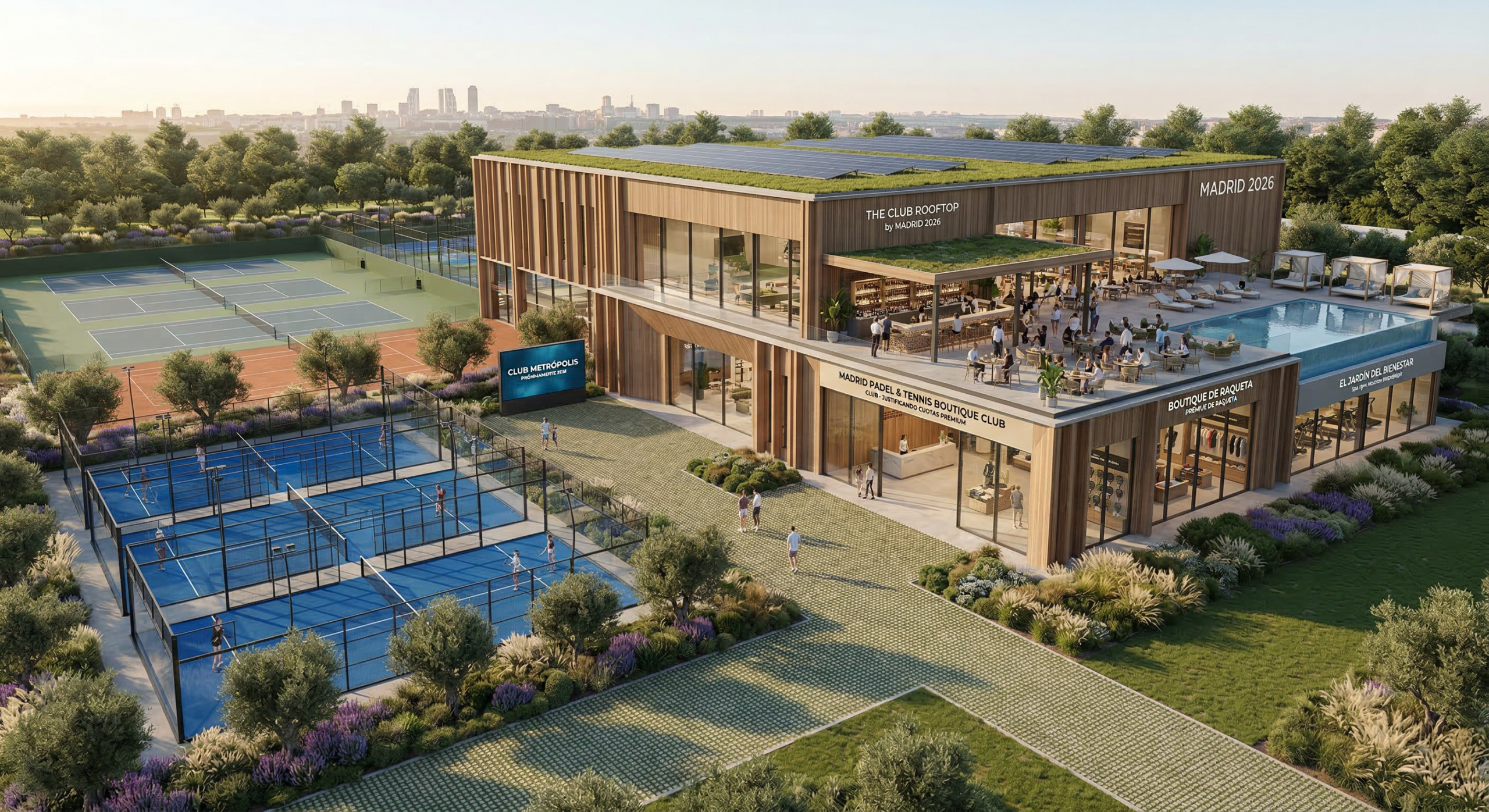
Padel in Madrid has gone from being a neighborhood sport to the trendiest sport, boasting one of the most active facility markets in Europe. The problem is that most of the new clubs have been built focusing on the court itself and neglecting everything else.
The boutique club, which will be operating in Madrid in 2026, is distinguished not only by the quality of its courts. It's distinguished by everything surrounding the courts: the changing rooms, the social area, the cafeteria, the reception. It's the entire package that justifies a monthly fee of 120 euros compared to 40 euros for a municipal sports center.
The elements that make a top-level sports club
The changing rooms: where membership renewals are decided
The changing rooms are the most intimate space in the club and the one that has the greatest impact on the decision to renew a membership. Members who use the changing rooms four times a week subconsciously make this assessment on each visit: Does this club take care of this space? Is it clean? Can the materials withstand daily use? Do I feel comfortable here?
A boutique club changing room needs: designer lockers with a modern locking system, a shower with good flow and stable temperature, lighting that is not cold fluorescent, non-slip flooring that doesn't look like a sports center, and a level of maintenance that is evident in the details.
The social zone: where community is built
A padel or tennis club with just courts is a place to play. A club with a well-designed social area is a place where people want to be before and after playing. And the time members spend at the club off the court generates additional spending and fosters loyalty.
The social area needs comfortable furniture, good lighting, a view of the courts if possible, and a well-functioning bar or café. It's the heart of the club and the space that most influences the decision to recommend it to others.
Track lighting: performance and aesthetics
The lighting for courts in an indoor padel or tennis club must fulfill two functions: ensuring players can clearly see the ball (a technical requirement for uniformity and lux level) and making the space look good in photos and in person. High-quality LED lighting for sports courts costs more than standard lighting, but the energy savings pay for themselves in 3-4 years, and the visual impact is immediate.
Actual budget: 4-court padel club in Madrid
- Padel courts (4 units, structure and installation): 120,000-180,000 euros
- Technical LED track lighting: 20,000-35,000 euros
- Wardrobes (2 complete units): 30,000-50,000 euros
- Social area and cafeteria: 25,000-45,000 euros
- Reception and access: 10,000-18,000 euros
- Project and management: 14,000-24,000 euros
- Total: 219,000-352,000 euros
A padel club in Madrid with four courts, 200 members at €95 per month, and 80 weekly rentals by non-members at €20 per hour, generates around €25,600 in revenue per month. The difference between the €60 and €95 monthly membership fees, partly justified by the quality of the facilities, represents an additional €7,000 per month with the same 200 members.
Are you building or renovating a padel or tennis club in Madrid?
Tell us the number of courts, the space available for common areas, and your desired price point. We design clubs that build member loyalty and justify premium fees.