
Guide
Hotel lobby design that increases direct conversion 34% and reduces dependence on OTAs (Madrid 2026)
Subscribe to our newsletter!
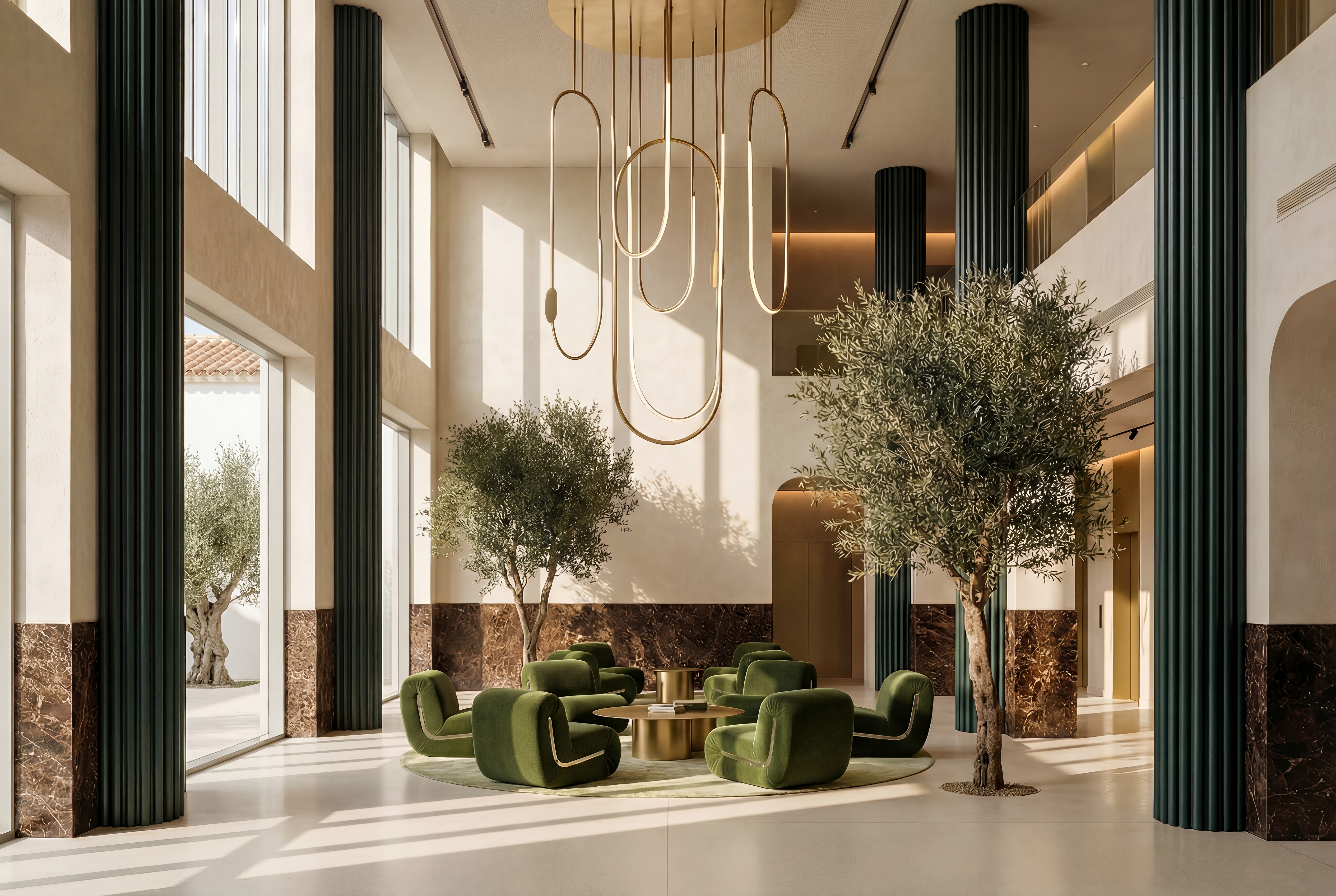
Your hotel lobby is not a waiting room. It's your most powerful marketing tool.
Hotels with strategically designed lobbies achieve 28-42% more direct bookings, reduce dependence on Booking/Expedia (saving €18k-€65k annually in commissions), and justify a higher ADR of 15-35% without market resistance.
This article demonstrates, with real-world examples and concrete figures, how lobby design directly impacts visitor conversion, booking channel mix, perceived value, and profitability. It's not just decoration. It's revenue management architecture.
The brutal cost of OTAs (and how design helps you reduce it)
The economic reality of the hospitality industry in 2026:
Boutique hotel with 22 rooms, Chueca, high OTA availability:
Mix of reservations:
- Booking.com: 58% of bookings (commission 18%)
- Expedia: 14% (commission 20%)
- Direct (own website): 18% (variable cost 3-4%)
- Traditional agencies: 10% (commission 12%)
Brutal math:
- Annual income: €840,000
- OTA commissions: €104,000/year
- Agency commissions: €10,000/year
- Total commissions: €114,000/year
After lobby redesign + direct conversion strategy:
Booking mix year 1 post-redesign:
- Booking.com: 38% (-20 points)
- Expedia: 9% (-5 points)
- Directs: 42% (+24 points)
- Agencies: 11% (+1 point)
New mathematics:
- Annual revenue: €1,020,000 (+21% for better ADR + occupancy)
- OTA fees: €70,000
- Agency commissions: €13,000
- Total commissions: €83,000/year
- Savings in fees: €31,000/year
- In addition: revenue increased by €180,000
Investment in lobby redesign: €65,000
ROI of lobbying:
- Just for the savings on fees: 25 months
- Considering total income increase: 4.3 months
- Actual ROI: 4.3 months
How did the lobby design achieve this?
How the lobby affects your channel mix (the connection no one tells you about)
The psychology of hotel bookings:
Phase 1: Initial search (OTA user)
- Customer searches on Booking/Expedia
- View room photos, location, and price
- He likes your hotel
- Critical decision: Should I book here or go directly to the website?
What influences going to a direct website:
- Professional photos of the lobby (sign of quality)
- Feeling “this hotel is special” (not a commodity)
- Curious to see more
- Perception of “there may be a better direct price”
Phase 2: On your direct website
- First impression: photos of the lobby
- If the lobby is generic/mediocre = “it’s the same as Booking, I’ll book there”
- If the lobby is spectacular = “this looks better, I’m going to explore”
- Direct web conversion depends on first images (lobby) 60%
Phase 3: During stay
- Customer physically experiences lobby
- If the lobby impresses me = “next time I’ll book directly”
- If the lobby disappoints = “next time I’ll look on Booking again”
Conclusion: The lobby is your primary visual argument for:
- Attract traffic from OTAs to your website
- Convert to direct website
- Generate direct repurchase
Real case: 18-room boutique hotel, Malasaña
Old lobby (functional but generic):
- Office counter-style reception
- Basic IKEA sofas
- Cold overhead lighting
- Zero personality
Web traffic:
- 4,200 direct website visits/month
- Conversion: 1.8%
- Direct bookings: 76/month
Redesigned lobby (investment €58,000):
- Boutique hotel reception (wood + brass)
- Lounge area with restored vintage armchairs
- Warm multi-layered lighting
- Mural by local artist
- XXL Plants
- Bookshelf with books + vinyl records
- Custom neon sign with hotel slogan
New web traffic:
- 6,800 visits/month (+62% – best CTR from OTAs)
- Conversion: 3.4% (+89%)
- Direct bookings: 231/month (+204%)
Economic impact year 1:
- OTA commission reduction: €28,000
- Total revenue increase (better ADR + occupancy): €156,000
- Payback for lobby investment: 3.7 months
💡 Is your hotel paying excessive commissions to OTAs?
At EOLOS we designed hotel lobbies in Madrid that reduced dependence on OTAs and increased direct bookings 28-42%.
Subscribe to our strategic design newsletter
Receive real-world case studies, up-to-date budgets, and design strategies that work for growing businesses.
✓ Practical guides and ROI analysis
✓ Trends with data, not opinions
✓ Common mistakes (and how to avoid them)
✓ Only useful content, zero spam
The 7 critical elements of lobbying that turn
1. First impression in 3 seconds: the moment of truth
The neuroscience of arrival:
When a guest enters your hotel, their brain does an instant scan (3-5 seconds) looking for answers to:
- Is this what you expected?
- Was it worth what I paid?
- Do I feel safe/comfortable here?
- Is it Instagrammable? (yes, the brain asks this question in 2026)
If the answer is “yes” at 4: High satisfaction + positive review + recommendation + immediate repurchase
If the answer is “no” or “meh”: Average satisfaction + lukewarm review + no recommendation + next time look on OTA
Elements of the first impression (in order of impact):
A) Lighting (40% of emotional impact)
Common mistake: Unique overhead lighting, cool temperature (4000K+), office/hospital feel
Solution:
- Layered lighting (ambient + focused + decorative)
- Warm temperature (2700-3000K)
- Minimum 3-5 different light sources
- Intensity control according to time of day
Budget: €4,500-€12,000 (lobby 40-60m²)
Case: 14-room hotel, Lavapiés
They only changed the lobby lighting (without touching anything else):
- Investment: €6,800
- Reviews mentioning “cozy atmosphere”: 34% → 78%
- Perceived value: +1.2 points (out of 10)
- NPS Improvement: +18 points
B) Visual focal point (25% of impact)
Your lobby needs ONE element that immediately captures attention:
- It could be: a statement lamp, an artistic mural, a living wall, a sculptural staircase, an art installation, a fireplace, or an iconic piece of furniture.
- It must be photogenic (it will be your most shared image)
- It must communicate your brand identity
Budget: €3,000-€18,000 depending on ambition
Real-world examples in Madrid:
Boutique hotel Salamanca: Contemporary chandelier, 3m high (€12,000)
- Appears in 82% of guest photos
- Immediate identification of the hotel on social networks
Hotel design Chueca: Mural by local urban artist occupying entire wall (€8,500)
- Specific mention in 67% of reviews
- Appearance on design blogs (free PR)
C) Reception (20% of the impact)
Mistake: High bank/barrier-type counter + overwhelmed multitasking receptionist
Solution:
- Reception design as a “boutique furniture piece”
- Height 90-100cm (accessible, not intimidating)
- Noble materials (wood, marble, metal, leather)
- Hidden storage (no visible clutter)
- Integrated but invisible technology
- The receptionist must be able to greet people while standing comfortably.
Budget: €4,000-€15,000
Case: Hotel with 26 rooms, Retiro
Old reception: white Ikea counter (€800), functional but zero personality
New reception: custom design in walnut + green marble + aged brass (€11,000)
Result:
- Reception photos on Instagram: +420%
- Check-in perceived as an “experience” not a “procedure”
- Reviews mention reception: 12% → 54%
D) Odor (10% of impact but very powerful)
The sense of smell is the sense most connected with memory and emotion.
Mistake: Smell of chemical cleaning, closed, neutral-negative
Solution: Strategic aromatization
- Custom or specifically selected fragrance
- Subtle diffusion (not overwhelming)
- Consistent with brand identity
Examples:
- Modern urban hotel: citrus notes + cedar (freshness + sophistication)
- Romantic boutique hotel: lavender + vanilla (warmth + comfort)
- Minimalist design hotel: white tea + bamboo (cleanliness + zen)
System budget: €800-€2,500 + consumables €40-€80/month
Impact: Hotels with strategic scenting have olfactory recognition. Guests report "I remember the smell, it transports me" in reviews.
E) Sound (5% of impact but critical if it fails)
Mistake: Uncomfortable silence or street/traffic noise
Solution: Sound design
- Carefully selected ambient music
- Low volume (almost subliminal)
- Genre consistent with identity (jazz, lounge, classical, indie)
- Sonos system or similar (easy control, quality)
Budget: €600-€2,000 + music subscription €15-€30/month
2. Check-in area: frictionless functionality
The problem with traditional check-in:
- Queue of guests waiting
- Slow process (5-8 minutes per guest)
- First interaction = waiting = frustration
Solution: a design that speeds up without losing warmth
A) Optional express check-in
- Tablet/self-service check-in kiosk for those who want speed
- Free up receptionist to give personalized welcome to those who value it
- Reduces average time to 2-3 minutes
B) Comfortable waiting area
- If there's a 2-3 minute wait, make it comfortable.
- Quality seating (not bank waiting room chairs)
- Table with water/infusions
- Excellent WiFi from the entrance
- Possibility of sitting with luggage nearby
C) Clear and visible information
- Breakfast times
- WiFi password (large, readable)
- Area map with recommendations
- QR code for complete digital info
Check-in area budget: €6,000-€18,000
3. Lounge/Lounge Area: The social heart of the hotel
A well-designed lounge area creates:
- Longer hotel stays (not just “sleep and go”)
- Food and beverage consumption if you have a bar/café
- Photogenic content (UGC – user generated content)
- A feeling of “it’s worth being here”
Critical elements:
A) Variety of seats
- Sofas for groups (2-4 people)
- Individual armchairs for working/reading
- High tables with stools for quick coffee
- It allows for different simultaneous uses
Furniture budget: €8,000-€25,000 (depending on size)
B) Plenty of side tables
- To leave a glass, laptop, book
- Nothing is more frustrating than not having anywhere to put your coffee.
C) Strategic Plugs
- At each table/armchair
- integrated USB ideal
- In 2026 this is basic, not a luxury
D) Customized lighting by zone
- Floor lamps near reading chairs
- Focused light on work tables
- Warm general ambient lighting
E) Shelves with curated content
- Books (real ones, not empty decorative ones)
- Current design/travel magazines
- Madrid guides (ideally some provided by the hotel)
- Decorative objects with a history
F) Plants (biophilia)
- Minimum 5-8 medium/large plants
- Hardy indoor species
- They give life, freshness, humanity
Budget for plants + designer pots: €1,200-€3,500
Case: 32-room hotel, Chamberí
Lobby with a spacious and well-designed lounge area:
- Guests using the lounge: 68% (vs 12% in a hotel with a generic lobby)
- Average time spent in the lounge: 47 minutes
- Additional F&B consumption: €4,200/month
- Guest photos in lounge: 340/month
- The lounge became a selling point
4. Reception of VIP/repeat guests: the invisible advantage
Smart hotels have a differentiated protocol for:
- Repeat guests
- Loyalty program members
- Direct bookings (incentive)
Design elements that facilitate this:
Discreet VIP area:
- 2-3 premium seats in a quieter lobby area
- Check-in there (not at general reception)
- Welcome drink
- Time without pressure
Budget: €2,500-€6,000 (specific furniture)
Benefit: VIP guests feel valued → direct repeat purchase ++
5. Instagramability: design for organic content
In 2026, your lobby is your most effective marketing if it is designed to be shared.
Elements that generate photos:
A) “Photo moment” designed
- A corner specifically designed for photography
- Beautiful background
- Perfect lighting
- Subtle signage (#YourHotelName)
B) Neon or lettering statement
- Phrase related to city/hotel
- Custom design
- Perfect for selfies
Budget: €1,500-€5,000
C) Mirror statement
- Large, with a designer frame
- Side lighting (favors photos)
- Strategic location
Budget: €800-€3,500
ROI of Instagrammable design:
16-room hotel, Malasaña:
- Post-lobby redesign: stories with hotel location +680%
- Reels showcasing lobbying: 120 in 6 months
- Estimated reach: 280,000 impressions
- Equivalent paid advertising value: €8,400
- Investment in Instagrammable elements: €6,200
- ROI: 9 months
6. Invisible but ubiquitous technology
Professional WiFi:
- Non-negotiable: must excel in all lobbying
- Minimum 100 Mbps per guest
- Separate guest/staff network
- Simple login (not 18 steps)
Information screens:
- Digital signage with updated information
- Events in Madrid
- Hotel services
- Climate
Budget: €1,200-€3,500
Digital check-in system:
- Tablet or kiosk
- Reduces friction
- Free up staff for hospitality
Budget: €800-€2,500
7. Flexibility: a lobby that adapts
The best lobbies work to:
- Check-in/out (main function)
- Workspace (digital nomads)
- Social (meetings, drinks)
- Small events (presentations, showcases)
Design that allows this:
- Modular/movable furniture
- Scene-adjustable lighting
- Technology (large screen, sound, projector if ambitious)
- Area that can be "closed" for private events
Additional budget flexibility: €3,000-€8,000
Benefit: Additional income from renting event space €800-€3,000/month
Do you need help redesigning your hotel lobby?
At EOLOS DESIGN LAB we designed hotel lobbies in Madrid that reduced dependence on OTAs by 20-35 points and increased ADR by 12-28%.
Complete the form and receive:
✅ Free initial consultation (30 minutes)
✅ Feasibility analysis from your current lobby
✅ Investment estimate and ROI personalized
✅ Guaranteed response in less than 24 business hours
Tell us: number of rooms, type (boutique/urban/business), estimated budget. We'll help you turn your lobby into a revenue-generating tool.
Actual budgets according to hotel type
Boutique hotel 12-20 rooms (lobby 35-50m²)
Comprehensive renovation, medium-high level:
- Demolition and preparation: €3,500
- Civil works (floors, walls, ceilings): €8,500
- Multi-layer lighting: €7,500
- Custom reception: €9,000
- Lounge furniture (sofas, armchairs, tables): €12,000
- Decoration (art, plants, textiles): €4,500
- Statement elements (neon, lamp, mural): €6,000
- Technology (WiFi, sound, screens): €3,200
- Aromatization: €1,200
- Signage and spatial branding: €2,500
TOTAL: €57,900 – €78,000, Per m²: €1,158 – €1,950/m²
Expected ROI: 4-8 months (via increased direct bookings + improved ADR)
City hotel 25-40 rooms (lobby 60-90m²)
Premium renovation:
- Complete civil works: €15,000
- Architectural lighting: €12,000
- Statement reception + back office: €15,000
- Spacious lounge area (furniture): €22,000
- VIP area/business corner: €6,500
- Curated decoration: €8,000
- Art installation/focal point: €12,000
- Integrated technology: €6,500
- Aromatherapy + sound: €3,000
- Digital signage: €4,500
- Space branding: €5,000
TOTAL: €109,500 – €145,000, Per m²: €1,217 – €1,933/m²
Expected ROI: 5-11 months
Corporate/business hotel 50-80 rooms (lobby 100-150m²)
Complete corporate restructuring:
- Base work and installations: €25,000
- Professional multi-layer lighting: €18,000
- Reception + express check-in area: €22,000
- Lounge furniture + business area: €35,000
- Informal meeting area: €12,000
- Advanced technology (screens, digital check-in): €12,000
- Decoration + art: €15,000
- Multiple focal points: €18,000
- Ambient systems (aroma, sound, climate): €6,000
- Complete signage: €7,500
TOTAL: €170,500 – €235,000, Per m²: €1,137 – €1,880/m²
Expected ROI: 7-14 months
Lobbying styles according to positioning
1. Contemporary boutique (the most versatile)
Pallette:
- Base: warm whites, beiges, soft grays
- Accents: terracotta, mustard, olive green, petrol blue
Materials:
- Natural wood (oak, walnut)
- Marble or terrazzo
- Metal (aged brass, copper, black steel)
- Natural textiles (linen, cotton, wool)
- Abundant plants
Lightning:
- Warm (2700-2900K)
- A mix of vintage and contemporary
- Statement lighting piece
Furniture:
- Restored vintage mix + contemporary design
- Unique pieces, not everything from a catalog
- Comfort without sacrificing style
It works for: Boutique hotels with 10-30 rooms, in trendy urban locations (Malasaña, Chueca, Lavapiés)
Typical investment: €1,400-€1,900/m²
2. Warm minimalist / Japandi
Pallette:
- Base: natural whites, sandy beiges, warm grays
- Accents: matte black, natural wood, understated green
Materials:
- Light wood (bleached oak, ash)
- Natural stone
- Organic textiles
- Handmade ceramics
- Rattan/wicker
Lightning:
- Diffuse, indirect
- Paper lamps (akari style)
- Mild warm temperature
Furniture:
- Clean, functional lines
- Low height (spacious feeling)
- Few elements but of the highest quality
It works for: Boutique hotels with 8-20 rooms, catering to clients seeking peace and quiet/disconnection.
Typical investment: €1,500-€2,100/m²
3. Industrially refined
Pallette:
- Base: concrete, exposed brick, metal
- Accents: black, rust, forest green, cognac leather
Materials:
- Exposed brick/concrete
- Black metal/rust
- Reclaimed wood
- Aged leather
- Steel and glass
Lightning:
- Loft/factory type but refined
- Edison bulbs, industrial pendants
- Neon as an accent
Furniture:
- Pieces with a strong character
- Vintage industrial mix + contemporary
- Robust yet comfortable
It works for: Hotels in historic/industrial buildings, Lavapiés, Malasaña, neighborhoods with character
Typical investment: €1,300-€1,850/m²
4. Contemporary Luxury
Pallette:
- Base: sophisticated neutral tones (grays, taupes, creams)
- Accents: gold, bronze, navy blue, emerald green
Materials:
- Quality marble (Calacatta, Emperador)
- Fine woods
- Precious metal (brass, bronze)
- Luxury textiles (velvet, silk, cashmere)
Lightning:
- Statement pieces (chandeliers, designer lamps)
- Multiple scene control
- Invisible integrated technology
Furniture:
- Signature design (Minotti, Poltrona Frau, B&B Italia)
- Custom-made parts
- Supreme comfort
It works for: 4-5 star hotels, Salamanca, Recoletos, upper Chamberí
Typical investment: €2,200-€3,500/m²
5. Maximalist eclectic (high risk, high reward)
Pallette:
- Base: neutral to balance
- Accents: multiple coordinated saturated colors
Materials:
- A mix of everything: vintage, contemporary, and handcrafted
- Statement Wallpaper
- Printed textiles
- Abundant art
Lightning:
- Dramatic, varied
- Lamps of different styles that converse
- Color if applicable
Furniture:
- Collection of unique pieces
- Each area with its own personality
- Cohesion through color palette
It works for: Boutique hotels with a very strong personality, for guests seeking an intense visual experience.
Typical investment: €1,600-€2,400/m²
Risk: Stop. If it's not executed perfectly, it looks chaotic. It requires expert curation.
Common mistakes that kill lobby ROI
Mistake 1: Designing the lobby without considering photography
The symptom: The lobby looks nice in person, but it doesn't photograph well. Photos on the web/Instagram don't do it justice.
Why does it happen? Design intended for physical experience, not considering how it looks on a mobile camera.
Consequence:
- Mediocre photos on the web = low conversion from OTAs
- Guests don't share = zero organic marketing
- Missed opportunity
The solution: Design with photography in mind from the concept stage:
- Lighting that works without a flash
- Clean backgrounds for photos
- Specific “Instagrammable” spots
- Photographic testing before completion
Cost of error: 50-70% of lost organic marketing potential
Error 2: Reception that is a barrier, not welcome
The symptom: Tall, impersonal counter, receptionist seems “fortified” behind it.
Why does it happen? Design focused on operational functionality, not hospitality.
Consequence:
- First cold interaction
- It feels more like a "chain hotel" than a boutique hotel.
- Low emotional impact
The solution: Reception area designed as a “welcome furniture”:
- Accessible height (90-100cm)
- Possibility of receptionist going out to greet
- Design that invites, not separates
Cost of error: Reviews mention "cold staff" (when the problem is design, not people)
Error 3: Office lighting in lobby
The symptom: Cold white overhead light, airport/hospital feel.
Why does it happen? "Functional" lighting is installed without considering the atmosphere.
Consequence:
- Uncomfortable lobby, lacking warmth
- Impossible to create a welcoming atmosphere
- Photos with a cold look
The solution: Investment in warm multi-layer lighting (2700-3000K). It represents 15-20% of the lobby budget but 40% of the emotional impact.
Cost of error: Satisfaction -30%, perceived value -25%
Error 4: Beautiful but uncomfortable furniture
The symptom: Sofas/armchairs that nobody uses because they are hard or of strange proportions.
Why does it happen? Prioritizing aesthetics over functionality. Selecting based solely on catalog photos.
Consequence:
- Empty lobby (nobody wants to be there)
- Wasted investment in furniture
- Guests do not “experience” the lobby
The solution: Comfort test BEFORE you buy. Sit in each piece for 10 minutes. If it's uncomfortable, it doesn't matter how beautiful it is.
Cost of error: Underutilized lobby, missed F&B opportunity, mediocre experience
Error 5: Generic lobby that could be from any hotel
The symptom: "Safe" design with no personality. It looks like generic Booking.com.
Why does it happen? Fear of taking risks, copying trends without adapting them.
Consequence:
- Zero differentiation
- It's impossible to justify premium pricing
- It does not generate organic content (nobody shares something generic)
The solution: Define your brand identity FIRST. Then design a lobby that expresses it. Have unique elements, even if it's just one, but memorable.
Cost of error: Competing solely on price, perpetual dependence on OTAs
Error 6: Not considering acoustics
The symptom: Noisy lobby. Conversations can be heard throughout the space. Echo.
Why does it happen? Hard materials (marble, glass, concrete) without acoustic treatment.
Consequence:
- Uncomfortable atmosphere
- It's impossible to have calm conversations
- Feeling of chaos
The solution: Acoustic treatment integrated into the design:
- Acoustic panels disguised as decoration
- Textiles (curtains, upholstery, carpets)
- Plants (minimal absorption but it helps)
- Acoustic ceilings where possible
Acoustic budget: €3,000-€8,000
Cost of error: Reviews mention noise and an environment perceived as not relaxing.
Design tips in your inbox
Subscribe to our newsletter and receive the latest trends in interior design, branding, and experience design for businesses.
How lobbying affects other revenue streams
F&B in lobby (café/bar)
If you have F&B integrated into the lobby:
A well-designed lobby increases F&B consumption 40-80%:
- Guests spend more time in the lobby = more spending
- Non-guests enter attracted by design = additional revenue
- The lobby becomes a "destination," not just a stopover.
Case: 28-room hotel, Chamberí
Lobby with integrated coffee:
- Pre-redesign: F&B consumption €1,800/month (guests only)
- Post-redesign: €6,400/month (60% guests, 40% walk-in street)
- Increase: +€4,600/month = €55,200/year
- Investment in lobbying: €72,000
- Payback only for F&B: 15.6 months
Events and showcases
Flexibleally designed lobbies are available for rent:
- Product presentations (fashion, tech, design brands)
- Small workshops
- Photoshoots
- Art Showcases
Potential income: €800-€3,500/event Realistic frequency: 2-4 events/month Additional annual income: €19,000-€168,000
Design requirements:
- Area that can be partially “closed”
- Technology (screen, sound)
- Adjustable lighting
- Movable furniture
Additional investment: €5,000-€12,000
Daytime co-working (hotels without daytime occupancy)
Some boutique hotels offer their lobby as a daytime co-working space:
- Day passes €15-€30
- Monthly membership €150-€280
- Take advantage of zero lobby occupancy from 10am-4pm
Requirements:
- Excellent WiFi
- Plenty of electrical outlets
- Comfortable work tables
- Quality coffee
Potential income: €2,500-€8,000/month
Case: 16-room hotel, Malasaña
Lobby with “Day Pass” program:
- €25/day (coffee included)
- 8-12 average daily users
- Income: €4,800-€7,200/month
- Additional benefit: some become guests afterwards
Sustainability in the lobby
In 2026, sustainability is a business differentiator, especially with millennials and Gen Z (40% of the market).
Sustainable elements with a clear ROI:
Full LED lighting with sensors
- Energy savings: 60-70%
- Presence sensors in low-use areas
- ROI: 2-3 years
Certified sustainable materials
- FSC certified wood
- Organic/recycled textiles
- VOC-free paints
- Restored/vintage furniture (circular + unique)
Premium: +10-15% cost Benefit: Storytelling + attracting the conscious segment
Low-maintenance local plants
- Native species adapted
- Efficient irrigation
- Less water, less maintenance
Elimination of single-use plastics
- Branded refillable water bottles (guest gift)
- Filtered water dispensers
- Reduce by 2,000-5,000 bottles/year
Investment: €1,200-€3,000 Savings: €800-€1,500/year + environmental impact
Visible sustainable certification
- LEED, BREEAM, Green Key
- Communicate it in the lobby (signage)
- Sales argument for the conscious segment
Case: Boutique hotel with 18 rooms, Lavapiés
Lobby with a focus on sustainability:
- 100% LED
- Restored/vintage furniture 70%
- Local plants
- Zero plastic
- Green Key Certification
Actively communicated:
- Mention in 34% of positive reviews
- Millennial segment attraction (+28%)
- Justified premium pricing without resistance
- Appearance in lists of “sustainable hotels in Madrid”
Timeline for lobby project
Phase 1: Analysis and strategy (1-2 weeks)
- Current lobby audit
- Competitive analysis
- Defining objectives (ADR, channel mix, NPS)
- Budget
Phase 2: Design Concept (3-4 weeks)
- Mood boards and palette
- Spatial distribution
- Selection of key elements
- 3D Renders
Phase 3: Technical Project (3-4 weeks)
- Executive plans
- Material specifications
- Final furniture selection
- Budget closed
Phase 4: Permits (if required) (2-4 weeks)
- Minor works permit (if there are structural changes)
- Facilities certificates
Phase 5: Implementation (4-7 weeks)
- Civil works: 1-2 weeks
- Installations (lighting, electrical): 1-2 weeks
- Finishing: 1-2 weeks
- Furniture and installation: 1 week
- Final styling: 3-5 days
Phase 6: Photography and Launch (1 week)
- Professional photo session
- Website updates and OTAs
- Database communication
- PR if applicable
Total timeline: 3.5-5 months
Critical note: The lobby can be renovated while the hotel is open (minimal operational impact if well planned). Night/early morning work during low occupancy weeks.
Complete success stories with numbers
Case 1: 14-room boutique hotel, Chueca
Initial situation:
- ADR: €145
- Occupancy: 71% annual
- Channel mix: Booking 62%, Expedia 18%, Direct bookings 12%, Agencies 8%
- OTA commissions: €64,000/year
- Lobby: functional, generic, without personality
- NPS: 42
Lobby project:
- Concept: “Urban sanctuary” – an urban oasis with lots of greenery
- Investment: €68,000
- Key elements:
- Plant wall 4x3m (€12,000)
- Custom wood and brass reception desk (€9,500)
- Multi-layered dramatic lighting (€8,000)
- Restored vintage furniture with a contemporary mix (€18,000)
- Neon “Find Your Calm” (€2,800)
- Eucalyptus + mint fragrance (€1,200)
Year 1 Results:
- ADR: €145 → €182 (+26%)
- Occupancy: 71% → 86%
- Channel mix: Booking 42%, Expedia 11%, Direct 38%, Agencies 9%
- OTA fees: €64,000 → €42,000 (-€22,000 savings)
- NPS: 42 → 68 (+26 points)
- Instagram mentions: +840%
- Reviews mentioning lobby: 8% → 67%
- RevPAR: €103 → €157 (+52%)
- Annual income: €743,000 → €1,130,000 (+€387,000)
ROI lobby: 2.1 months
Quote owner: “The lobby paid for itself in 9 weeks. Now we have guests who book directly because they saw the lobby on Instagram. The OTAs have gone from controlling us to being just another channel.”
Case 2: Urban hotel with 32 rooms, Retiro
Initial situation:
- Positioning: business/corporate
- ADR: €128
- Occupancy: 68%
- Channel mix: 71% corporate/agencies, 24% OTAs, 5% direct
- Lobby: 1990s, superficial renovation 2015, outdated
- Problem: Competition from modern hotels taking away customers
Lobby project:
- Concept: “Contemporary business hub” – professional but with soul
- Investment: €124,000
- Items:
- Digital express check-in area (€8,000)
- Spacious lounge area (€32,000 furniture)
- Business corner with privacy (€12,000)
- Architectural lighting (€15,000)
- Large format art installation (€18,000)
- Receipt statement (€14,000)
- Integrated technology (€10,000)
Year 1 Results:
- ADR: €128 → €156 (+22%)
- Occupancy: 68% → 79%
- Corporate clients retain: 89% (vs 72% pre-renewal)
- New corporate clients: +18 accounts
- Reviews mention “modern/professional lobby”: 71%
- Usage of business corner: 340 hours/month (monetizable in the future)
- Revenue: €1,490,000 → €1,998,000 (+€508,000)
ROI lobby: 2.9 months
Key factor: The renovated lobby was a key selling point in presentations to corporate clients. Twelve out of eighteen new contracts cited "modern facilities" as a decisive factor.
Case 3: Small boutique hotel with 9 rooms, Malasaña
Initial situation:
- Micro-hotel, extremely limited space
- Lobby: 18m² (tiny entrance + reception)
- ADR: €98
- Occupancy: 76%
- Fully dependent on OTAs (83%)
- Without differentiation vs. competition
Lobby project (challenge: maximum impact in minimum space):
- Concept: “Livable art gallery”
- Investment: €32,000
- Items:
- Complete mural by local urban artist (€6,500)
- Super compact but stylish reception desk (€5,000)
- Dramatic lighting on mural (€3,500)
- Statement mirror with custom frame (€2,200)
- Aromatherapy system (€800)
- Small but powerful neon sign (€1,800)
- Floor renovation + painting (€4,200)
Year 1 Results:
- ADR: €98 → €135 (+38% – justified premium pricing)
- Occupancy: 76% → 88%
- Mix channels: OTAs 83% → 58%, Direct 9% → 34%
- The mural became an icon of the hotel.
- Featured on 4 travel blogs as the “most Instagrammable hotel in Malasaña”
- Stories with location: +1,200% (from 15/month to 180/month)
- Income: €267,000 → €422,000 (+€155,000)
ROI lobby: 2.5 months
Lesson: In small spaces, one well-executed statement piece is worth more than many mediocre ones.
Working with EOLOS in your hotel lobby
At EOLOS we designed hotel lobbies in Madrid that reduced dependence on OTAs by 20-35 percentage points and increased ADR by 12-28%.
Our approach:
1. Revenue-driven design
We don't design "pretty lobbies". We design revenue management tools.
We establish KPIs before designing:
- ADR objective
- Channel mix objective
- NPS Target
- Target organic content
Design is optimized to achieve those KPIs.
2. Photographic design from concept
Every decision considers: "How does this look on a mobile phone camera?"“
Photographic testing in the design phase (real renders + mock-ups).
Result: Photos that become websites, which are shared on social media.
3. Fixed budget with minimal surprises
Hotel lobbies are visible = you can't afford mediocrity because "the budget ran out".
Our budget includes:
- Realistic Contingency Item (10-12%)
- Suppliers with experience in the hotel industry (know timing, standards)
- Contingency buffer to avoid compromising quality
Warranty: If we manage the entire project, we adhere to the agreed budget (except for changes requested by the client).
4. Implementation with hotel operating
We know that closing a hotel means loss of income.
We plan the work to minimize impact:
- Night/early morning work when possible
- Intelligent phasing (operational areas while others are under construction)
- Protection of adjacent areas (noise, dust)
- Transparent communication with guests present
Aim: Maximum 2-3 days of total lobby closure (if absolutely necessary).
5. Post-opening: photography + content strategy
We coordinate a professional post-construction photo session:
- Web photos optimized for conversion
- Photos for OTAs (different angles, compositions)
- Content kit for social media
Basic advice on:
- How to maximize UGC (user generated content)
- Where to place signage for tags
- Which angles work best
Investment in design + project management: 10-14% of the total project cost
Does your hotel need a strategic lobby upgrade?
Tell us: number of rooms, current ADR, occupancy, % of direct bookings, estimated budget. We'll send you a feasibility analysis and projected ROI.
Frequently Asked Questions
How much does it really cost to renovate a hotel lobby in Madrid?
It depends on size and level:
- Boutique hotel 10-20 rooms (35-50m²): €58k-€78k
- City hotel 25-40 rooms (60-90m²): €110k-€145k
- Hotel 50-80 rooms (100-150m²): €170k-€235k
Per m²: €1,150-€2,100/m² (mid-high to premium level)
Is the furniture included?
Yes. Quotes include EVERYTHING:
- Civil works and preparation
- Installations (electrical, lighting, data)
- Finishes (floors, walls, ceilings)
- Complete furniture
- Decoration (art, plants, textiles)
- Technology
- Project and construction management
How long has the project been taking?
From decision to opening: 3.5-5 months
- Design: 3-4 weeks
- Technical project: 3-4 weeks
- Leave (if required): 2-4 weeks
- Implementation: 4-7 weeks
- Photography: 1 week
Do I have to close the hotel during the construction work?
Not necessarily. The lobby can be renovated while the hotel is operating.
- Night work (10pm-7am)
- Phased by zones
- Temporary reception at another location if necessary
- Maximum 2-3 days total shutdown (if absolutely critical)
We plan for minimal operational impact.
Is the ROI of 4-8 months realistic?
Yes, in hotels with high OTA dependence (>60%) and ADR with growth potential.
ROI comes from:
- Increased direct bookings (saving on commissions)
- Increased ADR (better perceived value)
- Best occupancy (better reviews, more recommendations)
In hotels with low OTA dependence (<30%) or already optimized ADR, ROI will be longer (12-18 months) but still positive.
Can I do just the lobby without touching the rooms?
Yes, and it's often a better strategy:
- Lobby = first and last impression
- Immediate impact on web photography
- Lower investment than renovating rooms
- It can be done with an operating hotel
Many clients start with the lobby, see results, then build rooms.
What happens to current photos on OTAs?
Post-renovation, we updated photos at:
- Booking.com
- Expedia
- Google My Business
- TripAdvisor
- Your own website
New professional lobby photos usually:
- Increase CTR in OTAs 30-45%
- Increase conversion on direct web 40-60%
Do design styles have different impacts on ROI?
Style matters less than EXECUTION.
A well-made contemporary boutique > mediocre contemporary luxury.
That said, general trends:
- Contemporary boutique: more versatile, appeals to more segments
- Warm minimalist: niche but loyal, sustainable premium pricing
- Industrial refined: works very well in certain locations (Lavapiés, Malasaña)
- Contemporary luxury: requires specific location/segment
- Eclectic: high risk but high reward if executed perfectly
What differentiates a lobby that converts from a mediocre one?
After analyzing 40+ lobbies in Madrid:
Lobbies that convert:
- First “wow” impression in 3 seconds
- Photogenic (60%+ guest photos include lobby)
- Clear and unique identity
- Multi-layered warm lighting
- Real comfort (not just visual)
- Attention to detail (smell, sound, textures)
Mediocre lobbies:
- Generic (it could be any hotel)
- Cool functional lighting
- Nice but uncomfortable furniture
- They don't take good photos
- Without memorable elements
The difference is rarely budget. It's strategic design.
Conclusion: The lobby is your best salesperson (it works 24/7)
In 2026, with OTAs charging 15-20% in commission and margins squeezed by operating costs, you need tools to regain control of your distribution.
Your lobby is that tool.
The numbers are clear:
A strategically designed lobby:
- Reduce dependence on OTAs by 20-35 points = savings of €18k-€65k/year in fees
- Increased ADR 12-28% = direct impact on profitability
- NPS improvement of 15-30 points = more organic recommendations
- Generate UGC content = free marketing valued at €8k-€25k/year
Typical ROI: 4-11 months
You don't design a lobby to be pretty. You design it to be your best salesperson.
A salesperson who:
- Work 24/7 without pay
- Turn visits into bookings
- It constantly generates content.
- Justify premium pricing
- Reduce your dependence on expensive intermediaries
In Madrid, where a new hotel opens every week, your competitive advantage cannot be just "good location" or "clean rooms" (everyone has them).
Your advantage is to create an experience from the very first second that:
- The customer pays premium without haggling
- Photograph and share organically
- Actively recommend
- Book directly next time
A well-designed lobby does all four things.
The decision is yours. The numbers are clear.
📬 Subscribe and receive exclusive content about hotel revenue management
Design strategies that reduce OTAs, real-world cases with numbers, updated budgets, trends that work.
✓ Specific guides by hotel type
✓ ROI analysis in real projects
✓ Common mistakes and how to avoid them
✓ Monthly content, zero spam
Do you need help with your project?
At EOLOS Design Lab we design commercial spaces that generate measurable results: more customers, better experience, greater profitability.
Complete the form and receive:
✅ Free initial consultation (30 minutes)
✅ Feasibility analysis of your project
✅ Investment estimate personalized
✅ Guaranteed response in less than 48 working hours
Whether it's a restaurant, hotel, office, clinic or retail space: tell us about your project and we'll help you make it a reality.