
Guide
How interior design increases the value of a commercial asset before selling or renting it
Subscribe to our newsletter!
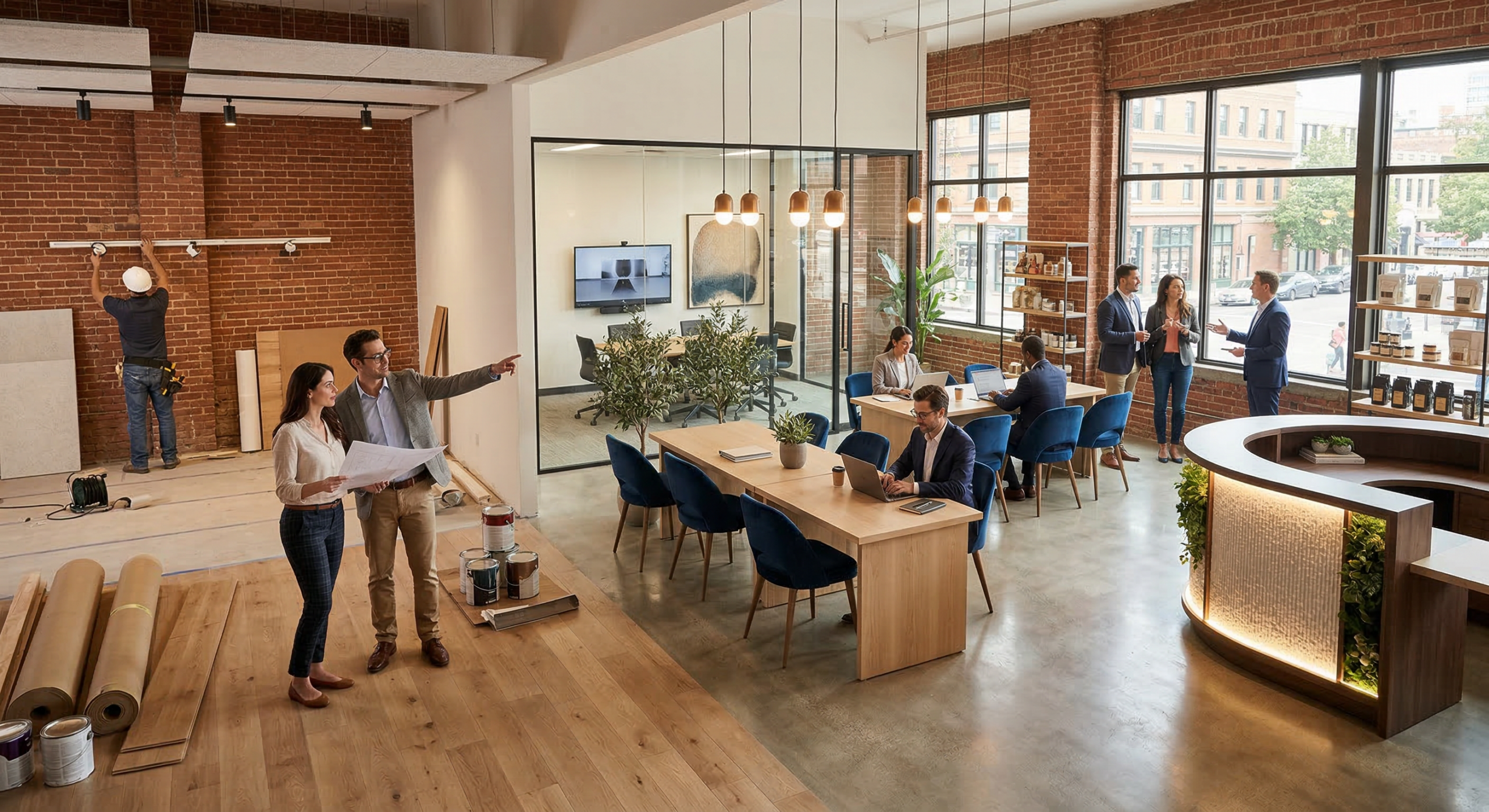
If you have a shop, office or commercial space that you want to sell or rent, the design can make the difference between closing it quickly at a good price or having it sitting idle for months.
It's not just theory. It happens constantly in the commercial real estate market in Spain.
Why the state of space directly affects the price
An empty, unfurnished commercial property requires the buyer or tenant to use their imagination. Most don't. They see an added cost, a problem, a risk.
A well-designed, or at least well-presented, space does the exact opposite: it reduces mental friction. The user can envision themselves working there from the very first minute. That has real and measurable economic value.
What impact does it have on the valuation?
A commercial space fitted out with a mid-range design can achieve rents between 15% and 35% higher than the same space without intervention. In properties geared towards hospitality, premium retail, or offices, that difference can be even greater.
For sale, the impact on the asking price is typically between 10% and 25%, depending on the area, intended use, and the quality of the work. And most importantly for the owner: the time on the market is significantly reduced.
What type of intervention makes the most sense
A complete overhaul isn't always necessary. In many cases, a well-directed strategic intervention is enough to change the perception of the asset.
Basic presentation conditioning. Cleaning, painting, functional lighting, removal of deteriorated elements. Low cost, high visual impact.
Concept design and renderings. Without undertaking any construction work, a good studio can produce renderings that showcase the potential of a space. This is especially useful for unfinished premises or sales processes.
Selective high-impact intervention. Focus investment on the areas the buyer will see first: facade, entrance, reception area.
Complete design with implementation. For assets that are coming onto the market ready to operate, or for repositioning properties that have been sitting idle for a while.
The assets that benefit the most
Empty restaurant premises. An old bar or restaurant left untouched conveys neglect. With a well-executed concept design, it becomes a clear opportunity for an operator.
Offices in second-generation buildings. The office market in Spain is highly polarized: well-designed spaces have high occupancy, while mediocre ones compete only on price.
Mixed or flexible use spaces. Flexibility is a value, but it needs to be communicated visually. A space without a clear use needs a design that tells the story of what it could be.
Properties in repositioning. If an asset comes from a use that is no longer optimal for its location, design is the tool to make the change of category visible.
The most common mistake
Put the asset on the market before making any intervention, to see how it responds. The problem: the first few weeks are the most valuable. If the asset performs poorly at that time, it quickly loses value and then it costs twice as much to revive it.
The correct sequence is intervention first, market entry later.
Indicative budget according to type of intervention
- Basic refurbishment (painting, lighting, cleaning): 3,000-8,000 euros
- Selective high-impact intervention (entrance, reception, facade): 12,000-25,000 euros
- Concept design + renderings (without construction): 4,000-9,000 euros
- Complete repositioning renovation: 40,000-150,000 euros depending on surface area and use
- The investment made before going to market is usually recovered in the first month of higher income or in the difference in the sale price.
Do you have an asset you want to position better?
Tell us what type of space it is, what area it's in, and what your goal is: selling, renting, or repositioning. We'll analyze the potential and tell you what makes sense to do.