
Guide
Design of Premium Veterinary Clinics that Builds Loyalty Between Owners and Pets (Madrid 2026)
Subscribe to our newsletter!
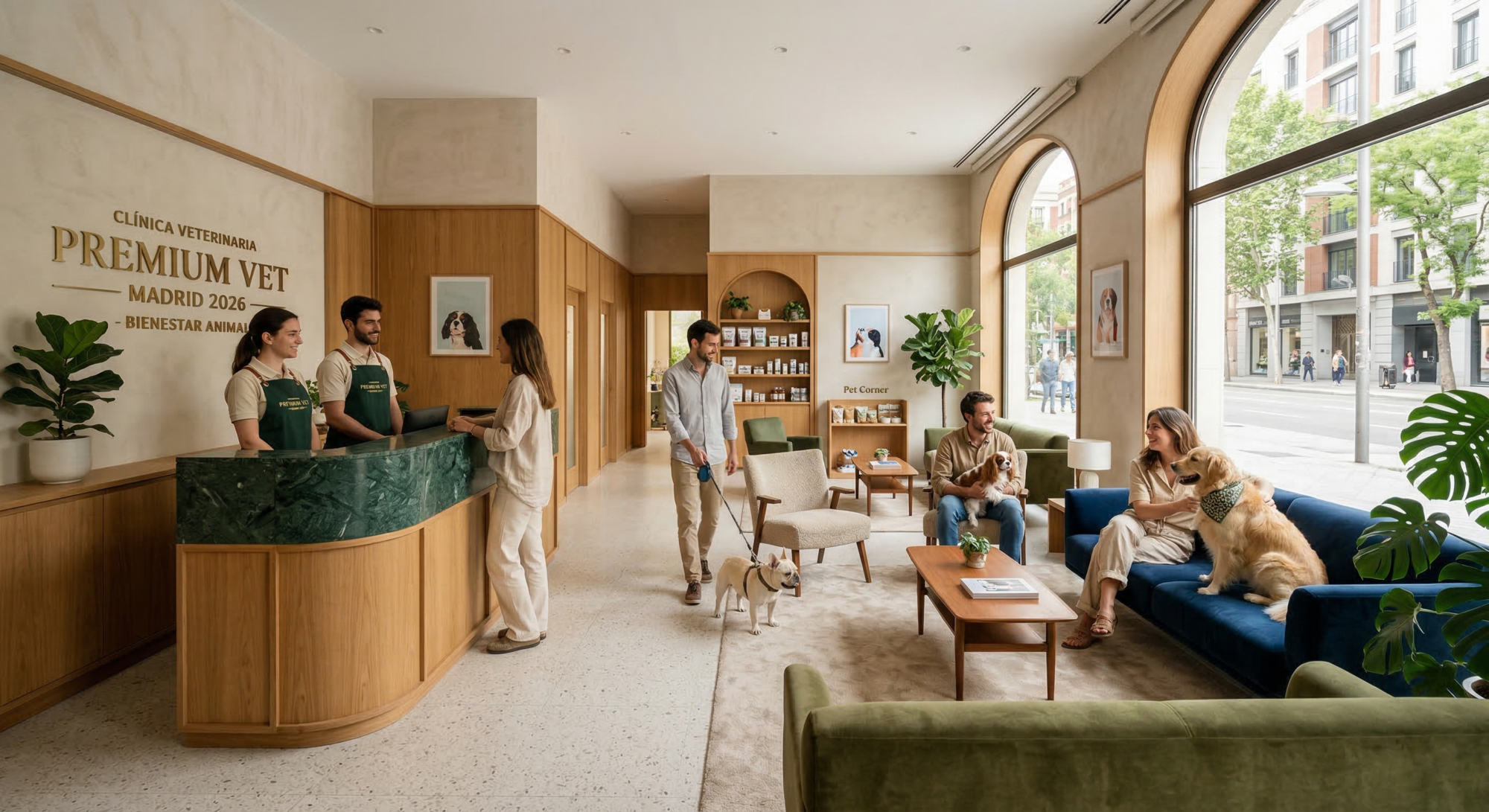

Pet owners in Madrid choose their veterinary clinic with one very clear criterion: they trust the person caring for their animal. And that trust, even before the veterinarian says anything, is conveyed by the clinic's atmosphere.
A veterinary clinic that appears outdated, poorly lit, or clinically impersonal creates anxiety that the owner associates with their pet's well-being. A well-designed clinic conveys competence, care, and a high standard. And that justifies higher prices, fosters genuine customer loyalty, and generates referrals.
Design in veterinary medicine: two simultaneous clients
Designing a veterinary clinic presents a unique challenge: you have to work for two clients at once. The owner, who makes the decisions and pays. And the animal, who perceives the space differently and whose stress level directly affects the owner's experience.
A space that reduces stress for the animal makes the visit more pleasant for the owner. And an owner who leaves with their pet calm and well cared for is more likely to return, recommend it, and spend more.
The design elements that make the difference
Separation of species in the waiting room
Dogs and cats in the same waiting room cause stress for both animals and anxiety for their owners. The most effective design solution is a waiting room divided into separate zones, with independent access if possible, or with clear visual and acoustic separation between the feline and canine areas.
This separation doesn't require a large space. In a 120m² clinic, it can be achieved with a smart layout that works well for the animals and also communicates that the clinic understands its patients.
The materials: quality without clinical coldness
The most common mistake in veterinary clinic design is going to the extreme of clinical: all white, all tile, all easy to clean, but lacking any warmth. The result is a space that increases the animal's anxiety and makes the owner feel like they're in a second-rate facility.
The solution lies in materials that are easy to clean but don't look like a hospital. Think quality vinyl flooring with a wood-look finish, walls in warm, neutral colors in waiting areas, and smooth, seamless materials in treatment areas. Hygiene and warmth are not mutually exclusive.
Lighting: avoid fluorescent at all costs
Fluorescent lighting flickers at frequencies that dogs and cats can perceive and that stress them out. Furthermore, it suggests budget savings, not professional standards. Replacing it with warm LED lighting in waiting and treatment areas, along with appropriate technical lighting in examination rooms, is an investment of €6,000-€12,000 with a disproportionate impact on the perception of space.
The reception: where the relationship with the client begins
The reception area of a veterinary clinic is where pet owners typically arrive with some anxiety. An accessible counter with space to place the carrier, a receptionist who can maintain unobstructed eye contact, and a tidy, well-designed environment immediately reduce that anxiety. And a less anxious pet owner is a more receptive client to the services recommended to them.
Actual budget: 100-160m² veterinary clinic in Madrid
- Civil works and distribution (examination rooms, operating room, hospitalization): 18,000-30,000 euros
- Separate waiting room (dogs/cats): 8,000-14,000 euros
- Custom reception: 7,000-12,000 euros
- Examination rooms (3-4 units): 14,000-24,000 euros
- Complete warm LED lighting: 6,000-11,000 euros
- Quality washable wall coverings and finishes: 10,000-18,000 euros
- Project and management: 7,000-12,000 euros
- Total: 70,000-121,000 euros
A well-designed veterinary clinic in Madrid with 40 daily visits and an average ticket price of €65 generates approximately €78,000 in monthly revenue. The difference between an average ticket price of €50 and €65, with the same volume of visits, represents €18,000 per month. The design investment is recouped in less than 7 months.
Are you opening or renovating a veterinary clinic in Madrid?
Tell us about your space, the services you offer, and the type of clientele you want to attract. We design clinics that work for animals and build loyalty with their owners.