
Guide
Wine Shop and Wine Bar Design that Sells by Experience, Not by Price (Madrid 2026)
Subscribe to our newsletter!
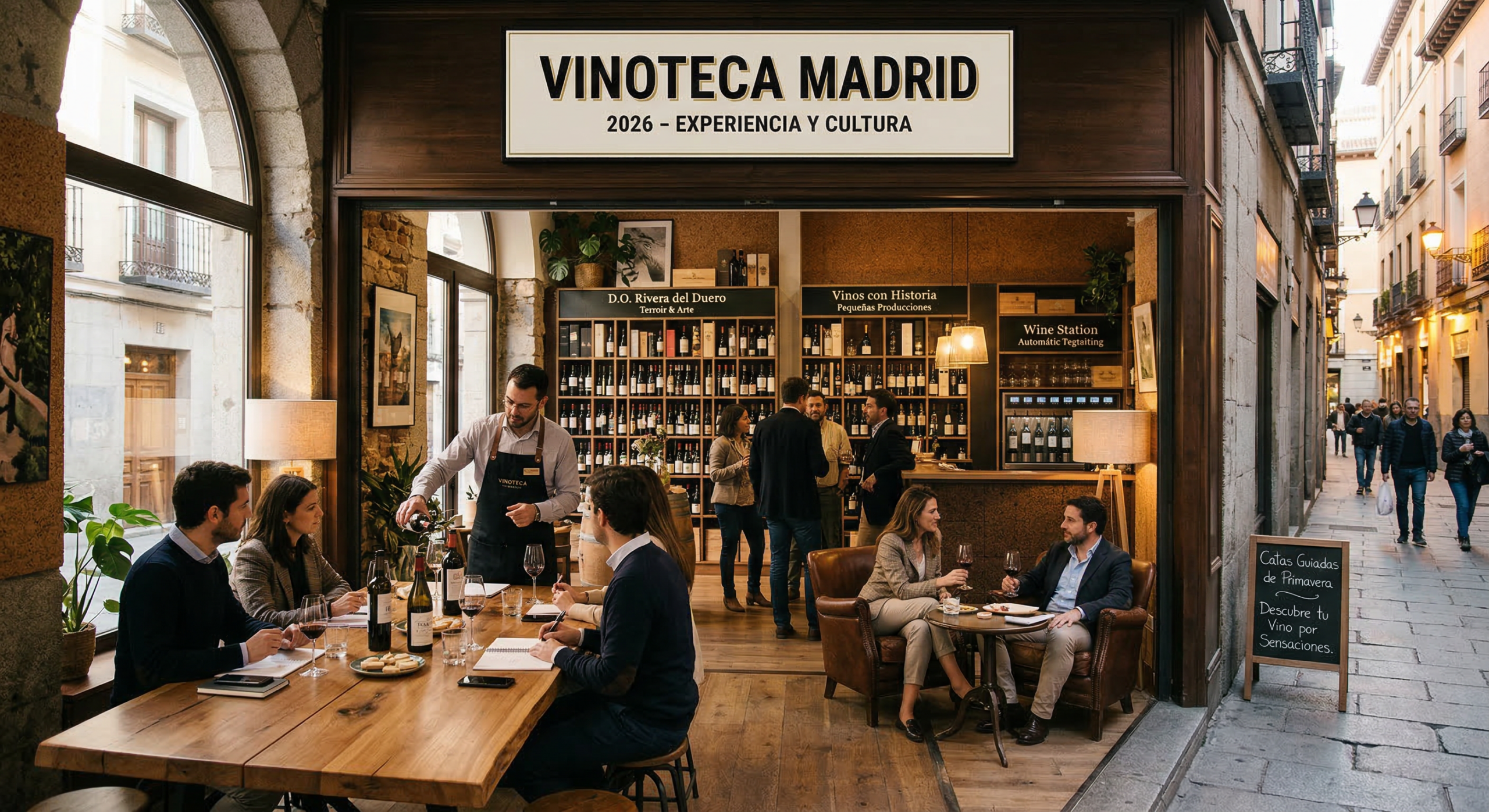
A wine shop in Madrid, whether it likes it or not, competes with Vivino, El Corte Inglés, and online distributors that offer 24-hour delivery. If the only selling point is price or selection, that competition is very difficult to win.
The wine shops operating in Madrid in 2026 won't compete on price. They'll compete on experience: the experience of entering a space that makes you want to learn more about wine, that makes you feel the sommelier is advising you, that makes buying a €40 bottle seem like a pleasurable decision, not an expense.
What design brings to a wine shop that no algorithm can provide
The customer who enters a well-designed wine shop in Madrid isn't looking for the lowest price. They're looking for someone to help them choose. The space has to make that search for help comfortable: an atmosphere that invites leisurely exploration, a product organization that facilitates navigation, and an area where the salesperson can talk to the customer without both of them standing in the middle of an aisle.
The design elements of a high-end wine cellar
Product display: less is more
A wine shop that tries to display all its wines at once looks like a warehouse. A shop that displays a curated selection, with space around each bottle, makes every one seem special.
The display criteria must be editorial: not all references in all positions, but a visual journey that takes the customer from the entrance to the back, with highlighted references in strategic points and the cellar or stock warehouse separate from the display area.
The lighting: making each bottle shine
Focused lighting on the bottles, with a warm color temperature that enhances the amber and ruby tones of the wine, transforms a shelf into a gallery. The ambient lighting must be sufficient for the customer to easily read the labels without compromising the space's atmosphere.
The tasting area: the asset that transforms buyers into a community
A tasting bar or table, even for just 6-8 people, transforms a wine shop into a meeting place. Tastings generate direct revenue (price per person), additional traffic to the shop, and customer loyalty: customers who learn at your tasting will buy from you.
The design of the tasting area must be flexible (so that it can also be used as a one-on-one consultation area), well-lit to see the color of the wine, and with easy access to the exhibition area so that the customer can go directly from the tasting to buy the bottle they have just tasted.
The materials: wood, stone, temperature
The materials in a wine shop must communicate the same message as the product itself: tradition with a contemporary approach, quality without ostentation, and a connection to the land. Dark wood, natural stone, aged metal. Materials with a history that make discussing vintages and terroirs meaningful in that space.
Actual budget: wine shop or delicatessen 60-100m² in Madrid
- Civil works and distribution: 10,000-16,000 euros
- Custom-made shelving and displays: 14,000-24,000 euros
- Tasting area (bar + furniture): 8,000-14,000 euros
- Focus and ambient lighting: 7,000-12,000 euros
- Wall coverings with high-quality materials: 9,000-16,000 euros
- Counter and checkout area: 5,000-9,000 euros
- Project and management: 5,000-9,000 euros
- Total: 58,000-100,000 euros
A wine shop in Madrid with 15 daily customers at an average spend of €55 generates €24,750 in monthly revenue. Adding three weekly tastings at €35 per person, with eight people at each tasting, adds an additional €3,360 per month and generates the traffic that fuels sales for the following week.
Are you opening a wine shop or delicatessen in Madrid?
Tell us about the space, the product selection you want to offer, and whether you plan on having a tasting area. We design stores that sell through experience.