
Guide
BTR and build-to-rent: why design defines rental prices from day one
Subscribe to our newsletter!
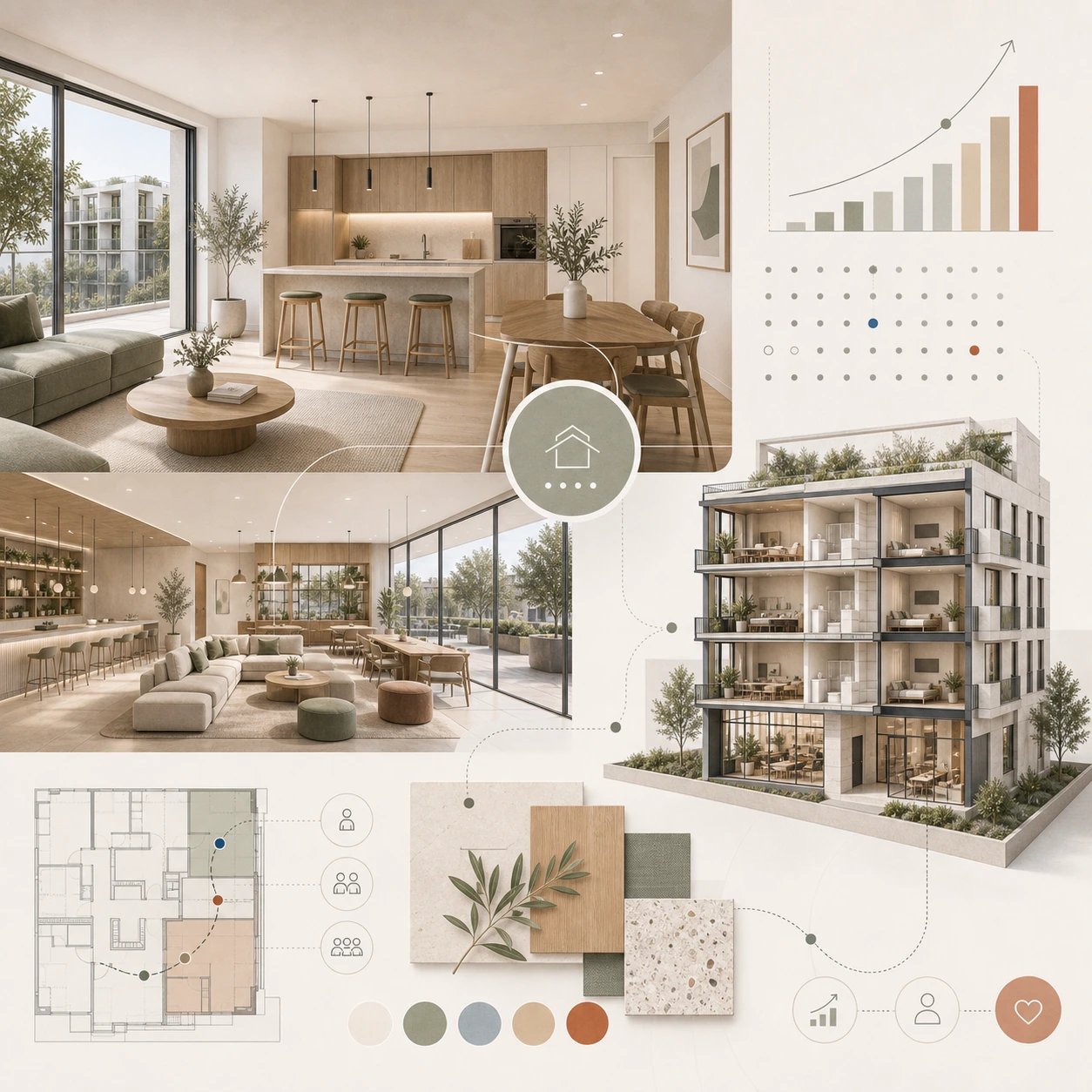
The build-to-rent market in Spain is growing rapidly. What separates the properties that achieve premium rents from those that don't is, to a large extent, design.
What does the BTR market understand by design?
Justify the rental price. A tenant paying above market rate needs to be able to see and feel why. If the space doesn't visually communicate this, negotiations always start off on the lower side.
Reduce time to market. Well-designed BTR assets are leased faster. In a project of 50 or 100 units, reducing the average time per unit by two weeks has a significant economic impact.
Minimize tenant turnover. A tenant who lives in a well-designed space is more likely to renew their lease. This is one of the most frequently cited factors in residential satisfaction surveys.
Where does design have the greatest impact on a BTR asset?
Common areas and access to the building. They are the first impression for a potential tenant. A well-designed lobby enhances the perception of the entire property. It's where every euro invested in design pays off most effectively.
Kitchen and bathroom in individual units. These two spaces carry the most weight in the rental decision and are the ones most frequently mentioned in online reviews. The level of finish here defines the price positioning.
Flexible workspaces and usage. The premium BTR tenant in Spain works remotely part of the week. A well-designed communal workspace is no longer a differentiator. It's an expectation.
Exterior and leisure areas. Terraces, patios, gardens. In the high price range, they influence the decision. In the mid-price range, they improve retention.
What doesn't work in BTR
The most common mistake is applying standard new-build finishes based on the "what won't break" mentality. Laminate flooring in the entryway, generic downlights, catalog kitchens lacking personality. It works, but it doesn't convince the tenant who pays more and has options.
When to integrate design into the process
Ideally, this should be done before construction begins. The decisions that most impact the final result are made during the design phase: layouts, ceiling heights, and the relationship between common and private areas. Changing them later is expensive or simply impossible.
The design that really works in BTR starts in the project briefing, not in the interior design chapter of the construction contract.
Indicative budget for BTR projects
- Lobby and common areas (mid-high level, per m²): 900-1,500 euros/m²
- Residential units (premium finishes over standard): 200-450 euros/m² extra
- Community workspaces: 800-1,400 euros/m²
- Outdoor areas and leisure: 350-700 euros/m²
- Project and construction management: 8-12% of the total cost
- In an 80-unit building with an average rent 150 euros higher per unit per month: 144,000 euros of additional annual income.
Do you have a BTR project in the planning stages or an asset you want to reposition?
Tell us the number of units, the project's stage, and your desired rental positioning. We'll analyze how design can impact your bottom line.