
Guide
Repositioning hotel assets: when to renovate, how much to invest, and what to expect
Subscribe to our newsletter!
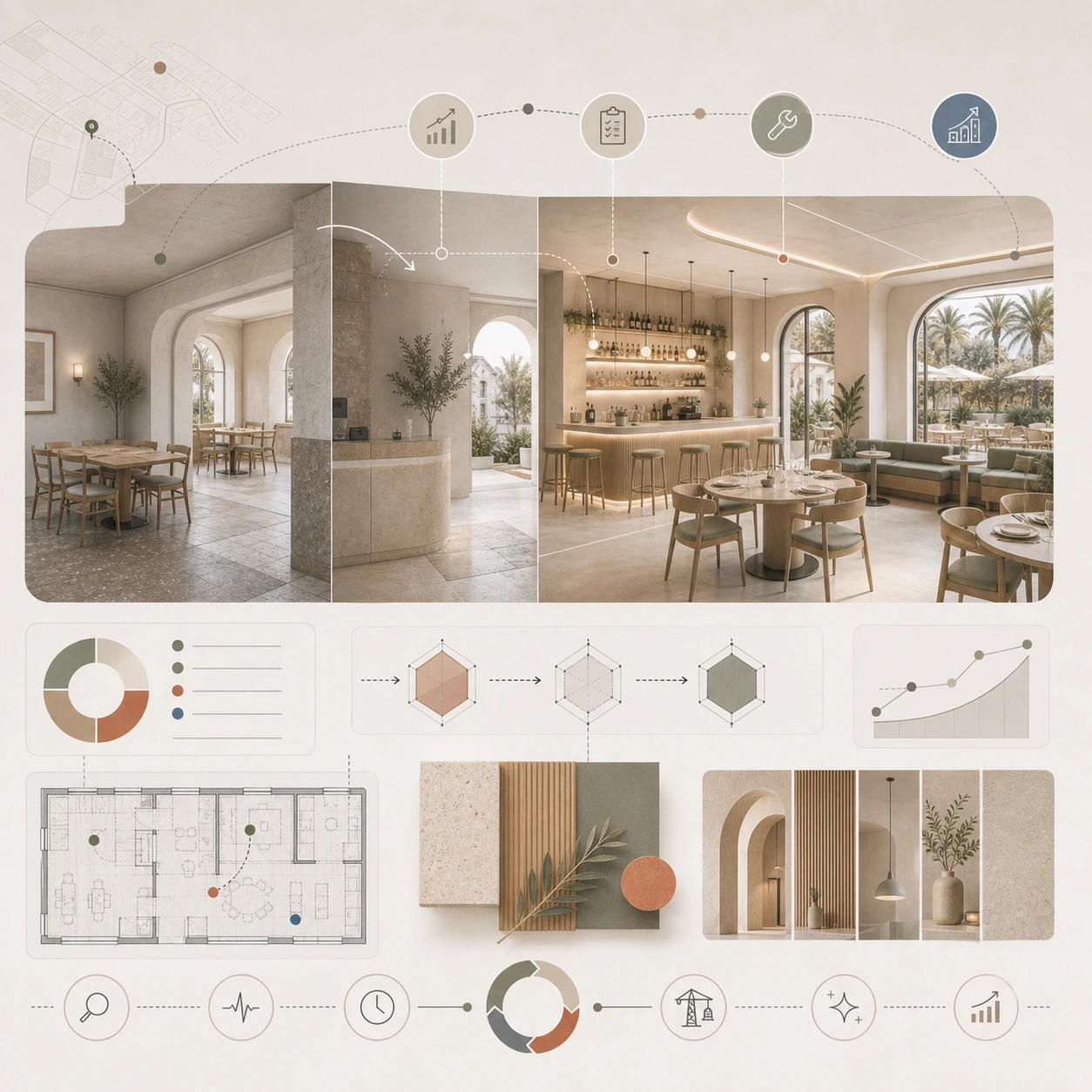
There are hotels, restaurants, and other hospitality venues that have been operating for years but have stopped competing effectively. This isn't due to a bad location or poor service, but rather because the establishment no longer meets customer expectations.
That's a repositioning problem. And it has a solution.
What does it mean to reposition a hotel asset
Repositioning isn't just about renovations. It's about changing the category in which the asset competes. A 3-star hotel with potential can become a 4-star boutique hotel with a well-directed design intervention. A restaurant that hasn't touched its space in ten years can regain relevance without changing its culinary concept.
Design is the tool that makes that change visible. Without it, the repositioning doesn't exist in the customer's mind.
Signs that an asset needs intervention
Unexplained drop in occupancy or average ticket price due to pricing or competition. Negative reviews consistently mentioning the space. Difficulty raising prices despite improved service.
The less obvious ones: direct competitors have photos that look noticeably better than yours, staff have to verbally compensate for what the space doesn't communicate, and regular customers don't bring in anyone new.
When does investment make sense?
The business has real traction. If the product works and the problem is space, the investment has a clear floor. If the business model has structural problems, renovation won't solve them.
There is financial leeway. A poorly funded reform that leaves the asset without liquidity to operate during the recovery is worse than not doing it at all.
The surrounding market justifies it. If the area is in decline or there is a structural oversupply, repositioning improves the asset individually but does not change market conditions.
What makes an intervention work or fail?
What works: being clear from the beginning about what customer profile you want to attract after the renewal and designing specifically for that profile.
The problem: a cosmetic renovation without a strategy behind it. Changing floors, painting, and updating furniture might improve the superficial appearance, but it doesn't move the asset into a different category.
Indicative budget by asset type
- Boutique hotel 15-30 rooms (complete repositioning): 150,000-350,000 euros
- Medium-sized restaurant (80-150m²): 80,000-200,000 euros
- Bar or cafe 50-100m²: 35,000-90,000 euros
- Project and management: 10-14% of the execution cost
- Typical recovery period: 12-24 months via increased ADR, occupancy or average ticket.
Do you have a hospitality asset that you want to value?
Tell us what kind of space it is, its current condition, and your goal. We'll do an initial assessment with no obligation.