
Guide
The Space That Doesn't Close to the Premises When the Hotel Closes: How to Design Mixed-Use Zones
Subscribe to our newsletter!
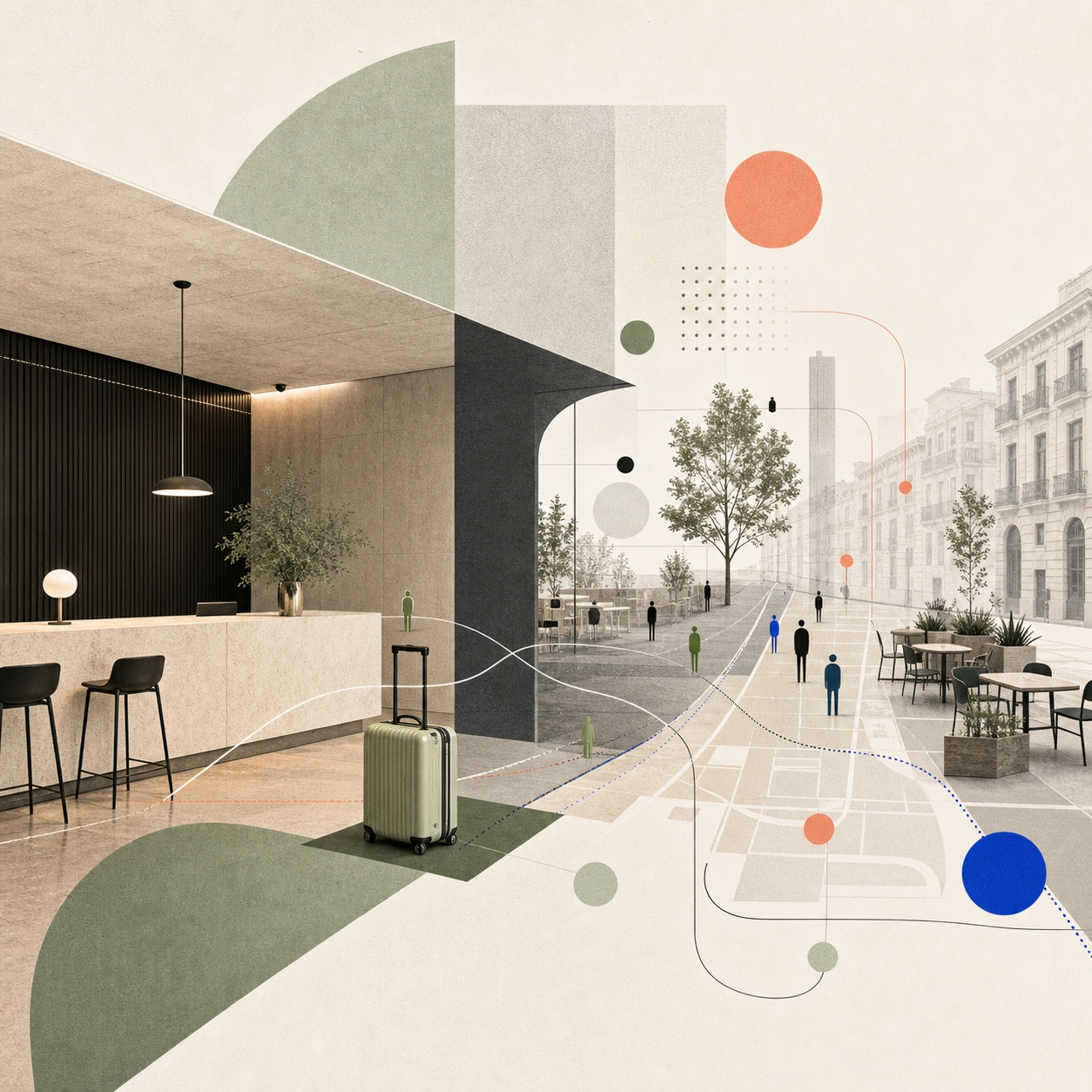
A hotel that has its restaurant full only when the hotel is full has a design problem, not a demand problem. The space is not working for the local customer because it was not designed for them.
Hotels that generate consistent F&B revenue throughout the year do not rely on the guest to fill the room. They have a restaurant or bar that the neighborhood has adopted as its own. And that doesn't happen by chance: it's the result of specific design decisions that make the space work for both profiles at the same time.
Why the local customer does not enter many hotels
The local client perceives a hotel restaurant as a space that is not for him. The signage is in English, the staff serves guests first, the prices are designed for the tourist who has no reference to the local market, and the decoration communicates that this is for people who are just passing through.
That's a design decision, even if the operator didn't make it consciously. The space communicates who it is for. If it doesn't communicate anything to the local customer, the local customer doesn't come in.
The question to answer before designing a mixed-use space in a hotel is: what does someone from the neighborhood need to feel when they first walk in here? If the answer is “that they are in a hotel,” the design is still going to fail for that profile.
What design decisions make a space work for both of you?
Independent access from the street is the most important decision. A restaurant or bar that can be entered without going through the hotel reception removes the biggest psychological barrier. The local customer does not want to feel that he is entering a hotel: he wants to enter a bar.
Zoning that allows for different levels of privacy. The breakfast guest needs something different from the work group having an informal midday meeting, which is different from the local customer having a drink in the afternoon. A well-zoned space can serve all three without any of them feeling like they are in the wrong space.
The visual relationship with the exterior. A space that can be seen from the street, that has a presence in the neighborhood even if you are inside the hotel, attracts the local client who passes by. A space that is hidden behind the reception does not exist for those who do not know it is there.
The material and the scale. A finish that is too corporate, too neutral, too much designed to please everyone, does not connect with anyone in particular. The local client wants a space with character, one that has something to say about the place it is in. That requires more specific and bolder design decisions than a hotel chain brand manual can produce.
The economic impact of a functioning mixed-use space
A 40-room boutique hotel in Madrid with a bar that the neighborhood uses as its own can generate between 8,000 and 20,000 euros per month in F&B in addition to guest consumption, depending on the concept and location. That does not depend on the hotel's occupancy, which means it is stable income even in low seasons.
In addition, a restaurant or bar that the neighborhood values works as a visibility channel for the hotel itself. The local client who uses the bar talks about the hotel, recommends it when someone asks where to stay in the area, and generates direct bookings that do not go through any OTA.
If you want to understand how the design of a hotel's lobby and common areas impact direct conversion and platform dependency reduction, the article on hotel lobby design increasing direct conversion provides a useful framework for thinking about the entire project.
If you have a hotel where the F&B is not working as it should, or you are planning a new project and want the space to work for the neighborhood from day one, tell us about the situation. The form is below.