Cómo diseñar un spa urbano o centro de belleza en Madrid: programa, membresías, experiencia, operaciones y posicionamiento.
Journal · EOLOS DESIGN LAB
Guía · EOLOS DESIGN LAB Journal
Madrid no tiene cultura de spa de la misma forma que Berlín o Amsterdam. Pero eso está cambiando rápido. En los últimos tres años han abierto en Madrid más de 40 spas urbanos con concepto de escapada urbana, membresía mensual y listas de espera.
Los que funcionan tienen algo en común: un diseño que justifica el precio antes de que el cliente pruebe ningún tratamiento. Este artículo analiza qué hace que un spa urbano de Madrid tenga membresías ocupadas y clientela fiel que paga €180-€350/mes.
La economía del spa urbano de membresía
Spa A (sin diseño diferenciado): 200m², 4 cabinas, sauna, zona de aguas básica, Membresía: €150/mes, Ocupación: 52%, ingresos mensual: €38.000, ingresos por m²/mes: €190
Spa B (diseño de experiencia completa): 185m², 3 cabinas, sauna finlandesa, zona de aguas diseñada, zona relax, Membresía: €245/mes (única vía de acceso a zona aguas), Ocupación membresías: 94%, ingresos mensual: €71.000, ingresos por m²/mes: €384
Diferencia: +€33.000/mes con 15m² menos. La inversión adicional en diseño fue de €85.000. Se recuperó en 31 meses en ingresos incremental.
Los elementos de diseño que distinguen un spa urbano premium
1. La entrada: la transición del mundo exterior al interior
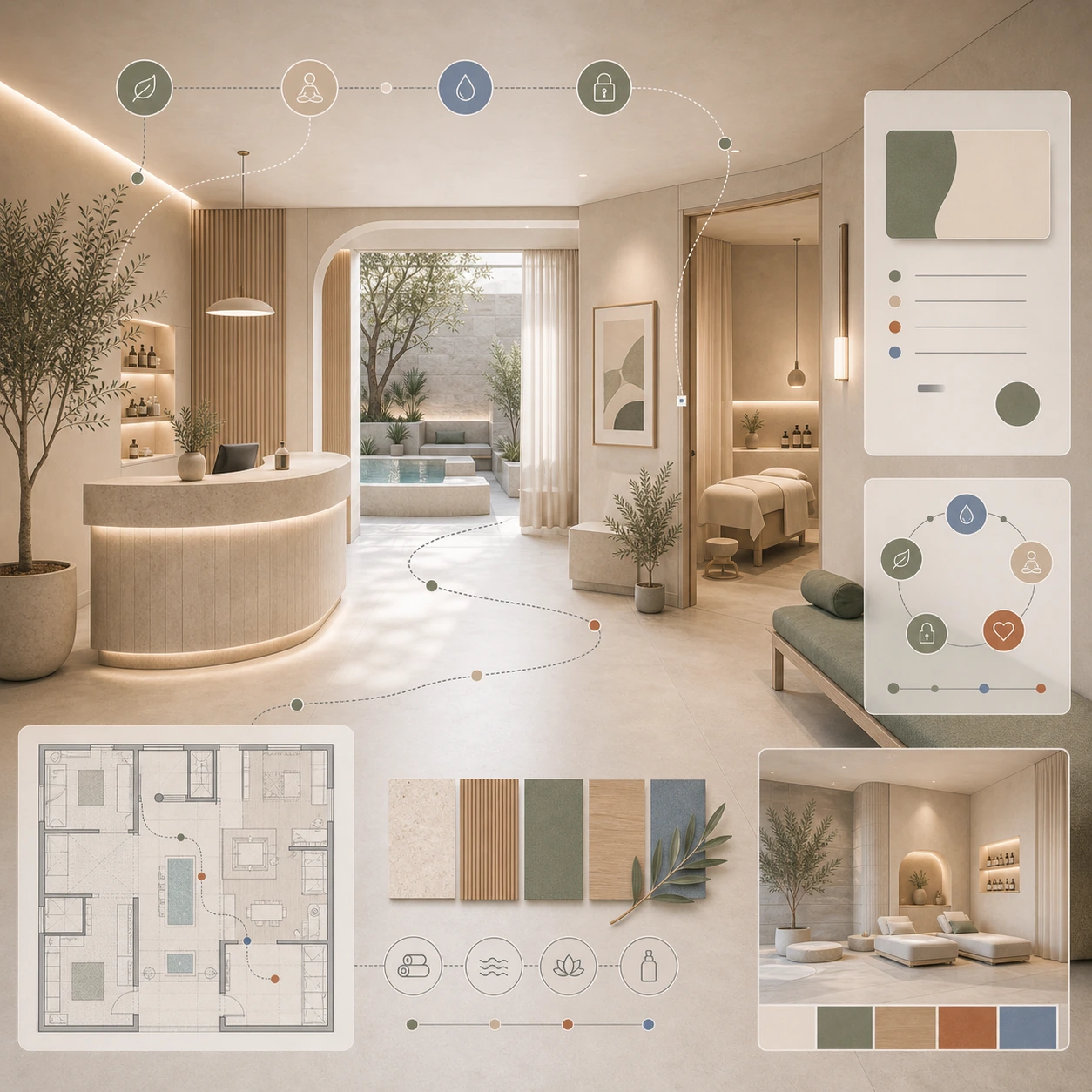
Un spa urbano bien diseñado empieza antes de que el cliente se desvista. La transición desde la calle hasta el espacio de bienestar es un elemento que muchos ignoran. Elementos de transición bien diseñada: amortiguación de ruido exterior desde la entrada, cambio de temperatura y aroma desde el primer paso, reducción gradual de la luz, recepción que es una bienvenida y no un mostrador de banco. El cerebro del cliente necesita una señal clara de que ha dejado el mundo fuera. El diseño puede enviarla en 30 segundos.
2. Zona de aguas: el elemento diferenciador
La zona de aguas es lo que distingue a un spa de un centro de estética. También es lo que más justifica el precio. Opciones según superficie y presupuesto:
Baño turco o hammam: 8-12m², cerámica artesanal o zellige, banco central de mármol, €18.000-€38.000
Zona de hidroterapia (piscina + jacuzzi): 25-40m² mínimo, €45.000-€95.000
Duchas de sensaciones (lluvia tropical, niebla fría, ducha escocesa): €8.000-€16.000 por módulo
La zona de aguas es el 35-50% de la inversión total de un spa. Y el 80% de la razón por la que el cliente paga la membresía.
3. Zona de relajación post-tratamiento
El error más frecuente: el cliente sale de tratamiento directo a vestirse y a la calle. El spa que entiende la experiencia incluye una zona de relajación entre la cabina y el vestuario. Qué incluye: tumbonas o chaises longues cómodas, luz muy tenue y cálida, música ambiente a volumen muy bajo, infusiones o agua aromatizada disponibles, sin teléfonos ni pantallas.
Impacto económico: el cliente con zona de relajación post-tratamiento recomienda más, vuelve más y valora más. Aumenta NPS en 15-25 puntos respecto a spas sin esta zona.
Presupuesto zona relax (10-20m²): €8.500-€18.000
4. Vestuarios: donde más se ahorran y donde más importa
El vestuario de spa no es el vestuario de gimnasio. Es una extensión de la experiencia premium. Estándar obligatorio: taquillas de madera o material noble (no metal gris de polideportivo), duchas con mampara real y espacio suficiente, amenities de calidad, espejos con buena iluminación, temperatura agradable (vestuario frío = experiencia rota).
Presupuesto vestuarios premium por unidad: €18.000-€38.000
5. Iluminación: la clave de todo en un spa
Principios irrenunciables: temperatura máxima 2700K (idealmente 2400-2600K en zonas de relax), cero luz directa en zonas de reposo (siempre indirecta o puntual muy suave), control de escenas por zona y hora, zona de aguas con combinación de luz submarina, ambiental y cenital suave. Una cabina de masaje con luz fluorescente cenital es un fracaso de diseño que el cuerpo del cliente registra aunque la mente no lo verbalice.
El olfato y el oído son los sentidos que más impactan en la memoria y en la asociación de bienestar. Identidad olfativa: fragancia propia (no aceite de aromaterapia random), consistente en todos los espacios con variaciones por zona, puede extenderse a productos retail (jabones, velas), Inversión: €1.500-€4.000/año. Identidad sonora: curación musical por zona y momento del día, sistema con zonas independientes, volumen diseñado.
Presupuesto sistema audio: €3.500-€8.000
Escenarios de presupuesto
Spa urbano básico viable 180-220m²
Demolición y distribución: €12.000, Electricidad + potencia: €22.000, Fontanería y desagüe zona húmeda: €18.000
Impermeabilización zona aguas: €8.000, Suelos (microcemento, piedra, madera húmeda): €16.000
Un «spa» con solo cabinas de masaje y una sauna pequeña compite con cualquier centro de estética. La zona de aguas bien diseñada es lo que justifica membresía y precio premium.
Error 2: Vestuarios de gimnasio en espacio de spa
El cliente que paga €250/mes no acepta metal gris ni ducha sin mampara. El vestuario debe estar al nivel del resto del espacio sin excepción.
Error 3: Cabinas sin insonorización real
En un spa de bienestar, oír conversaciones de la cabina de al lado o ruidos exteriores durante un masaje es un fracaso que el cliente no perdona ni olvida.
Error 4: Iluminación de obra sin control de escenas
El coste de añadir control de iluminación después es 3x el de haberlo incluido desde el inicio. No es negociable en un proyecto de spa.
¿Tienes un proyecto de spa urbano en Madrid?
En EOLOS diseñamos spas urbanos y centros de bienestar premium en Madrid con ingresos recurrente de membresía y ocupación por encima del 85% en el primer año.
¿Estás preparando un gimnasio, un centro de estética o un espacio de bienestar? Cuéntanoslo mediante las opciones de contacto que encontrarás a continuación.
Madrid doesn't have the same spa culture as Berlin or Amsterdam. But that's changing fast. In the last three years, more than 40 urban spas have opened in Madrid, offering urban getaways, monthly memberships, and waiting lists.
Those that work have something in common: a design that justifies the price before the client even tries any treatment. This article analyzes what makes an urban spa in Madrid have full memberships and a loyal clientele that pays €180-€350/month.
The economics of the membership urban spa
Spa A (without differentiated design): 200m², 4 cabins, sauna, basic water area, Membership: €150/month, Occupancy: 52%, Monthly revenue: €38,000, Revenue per m²/month: €190
Spa B (complete experience design): 185m², 3 cabins, Finnish sauna, designer water area, relaxation area, Membership: €245/month (only access to water area), Membership occupancy: 94%, Monthly revenue: €71,000, Revenue per m²/month: €384
Difference: +€33,000/month with 15m² less. The additional investment in design was €85,000. It was recovered in 31 months in incremental revenue.
The design elements that distinguish a premium urban spa
1. The entrance: the transition from the outside world to the inside
A well-designed urban spa begins before the client even undresses. The transition from the street to the wellness space is an element many overlook. Well-designed transition elements include: dampening outside noise from the entrance, a change in temperature and aroma from the first step, a gradual dimming of light, and a reception area that feels welcoming, not like a bank counter. The client's brain needs a clear signal that they've left the outside world behind. Design can send that signal in 30 seconds.
2. Water zone: the differentiating element
The water area is what distinguishes a spa from a beauty salon. It's also what most justifies the price. Options depending on size and budget:
The water area accounts for 35-50% of a spa's total investment. And 80% of the reason why the client pays for the membership.
3. Post-treatment relaxation area
The most common mistake: clients go straight from their treatment to get dressed and head out the door. A spa that truly understands the experience includes a relaxation area between the treatment room and the changing area. This includes comfortable lounge chairs or chaise longues, soft, warm lighting, ambient music at a very low volume, herbal teas or infused water available, and no phones or screens.
Economic impact: Customers with a post-treatment relaxation area are more likely to recommend the service, return more often, and give higher ratings. Net Promoter Score (NPS) increases by 15-25 points compared to spas without this area.
Budget for relaxation area (10-20m²): €8,500-€18,000
4. Changing rooms: where the most savings are made and where it matters most
The spa changing room is not the gym changing room. It's an extension of the premium experience. Mandatory standards: lockers made of wood or other high-quality materials (not the gray metal of a sports center), showers with proper glass enclosures and ample space, quality toiletries, well-lit mirrors, and a comfortable temperature (a cold changing room = a ruined experience).
Premium wardrobe quote per unit: €18,000-€38,000
5. Lighting: the key to everything in a spa
Essential principles: maximum temperature 2700K (ideally 2400-2600K in relaxation areas), zero direct light in rest areas (always indirect or very soft, focused lighting), scene control by zone and time, and a water area with a combination of underwater, ambient, and soft overhead lighting. A massage cabin with overhead fluorescent lighting is a design flaw that the client's body registers even if their mind doesn't verbalize it.
Spa lighting budget for 200m²: €22,000-€48,000
6. Olfactory and auditory identity
Smell and hearing are the senses that most impact memory and the association of well-being. Olfactory identity: a unique fragrance (not a random aromatherapy oil), consistent throughout all spaces with variations by area, which can be extended to retail products (soaps, candles), Investment: €1,500-€4,000/year. Sound identity: curated music by area and time of day, a system with independent zones, and carefully designed volume.
Audio system budget: €3,500-€8,000
Budget scenarios
Viable basic urban spa 180-220m²
Demolition and distribution: €12,000, Electricity + power: €22,000, Plumbing and drainage of wet area: €18,000
Waterproofing of water areas: €8,000, Floors (microcement, stone, damp wood): €16,000
A "spa" with only massage cabins and a small sauna competes with any beauty salon. The well-designed water area is what justifies the membership and premium price.
Error 2: Gym changing rooms in a spa space
The client who pays €250/month does not accept gray metal or a shower without a screen. The changing room must be on par with the rest of the space without exception.
Error 3: Booths without real soundproofing
In a wellness spa, hearing conversations from the next cabin or outside noises during a massage is a failure that the client neither forgives nor forgets.
Error 4: Construction site lighting without scene control
The cost of adding lighting control later is three times the cost of including it from the start. This is non-negotiable in a spa project.
Do you have an urban spa project in Madrid?
At EOLOS, we design urban spas and premium wellness centers in Madrid with recurring membership revenue and occupancy exceeding 85% in the first year.
Planning a gym, beauty studio or wellness space? Tell us about it using the contact options below.
Siguiente paso
Cada buen proyecto empieza con una conversación clara.