Por qué el branding tiene que ir antes que la reforma (y qué pasa cuando no es así)
Por qué el branding tiene que ir antes que la reforma y qué pasa cuando no es así. Cómo alinear identidad de marca e interiorismo desde el principio.
Journal · EOLOS DESIGN LAB
Guía · EOLOS DESIGN LAB Journal
En EOLOS vemos este error con frecuencia: un propietario reforma su local, invierte entre €80.000 y €200.000, y cuando el espacio está listo llama a alguien para que diseñe el logo y la carta. El resultado es un espacio bonito pero sin coherencia. El logo no habla con los materiales. La paleta de colores no encaja con el ambiente. Y arreglarlo requiere o convivir con la incoherencia o gastar de nuevo.
Qué es el branding en el contexto de un local comercial
El branding de un local no es el logo. El logo es un elemento del branding, igual que la tipografía, la paleta de colores, el tono de comunicación, el nombre, la propuesta de valor y la forma en que todos esos elementos conviven en el espacio físico. La marca responde a las preguntas esenciales: qué eres, para quién eres, por qué eres diferente, cómo te sientes cuando entras. Responder esas preguntas antes de empezar la reforma hace que cada decisión de diseño tenga criterio y coherencia.
Los errores más caros que evita un branding previo
Materiales que no cuentan la historia correcta
Sin branding definido, la selección de materiales se hace por estética o por precio. Un restaurante de cocina japonesa contemporánea con marca definida sabe que la madera clara, el cemento gris y el hierro negro son los materiales coherentes con su identidad. Sin esa definición previa, puede acabar con mármol y latón que quedan bien en fotos pero que comunican mediterráneo y no japonés.
Un nombre difícil de comunicar o posicionar
El nombre de un local es parte del diseño. Hay nombres que funcionan bien en señalética, que son fáciles de recordar, que tienen personalidad. Hay nombres que están bien como concepto pero que gráficamente son imposibles, demasiado largos para el rótulo o confusos en búsquedas online. Definir el nombre antes de hacer el rótulo, antes de registrar el dominio, antes de diseñar la señalética, evita errores que después cuestan mucho corregir.
Una propuesta de valor que nadie ve en el espacio
La propuesta de valor es la razón por la que alguien debería elegirte a ti antes que a la competencia. Si esa razón no está reflejada en el espacio, el espacio es bonito pero no es estratégico. Un coworking que dice ser "el espacio para trabajadores creativos de Madrid" tiene que tener materiales, colores, iluminación y distribución que hagan que un trabajador creativo entre y piense "esto es para mí". Si el espacio podría ser de cualquier empresa, la propuesta de valor no existe físicamente.
Cómo funciona el proceso cuando branding y diseño van juntos
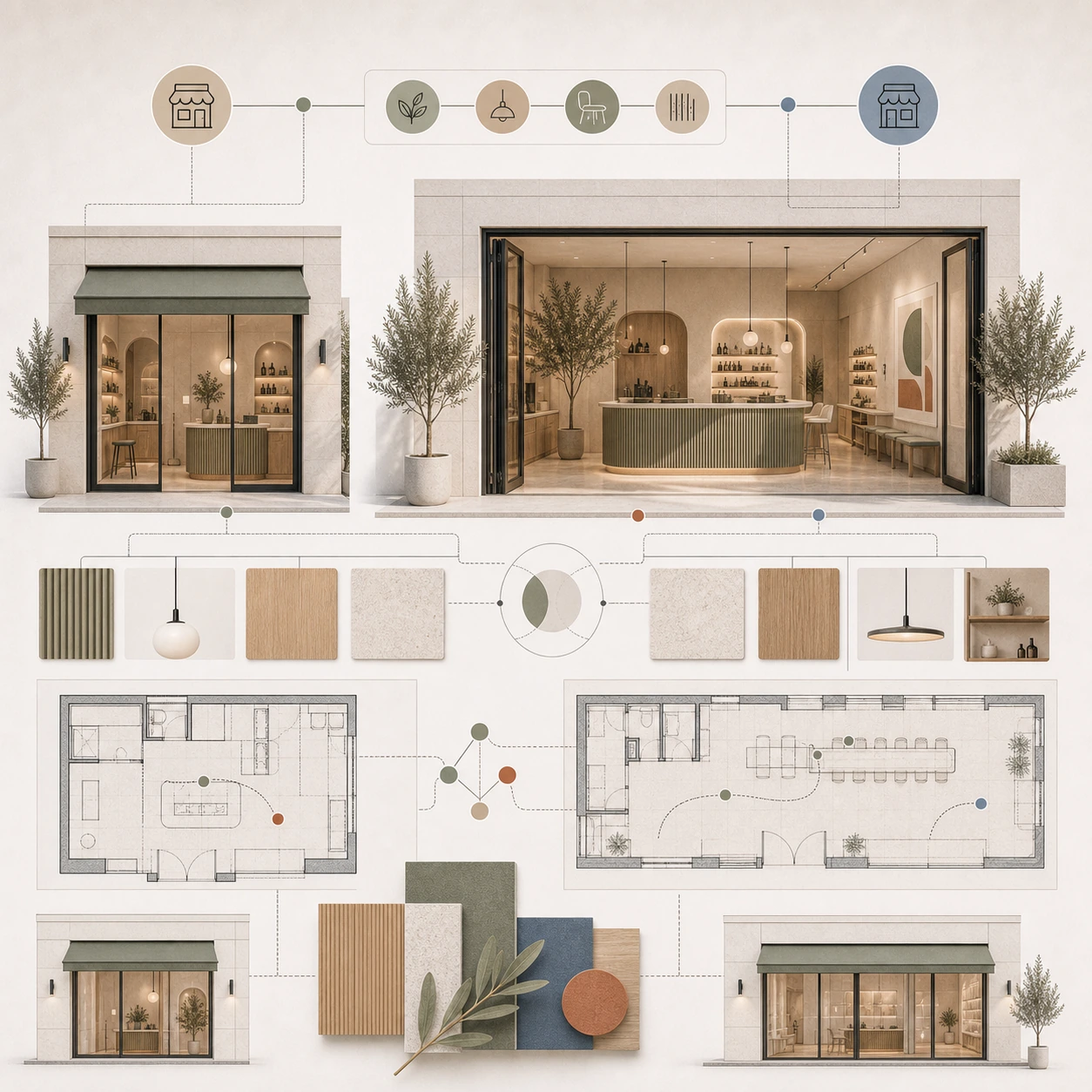
En EOLOS trabajamos el branding y el diseño de interiores como un proceso integrado cuando el cliente nos lo permite, y como un proceso coordinado cuando el cliente ya tiene un estudio de branding con quien trabaja. El resultado en ambos casos es el mismo: un espacio donde cada elemento comunica lo mismo. El color de la pared habla con el logo. La tipografía de la carta habla con la señalética. El material del mostrador habla con la imagen de marca digital. Esa coherencia tiene impacto directo en cómo el cliente percibe el valor del negocio y en cuánto está dispuesto a pagar.
Qué conviene definir antes de la obra
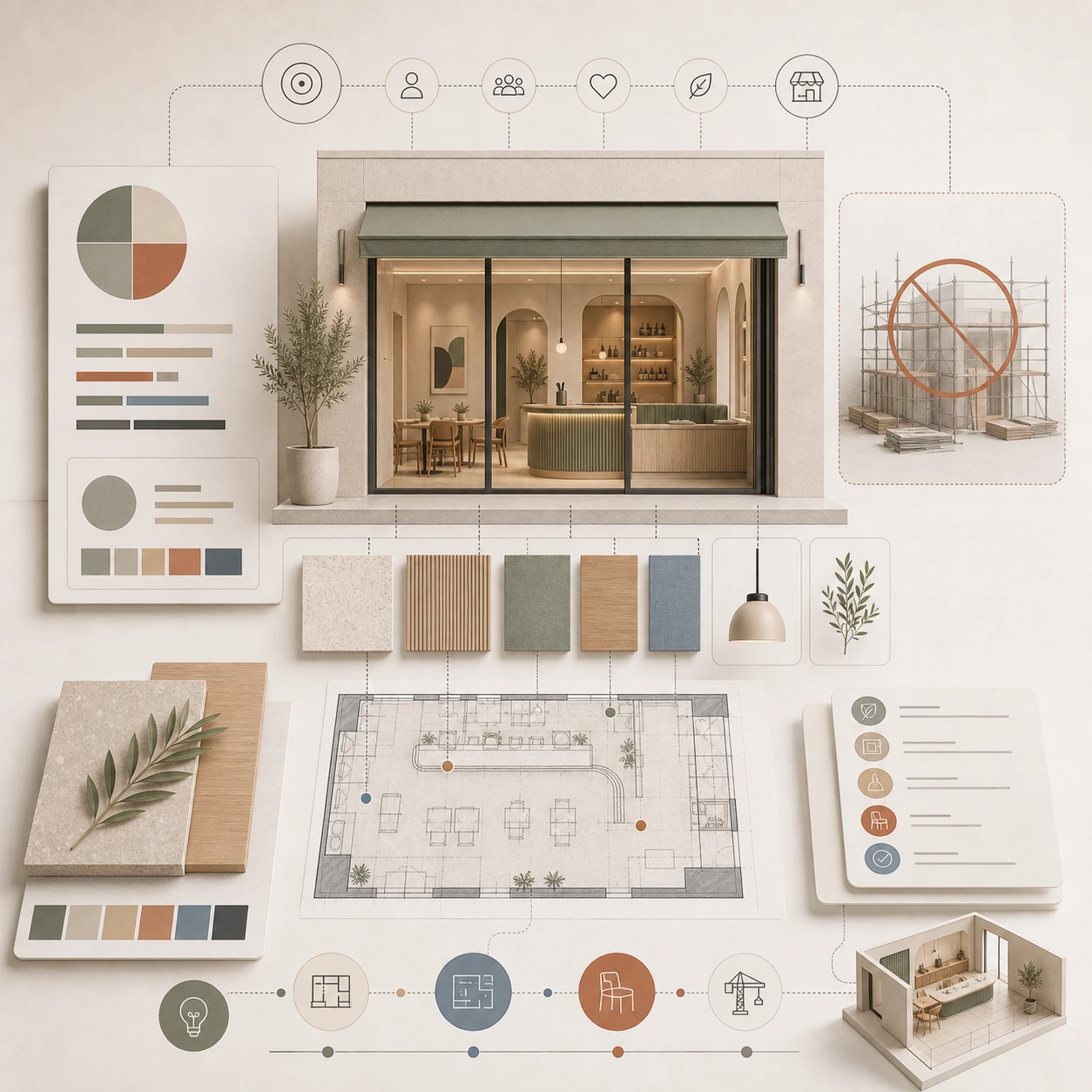
No es necesario cerrar todo el manual de marca antes de dibujar el espacio. Sí conviene definir cliente prioritario, posición de precio, diferencia competitiva, tono y experiencia deseada. Esas respuestas dan criterio a materiales, iluminación, recorrido y señalética sin bloquear la evolución posterior de la identidad.
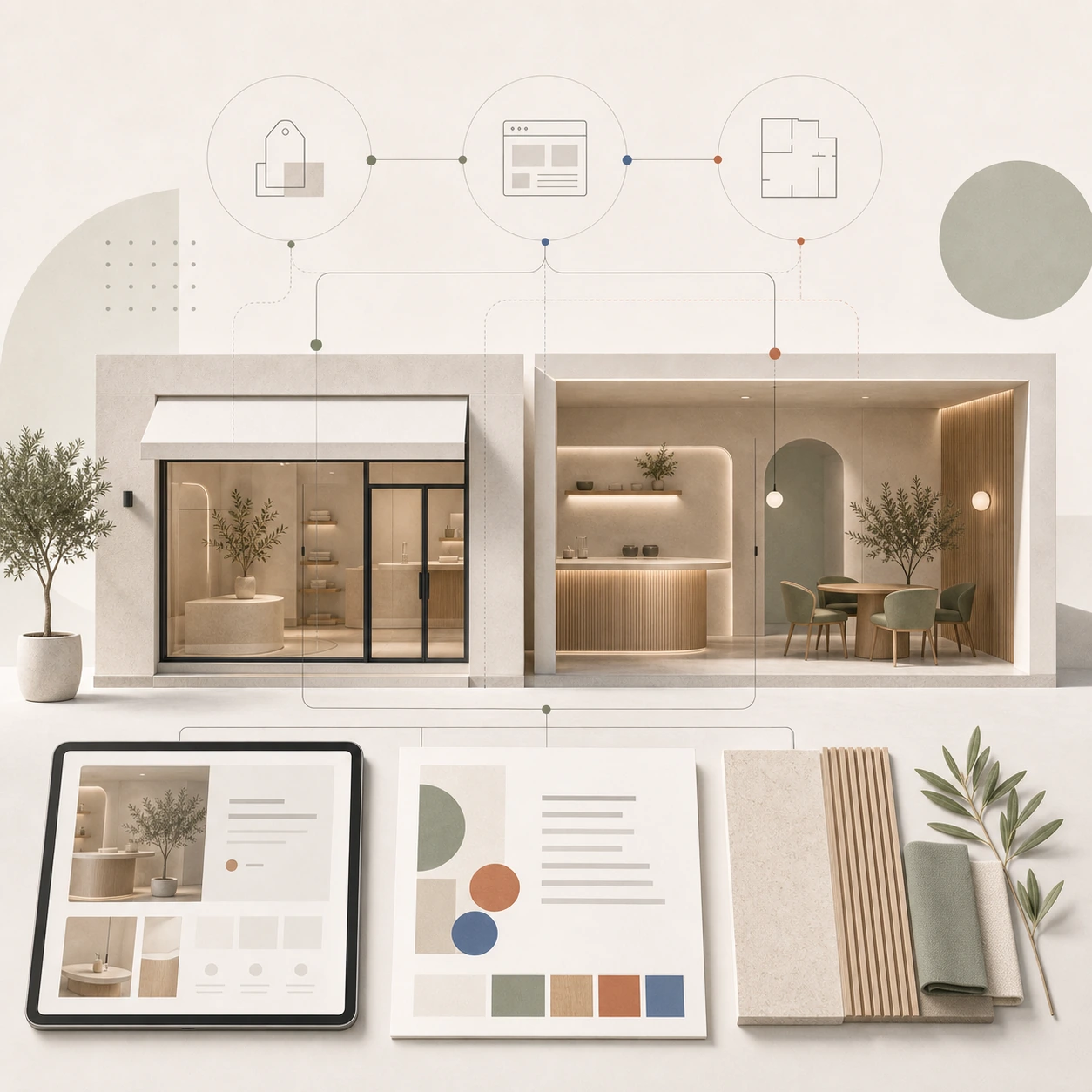
El objetivo es llegar a obra con suficientes decisiones compartidas para no improvisar puntos de luz, superficies gráficas o acabados costosos. La identidad completa y la web pueden desarrollarse en paralelo, siempre que exista una dirección común y responsables claros.
¿Estás preparando un proyecto que necesita unir marca, espacio y presencia digital? Cuéntanoslo mediante las opciones de contacto que encontrarás a continuación.
At EOLOS, we see this mistake frequently: a business owner renovates their premises, investing between €80,000 and €200,000, and once the space is finished, they hire someone to design the logo and menu. The result is a beautiful space, but one that lacks coherence. The logo doesn't match the materials. The color palette clashes with the ambiance. And fixing it requires either living with the inconsistency or spending money again.
What is branding in the context of a retail establishment?
A business's branding isn't just its logo. The logo is one element of branding, as are the typography, color palette, communication style, name, value proposition, and how all these elements come together in the physical space. A brand answers the essential questions: what are you, who are you for, why are you different, and how do you feel when you walk in? Answering these questions before starting any renovations ensures that every design decision is well-considered and coherent.
The most expensive mistakes that prior branding prevents
Materials that don't tell the right story
Without a defined brand, material selection is often based on aesthetics or price. A contemporary Japanese restaurant with a well-defined brand knows that light wood, gray cement, and black iron are materials consistent with its identity. Without that prior definition, it might end up using marble and brass, which look good in photos but convey a Mediterranean, not Japanese, feel.
A name that is difficult to communicate or position
A business name is part of the design. Some names work well on signage, are easy to remember, and have personality. Others are fine as a concept but are graphically impossible, too long for the sign, or confusing in online searches. Defining the name before making the sign, before registering the domain, and before designing the signage prevents mistakes that are very costly to correct later.
A value proposition that no one sees in space
The value proposition is the reason someone should choose you over the competition. If that reason isn't reflected in the space, the space might be attractive, but it's not strategic. A coworking space that claims to be "the space for creative workers in Madrid" needs to have materials, colors, lighting, and a layout that make a creative worker walk in and think, "This is for me." If the space could belong to any company, the value proposition doesn't physically exist.
How the process works when branding and design go together
At EOLOS, we approach branding and interior design as an integrated process when the client allows it, and as a coordinated process when the client already works with a branding studio. The result in both cases is the same: a space where every element communicates the same message. The wall color speaks to the logo. The menu typography aligns with the signage. The counter material reflects the digital brand image. This consistency has a direct impact on how the customer perceives the value of the business and how much they are willing to pay.
What should be defined before construction
The full brand manual does not need to be finished before spatial design begins. The priority customer, price position, competitive difference, tone and intended experience should be clear. Those answers give direction to materials, lighting, circulation and signage without preventing the identity from evolving later.
The objective is to enter construction with enough shared decisions to avoid improvising lighting points, graphic surfaces or costly finishes. The complete identity and website can develop in parallel, provided there is one direction and clear accountability.
Planning a project that needs to align brand, space and digital presence? Tell us about it using the contact options below.
Siguiente paso
Cada buen proyecto empieza con una conversación clara.