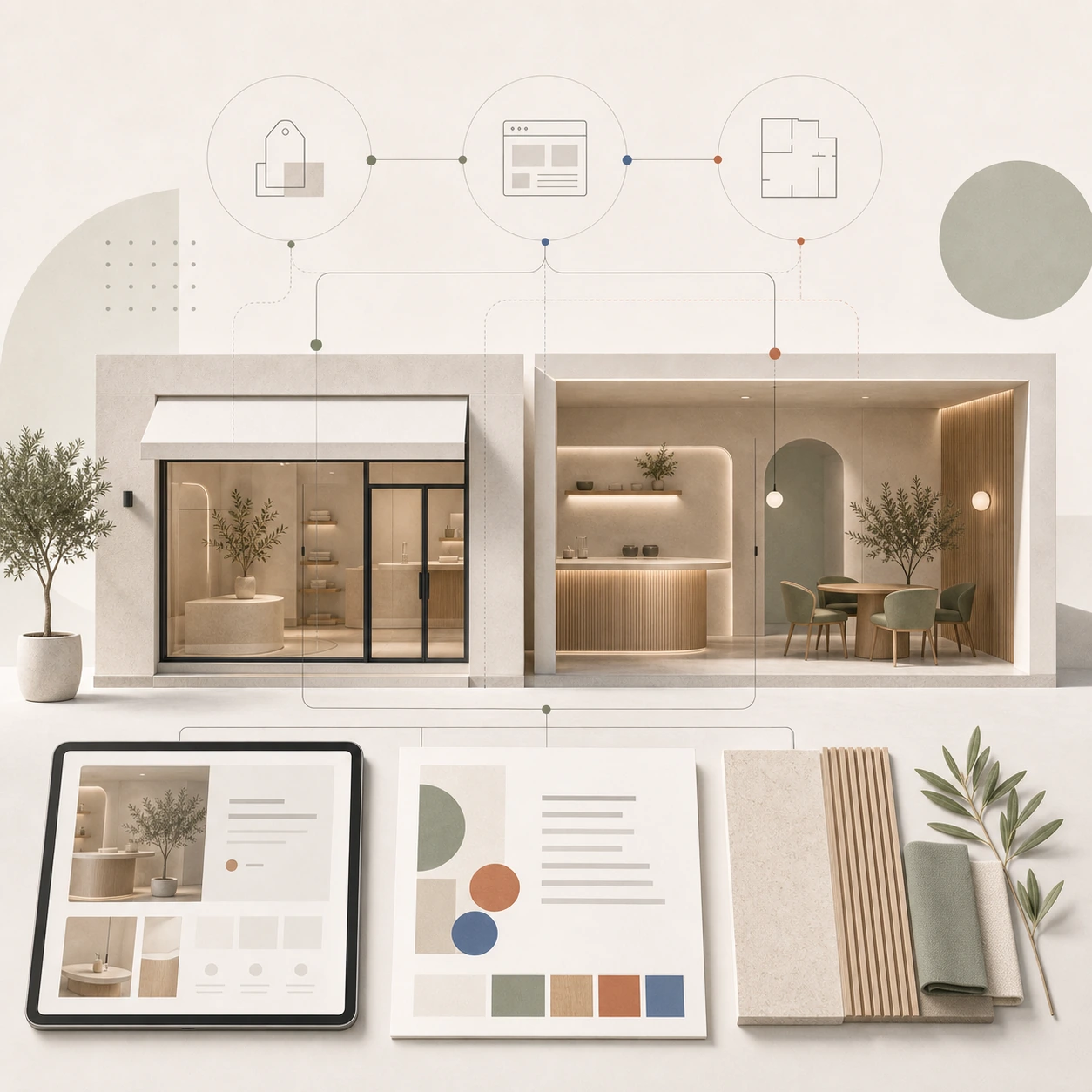
Nuevo negocio
La apertura es la única vez que una marca nueva tiene atención completa de forma gratuita. Un local bien diseñado que se fotografa y comparte en la apertura genera visibilidad que ningún presupuesto de marketing puede comprar después.
Los errores más comunes
La mayoría de errores en una apertura no ocurren durante la obra. Ocurren en las decisiones previas.
Antes de firmar un local, conviene revisar si el espacio puede sostener el negocio: instalaciones, normativa, accesibilidad, ventilación y riesgos de obra. Para eso hacemos due diligence técnica previa.
Local y marca no hablan el mismo idioma
El logo lo hizo uno, el local otro. El resultado es una marca sin expresión coherente y el cliente lo nota aunque no pueda explicar por qué.
El presupuesto se dispara en obra
Sin un proyecto ejecutivo completo, los presupuestos son estimaciones. Es en la ingeniería, no en la obra, donde se controla el presupuesto. Ahorrar en proyecto cuesta más en obra.
La apertura pasa sin pena ni gloria
Un local que no vale la pena fotografiar en la apertura pierde la única ventana de visibilidad orgánica que no se repite. Diseño y fotografía deben planificarse como parte del proyecto.
Sin escalabilidad
Si abres un local que funciona y quieres abrir otro, necesitas un sistema de diseño, no solo un local. Sin eso, cada expansión empieza desde cero.
Lo que nos preguntan quienes abren su primer local
¿Qué se decide primero, la marca o el local?
La marca, aunque sea en su versión mínima. Sin saber qué promete el negocio y a quién, el proyecto de interiorismo toma decisiones estéticas sin criterio y luego hay que rehacerlas. Definir posicionamiento, nombre y tono cuesta poco y ordena todo lo que viene después.
¿Por qué se dispara el presupuesto en obra?
Casi siempre por lo que no se vio antes de firmar: estado de instalaciones, salida de humos, insonorización, accesibilidad. Revisar esos cuatro puntos antes de cerrar el diseño es lo que separa un presupuesto que se cumple de uno que crece un tercio a mitad de obra.
¿Merece la pena diseñar pensando en el segundo local?
Sí, y es barato hacerlo al principio. Se decide qué es identidad (fijo) y qué es adaptación (variable) antes de la primera apertura. Sin eso, el segundo local se rediseña desde cero y la marca deja de reconocerse.
¿Cómo empieza el trabajo con vosotros?
Con una primera consulta gratuita de 30 minutos. Salimos de ahí sabiendo si encajamos, qué formato de servicio tiene sentido y cuál sería el siguiente paso. Si no encajamos, lo decimos.
New business
The grand opening is the only time a new brand receives undivided attention for free. A well-designed store that is photographed and shared on opening day generates visibility that no marketing budget can buy afterward.
The most common mistakes
Most mistakes in an opening don't happen during the build. They happen in the decisions made beforehand.
Before signing a lease, it is advisable to check if the space can support the business: facilities, regulations, accessibility, ventilation and construction risks. For this purpose, we do prior technical due diligence.
The space and the brand do not speak the same language
One person designed the logo, another the space. The result is a brand without a coherent expression, and the customer notices it even if they can't explain why.
The budget for the construction project skyrockets.
Without a complete engineering design, budgets are just estimates. It's in the engineering phase, not on-site, where the budget is controlled. Saving money in the design phase costs more on-site.
The opening passes without fanfare.
A venue that isn't worth photographing on opening day loses its only organic, non-repeated window of visibility. Design and photography should be planned as part of the project.
Without scalability
If you open a successful location and want to open another, you need a design system, not just a physical location. Without that, every expansion starts from scratch.
What people opening their first venue ask us
What comes first, the brand or the venue?
The brand, even in its minimal form. Without knowing what the business promises and to whom, the interior design makes aesthetic decisions with no criteria and they have to be redone later. Defining positioning, name and tone costs little and orders everything that follows.
Why do build budgets overrun?
Almost always because of what was not checked before signing: condition of services, extraction, sound insulation, accessibility. Reviewing those four before closing the design is what separates a budget that holds from one that grows by a third mid-build.
Is it worth designing with a second venue in mind?
Yes, and it is cheap to do at the start. You decide what is identity (fixed) and what is adaptation (variable) before the first opening. Without that, the second venue is redesigned from scratch and the brand stops being recognisable.
How does working with you start?
With a free first consultation of 30 minutes. We come out of it knowing whether we are a fit, which service format makes sense and what the next step would be. If we are not a fit, we say so.